

Understanding B2B Payment Processing
When it comes to what is b2b payment processing, it’s crucial to understand that it involves the transfer of value in currency from one business to another for goods or services. These transactions are often more complex and can take longer to settle compared to consumer payments.
If you’re looking for a quick answer, here it is:
– Definition: Business-to-business payments refer to transactions between businesses.
– Complexity: Involves longer payment terms, large amounts, and often recurring transactions.
– Processing Time: Can take days or weeks to settle.
B2B payments are essential for any business providing products or services to other businesses. From paper checks to electronic payments, businesses have various methods for conducting these transactions. However, the process can be challenging due to the need for approval, settlement, and the handling of large-scale invoices.
I’m Joe Amaral, with experience in sales and digital marketing, here to guide you through the nuances of B2B payment processing. Let’s dig deeper into the complexities and solutions that can streamline these vital transactions.

What is B2B Payment Processing?
Key Differences Between B2B and B2C Payments
Understanding B2B payment processing starts with recognizing the key differences from B2C (business-to-consumer) payments. Here’s what sets them apart:
Longer Payment Terms: B2B transactions often have extended payment terms. While B2C payments are instant at the point of sale, B2B payments might take 30, 60, or even 90 days to settle.
Recurring Business: B2B relationships are usually long-term. Businesses often engage in recurring transactions, fostering ongoing partnerships.
Significant Transaction Amounts: B2B transactions typically involve larger sums of money. A single B2B deal can be worth thousands or even millions of dollars.
Negotiation and Documentation: B2B payments often require detailed contracts and negotiations. Terms and conditions are carefully documented to ensure both parties are on the same page.
Complexity: B2B payments are more complex due to the involvement of multiple stakeholders, approval processes, and compliance requirements.
Common Challenges in B2B Payments
Despite the benefits, B2B payment processing comes with its own set of challenges:
Complex Transactions: The complexity of B2B transactions can lead to delays and errors. Multiple approvals and detailed documentation add layers of complexity.
Cash Flow Issues: Longer payment terms can strain a business’s cash flow. Waiting 60 or 90 days for payment can be challenging, especially for smaller businesses.
Manual Processes: Many businesses still rely on manual processes for invoicing and payment tracking. This not only takes time but also increases the risk of human error.
Fraud Vulnerability: B2B transactions are not immune to fraud. Ensuring secure transactions requires stringent measures like tokenization and encryption.
Cross-Border Complications: International B2B payments can be particularly tricky. Currency exchange rates, differing regulations, and longer processing times add complications.
By addressing these challenges, businesses can streamline their B2B payment processes, improving efficiency and security.

In the next section, we’ll explore the most common B2B payment methods, including ACH payments, credit cards, and more.
Most Common B2B Payment Methods
B2B payment methods have evolved significantly, offering businesses various ways to handle transactions. Let’s dive into the most common B2B payment methods:
ACH Payments
Automated Clearing House (ACH) payments are electronic payments that move funds between bank accounts through the ACH network. They are a popular choice for B2B transactions due to their efficiency and cost-effectiveness.
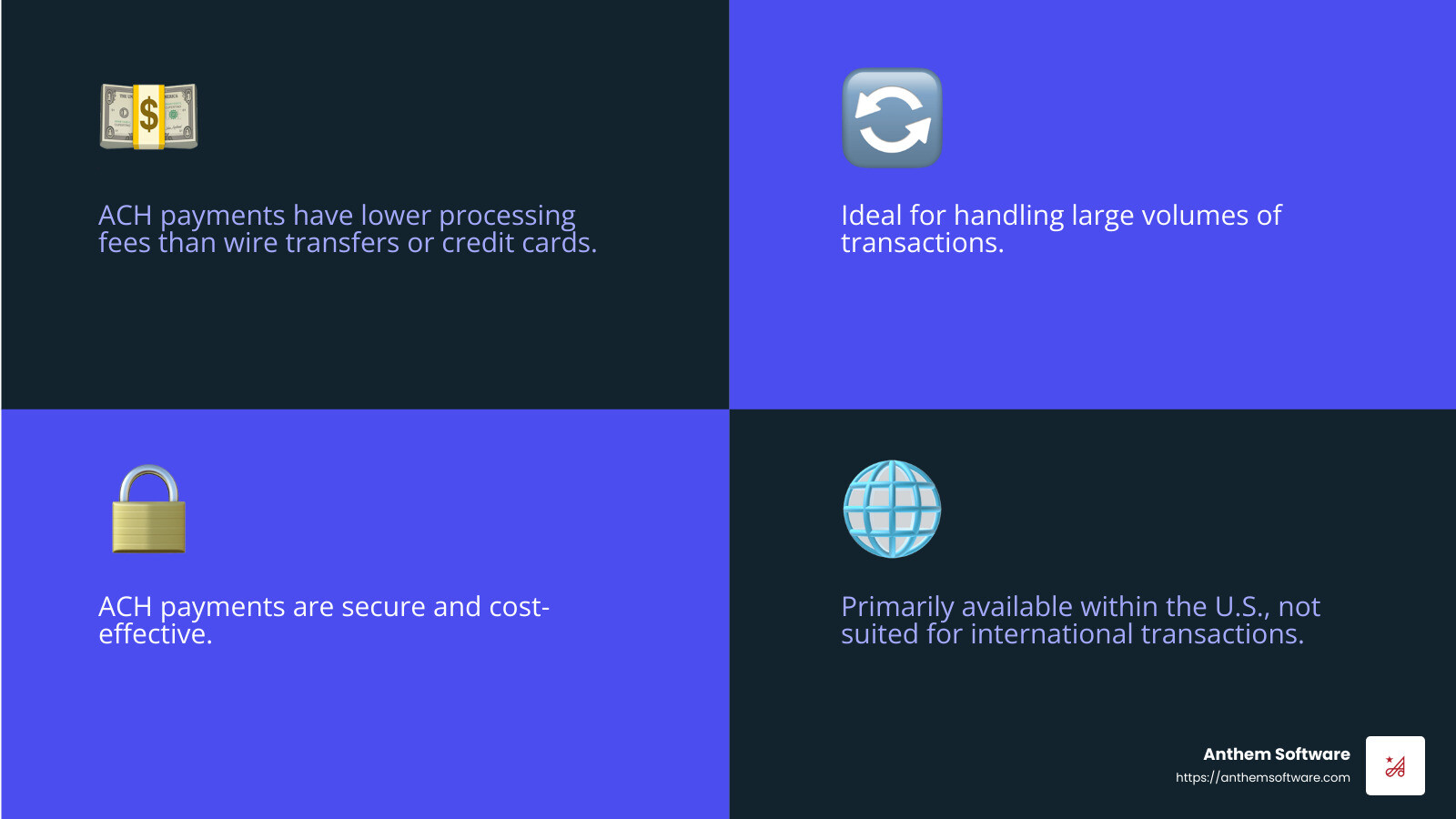
- Advantages: ACH payments are secure, cost-effective, and ideal for recurring payments. They often have lower processing fees compared to wire transfers and credit cards.
- Disadvantages: ACH transactions can take 1–2 business days to process. They are also primarily available within the U.S., making them less suitable for international transactions.
Credit Cards/B2B Credit Cards
Credit cards are widely used for B2B transactions, especially for smaller purchases. B2B credit cards come with additional features custom for business needs.
- Advantages: Credit cards offer immediate transaction processing, rewards, and fraud protection. They are convenient for online and over-the-phone transactions.
- Disadvantages: Transaction fees can be higher compared to other methods. There’s also a higher risk of fraud, and not all businesses accept credit cards for large transactions due to the fees.
Paper Checks
Despite the rise of digital payments, paper checks remain a common method in B2B transactions.
- Advantages: Familiarity and trust in paper checks keep them in use. They provide a tangible record of payment.
- Disadvantages: Paper checks are inefficient, with mailing delays and higher bank fees. They complicate cash flow management and are prone to errors and fraud.
Payment Gateways
Payment gateways facilitate online payments by connecting a merchant’s website to the payment processing network.
- Advantages: They offer convenience through electronic invoices and integration with CRMs and accounting software. They support multiple payment methods in one platform.
- Disadvantages: Fees can vary widely and might be higher than direct bank transfers. Relying on a third party necessitates trust in the service’s security measures.
Wire Transfers
Wire transfers are a reliable method for high-value and international B2B transactions.
- Advantages: Wire transfers are immediate and secure, making them ideal for large transactions. They don’t have a maximum transfer limit and are suitable for international payments.
- Disadvantages: They come with higher fees and once initiated, cannot be reversed. Security concerns also make wire transfers one of the less secure options.
Cash
Though less common, cash is still used for local and face-to-face B2B transactions.
- Advantages: Cash transactions are immediate and eliminate processing fees. They are straightforward and often used for small, local dealings.
- Disadvantages: Cash transactions can affect cash flow immediately and lack a digital trail, complicating bookkeeping and audits.
By understanding these B2B payment methods, businesses can choose the most suitable options for their needs, balancing convenience, cost, and security.
In the next section, we’ll explore the latest trends in B2B payments, including digitizing payments and real-time payments.
Trends in B2B Payments
Digitizing Payments
Digitizing payments is all about moving away from paper-based transactions to electronic methods. This shift brings several benefits:
- Efficiency: Electronic payments streamline the financial workflow, reducing the time and effort needed to process transactions.
- Cost Reduction: Automating payments can lower costs by minimizing manual labor and reducing errors.
- Financial Workflow Automation: With automated systems, businesses can set up recurring payments and automatic reconciliation, saving time and reducing the risk of human error.
- Real-Time Visibility: Digital payments provide real-time tracking, offering insights into cash flow and financial status.
Real-Time Payments
Real-time payments are gaining traction for their speed and convenience. Unlike traditional methods, real-time payments allow funds to be transferred and received almost instantly.
- Faster Transactions: Immediate processing helps businesses manage cash flow more effectively.
- Cash Flow Management: Quick payments reduce the risk of late payments, improving overall cash flow.
- Reduced Late Payment Risk: Real-time payments minimize delays, ensuring that businesses receive funds promptly.
Integration with ERP and Accounting Systems
Integrating payment systems with ERP (Enterprise Resource Planning) and accounting software is becoming essential for modern businesses.
- Synchronized Payment Processes: Integration ensures that payment data is automatically updated across all systems, reducing manual entry.
- Data Accuracy: Automated data entry minimizes errors, ensuring accurate financial records.
- Informed Decision-Making: Real-time data from integrated systems allows businesses to make better financial decisions.
Mobile Payments
Mobile payments are becoming more popular in the B2B space, offering flexibility and convenience.
- Convenience: Mobile platforms allow stakeholders to make and receive payments on the go, using smartphones or tablets.
- Accessibility: Mobile payments are particularly useful for remote workers and decentralized teams.
Blockchain and Cryptocurrency
Blockchain and cryptocurrency are emerging as innovative solutions for B2B payments, especially for international transactions.
- Transparency: Blockchain technology provides a decentralized and immutable ledger, ensuring transparent and secure transactions.
- Security: Cryptocurrencies offer improved security features, reducing the risk of fraud.
- Cross-Border Payments: Blockchain can facilitate international payments, bypassing traditional banking intermediaries and reducing transaction costs.
These trends are shaping the future of B2B payments, making transactions faster, more efficient, and secure.
How to Choose a B2B Payment Processing Solution
Choosing the right B2B payment processing solution can be a game-changer for your business. Here’s what to look for:
Features to Look for in a B2B Payment Platform
1. Time-Saving
Automating payment processes can save you a significant amount of time. Look for platforms that offer features like automatic invoicing, payment reminders, and reconciliation. These tools reduce manual labor and allow your team to focus on more strategic tasks.
2. Cash Flow Improvement
Efficient payment processing can improve your cash flow by reducing payment delays. Real-time payments and automated reminders ensure that you get paid on time, every time.
3. Bookkeeping Simplification
Integration with your accounting software is crucial. It simplifies bookkeeping by automatically updating your financial records. This reduces errors and ensures your books are always up-to-date.
4. Payment Security
Security is paramount. Ensure the platform complies with industry standards like PCI DSS. Features such as tokenization, encryption, and fraud detection can protect sensitive payment data.
Key Features to Consider
1. Invoicing Tools
Robust invoicing capabilities are essential. Look for customizable invoice templates, recurring invoicing, and automated reminders. These features streamline the invoicing process and improve cash flow management.
2. Strong Integrations
Your payment platform should integrate seamlessly with your existing tech stack. Key integrations include:
- Accounting Software: Facilitates payment reconciliation and simplifies financial reporting.
- Payment Gateway: Allows secure acceptance of payments through various channels like online, mobile, and in-person.
3. Multi-Currency Support
If you operate internationally, multi-currency support is a must. This feature allows you to accept payments in various currencies, minimizing conversion fees and simplifying global transactions.
4. Recurring Billing
For subscription-based services, automated recurring billing is essential. It reduces administrative overhead and ensures timely payments.
5. Customizable Payment Terms
Flexibility in payment terms can accommodate the unique needs of your B2B customers. Look for platforms that offer flexible payment schedules, early payment discounts, and extended credit terms.
6. Security and Compliance
Ensure the platform prioritizes security and compliance. Look for PCI DSS compliance, tokenization, encryption, and fraud detection features.
Frequently Asked Questions about B2B Payment Processing
What are B2B Payments?
B2B payments refer to transactions made between businesses. Unlike consumer payments, which are typically instant, B2B payments often involve more steps and longer timelines. These payments can be for goods, services, or recurring transactions. They usually include invoicing, payment terms, and sometimes negotiation.
For example, a manufacturer might pay a supplier for raw materials through an invoicing process that allows for extended payment terms. This contrasts sharply with a consumer buying a product online and paying immediately.
What are the key differences between B2B and B2C payment processing?
B2B (Business-to-Business) payments and B2C (Business-to-Consumer) payments differ mainly in complexity and speed:
- Payment Terms: B2B payments often involve longer payment terms. Businesses may have 30, 60, or even 90 days to pay an invoice.
- Transaction Amounts: B2B transactions usually involve larger amounts compared to B2C transactions.
- Recurring Business: B2B relationships often focus on long-term, recurring business, whereas B2C transactions are typically one-off purchases.
- Payment Methods: B2B payments use methods like ACH, wire transfers, and invoicing, while B2C payments are usually immediate, using credit cards or digital wallets.
- Documentation and Contracts: B2B transactions often require extensive documentation and contracts, which add to the complexity.
What are some of the most common B2B payment methods?
There are several common methods used in B2B transactions:
- ACH Payments: Automated Clearing House (ACH) payments are electronic transfers between banks. They are secure, cost-effective, and ideal for recurring payments.
- Credit Cards/B2B Credit Cards: These cards often have lower processing rates if they qualify for level 2 or level 3 processing. They also come with rewards and low-interest rates.
- Paper Checks: Despite being inefficient, paper checks are still widely used. They involve mailing and manual processing, which can delay transactions.
- Payment Gateways: These allow businesses to accept online payments securely. They integrate with CRMs and accounting software for streamlined processing.
- Wire Transfers: Real-time transfers that are often used for large, international transactions. They come with higher processing fees.
- Cash: Used for local transactions and face-to-face dealings. It provides immediate payment but can affect cash flow.
Understanding these methods helps businesses choose the best option based on their needs and transaction types.
In the next section, we will explore the latest trends in B2B payments, including digitizing payments and integrating with ERP systems.
Conclusion
At Anthem Software, we understand the importance of effective B2B payment processing for small businesses. As a digital marketing agency, we specialize in helping businesses streamline their operations and improve cash flow through innovative payment solutions and effective email marketing plans.
Why Choose Anthem Software?
Our platform is designed to simplify B2B payment processing and digital marketing for small businesses. We offer a comprehensive suite of tools that not only streamline your payment processes but also improve your email marketing efforts.
Expertise in B2B Email Marketing
We have years of experience in B2B email marketing, helping businesses craft strategic and personalized email campaigns. Our clients have seen significant growth by leveraging our solutions to improve their outreach and convert potential leads into loyal customers.
Focus on Small Businesses
Our tools and strategies are custom specifically for small businesses. We understand the unique challenges they face and provide solutions that are both effective and budget-friendly. By focusing on strategic email campaigns, we help small businesses connect and build lasting relationships with their audience.
Global Reach
Our email marketing solutions are versatile and adaptable to different markets and customer bases. This global reach demonstrates the effectiveness of our approach, helping businesses around the world improve their email marketing efforts.
Drive Growth and Engagement
By integrating effective email marketing plans with robust tools like those offered by Anthem Software, your business can thrive in today’s competitive digital landscape. The goal is not just to communicate but to connect, engage, and build lasting relationships with your audience.
For more information on how Anthem Software can transform your B2B payment processing and email marketing efforts, visit our payment processing service page.
By choosing Anthem Software, you are not just opting for a service but a partnership that aims to drive your business forward. Let’s work together to achieve sustained growth and success.
Thank you for reading, and we look forward to helping you succeed with your B2B payment processing and email marketing campaigns!