

How to do search engine optimisation for a website is a question crucial to understanding today’s digital landscape. If you’re eager to boost your online presence without diving into complex jargon, here’s a quick answer:
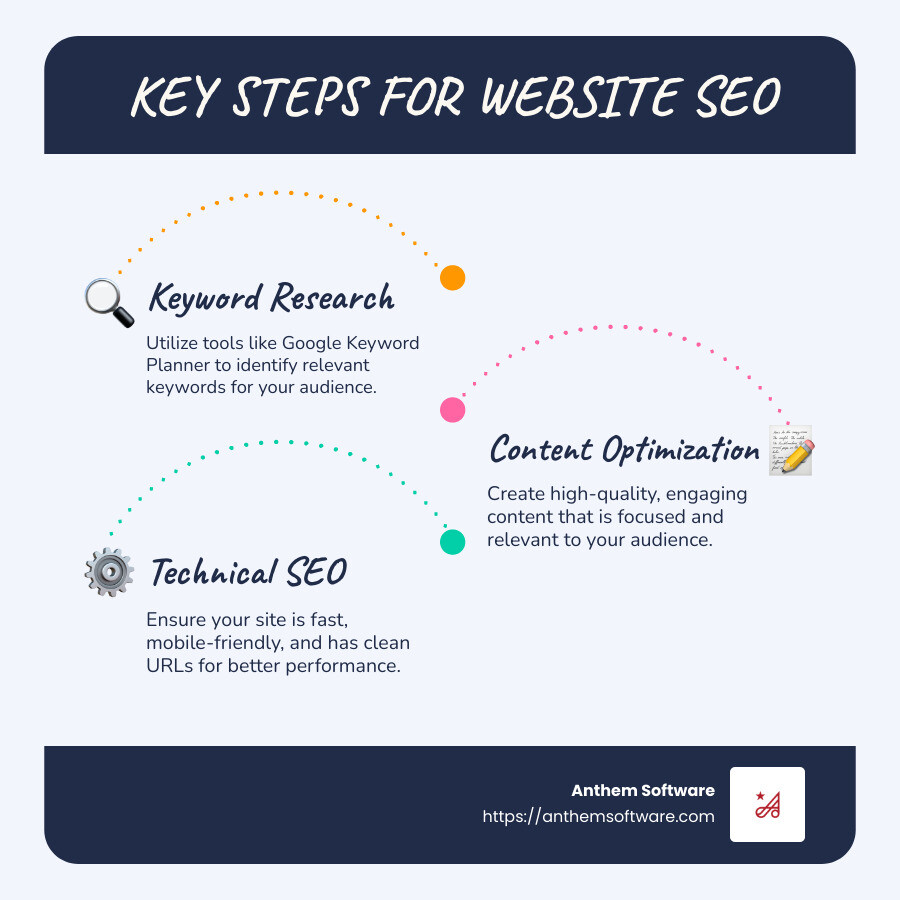
- Start with keyword research: Use tools like Google Keyword Planner to find keywords that your audience searches for.
- Create valuable content: Focus on engaging and informative content relevant to your audience’s needs. Avoid keyword stuffing.
- Optimize your site technically: Ensure your site loads fast, works well on mobile, and has clean URLs.
- Build quality backlinks: Get links from reputable sites to boost credibility.
In today’s competitive digital market, mastering the basics of SEO—or search engine optimization—can significantly improve how well your business performs online. But why is this so important? Without it, your website could be virtually invisible in search results. With effective SEO, you ensure more people find your website when they search for terms relevant to your business. Higher search engine rankings mean more visibility, more traffic, and ultimately, more success.
I’m Joe Amaral, and I’ve seen the transformative power of SEO throughout my career in digital marketing. After founding several companies and diving deep into SEO practices, I bring both passion and experience in understanding how to do search engine optimisation for a website effectively.
What is SEO?
Search Engine Optimization (SEO) is the art and science of enhancing your website’s visibility on search engines like Google and Bing. Imagine SEO as a set of best practices that help your website appear higher in the list of search results when someone looks for information related to your business or content.
Search Engines
Search engines are like digital librarians. They sift through countless web pages to find the most relevant information based on a user’s query. When you’re using a search engine, you’re essentially asking it to find the best answers from the vast library of the internet.

Organic Search
When you search for something online, you might notice two types of results: paid ads and organic results. Organic search refers to the unpaid listings that appear because they are relevant to the search terms. These results are based on what the search engine’s algorithm deems most relevant and authoritative.
Why focus on organic search? According to a report, around 64% of organic traffic comes from search engines, making it a crucial channel for businesses aiming to increase visibility and traffic.
Google and Bing
While there are many search engines, Google dominates with a whopping 92% market share. It’s the go-to platform for most of the world’s searches. However, Bing also plays a significant role, especially in certain regions and demographics. Understanding the nuances of both can help tailor your SEO strategy effectively.
SEO is about making your site easy for search engines to understand and recommend to users. By focusing on how to do search engine optimisation for a website, you’re setting up your business for better visibility, more traffic, and increased opportunities for growth.
Next, we’ll dive into why SEO is important and how it can impact your business’s success.
Why is SEO Important?
Search habits have evolved dramatically. Most people turn to search engines like Google to find answers, products, and services. This makes it critical for businesses to show up where their potential customers are looking. If your website isn’t visible, you’re missing out on a significant opportunity to connect with your audience.
Visibility
Visibility is crucial for any business aiming to grow online. The higher your website ranks on search engines, the more likely users are to click on it. In fact, studies show that the first page of Google captures 71% of search traffic clicks. If you’re not on the first page, you’re losing out on a lot of potential visitors.
Traffic
More visibility means more traffic. When your site appears prominently in search results, it attracts more visitors. This increase in organic traffic can lead to higher sales, more leads, and greater engagement. More traffic equals more opportunities to convert visitors into customers.
Brand Awareness
SEO also boosts brand awareness. When people repeatedly see your brand in search results, it builds familiarity and trust. Even if they don’t click on your site the first time they see it, repeated exposure can lead to future visits and conversions.
Customer Journey
SEO plays a vital role in the customer journey. From the initial search to the final purchase, SEO ensures your business is present at every stage. By optimizing your content for various keywords, you can guide potential customers from the awareness stage to the decision stage seamlessly.
In summary, understanding how to do search engine optimisation for a website is essential for improving visibility, attracting traffic, and enhancing brand recognition. SEO is not just a marketing tactic; it’s a fundamental component of a successful digital strategy.
Next, we’ll explore the step-by-step process of optimizing your website for search engines.
How to Do Search Engine Optimization for a Website
Keyword Research
Keyword research is the cornerstone of how to do search engine optimisation for a website. It involves identifying the words and phrases your potential customers use to search for products or services similar to yours. Tools like Google Keyword Planner and Ubersuggest are invaluable for this process. They help you find:
- Search Volume: How often a keyword is searched monthly.
- Rank Difficulty: How hard it is to rank for a keyword.
- Long-Tail Keywords: Longer, more specific phrases that often have less competition and higher conversion rates.
By focusing on keywords with moderate search volume and low competition, you can improve your chances of ranking higher in search results.
Content Optimization
Creating high-quality content is vital for engaging users and search engines alike. Here’s how to optimize your content:
- Keyword Placement: Naturally incorporate your chosen keywords throughout your content, including in the title, headings, and body.
- Meta Descriptions: Write compelling meta descriptions that include keywords and entice users to click.
- Image Optimization: Use relevant images and optimize them by adding alt text to describe the content of the images for search engines and visually impaired users.
Well-optimized content not only ranks better but also improves user experience, leading to higher engagement.
Technical SEO
Technical SEO ensures that your website is structured in a way that search engines can crawl and index it efficiently. Key elements include:
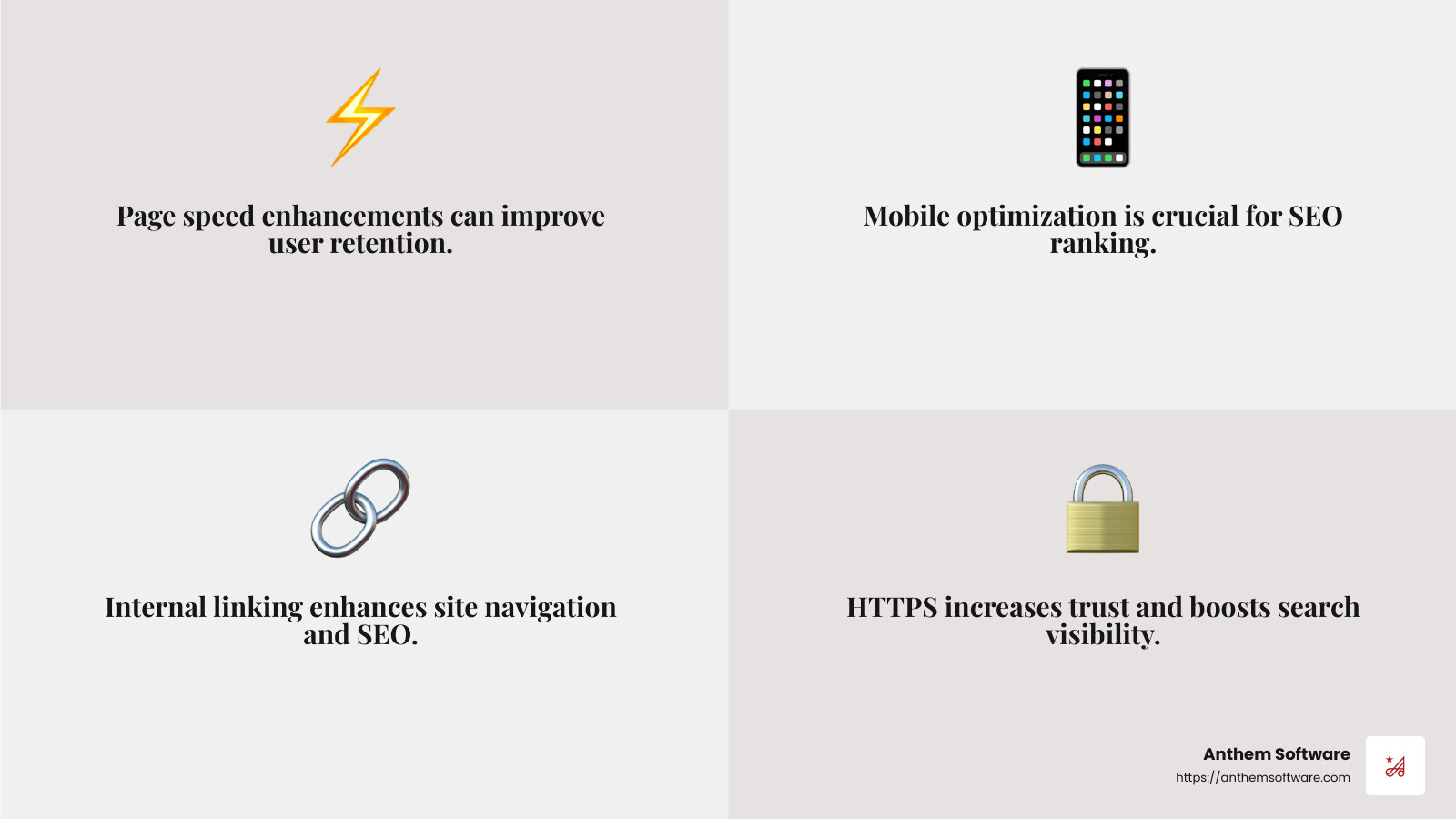
- Page Speed: Fast-loading pages improve user experience and are favored by search engines.
- Mobile Optimization: Ensure your site is mobile-friendly, as more users access the web via mobile devices.
- HTTPS: Secure your site with HTTPS to protect user data and boost your SEO.
- XML Sitemap: Create an XML sitemap to help search engines understand your site structure.
- robots.txt: Use this file to guide search engines on which pages to crawl or ignore.
Addressing these technical aspects can significantly boost your site’s performance and ranking.
On-Page SEO
On-page SEO involves optimizing individual pages to rank higher and earn more relevant traffic. Focus on:
- Title Tags: Include your primary keyword and keep it under 60 characters.
- Headings: Use H1, H2, and H3 tags to organize content and include keywords where appropriate.
- Internal Linking: Link to other relevant pages on your site to improve navigation and SEO.
- URL Structure: Keep URLs short, descriptive, and keyword-rich.
- Schema Markup: Implement schema markup to improve rich snippets and improve search visibility.
These on-page strategies help search engines understand your content and improve user experience.
Off-Page SEO
Off-page SEO refers to actions taken outside your website to impact your rankings. Key tactics include:
- Backlinks: Acquire high-quality backlinks from reputable sites to boost your authority.
- Social Media: Engage with your audience on social platforms to increase your brand presence.
- Brand Reputation: Manage your online reputation to build trust and credibility.
- Guest Posting: Write guest posts for other sites to gain exposure and backlinks.
- PR Coverage: Secure media coverage to improve your brand’s visibility and authority.
By focusing on these off-page strategies, you can strengthen your site’s authority and improve its ranking potential.
Next, we’ll dive into essential SEO tips for beginners to help you get started on your SEO journey.
10 Essential SEO Tips for Beginners
Starting on your SEO journey can feel overwhelming, but breaking it down into manageable tasks can make it simpler. Here are ten essential tips to help you get started:
1. Keyword Research
Keyword research is the cornerstone of any successful SEO strategy. Use tools like Google Keyword Planner and Ubersuggest to find keywords that your target audience is searching for. Focus on:
- Search Volume: Identify how often keywords are searched.
- Rank Difficulty: Assess how competitive these keywords are.
- Long-Tail Keywords: Target longer, more specific phrases that are less competitive but highly relevant.
2. Content Creation
Create high-quality, engaging content custom to your audience. Ensure that your content:
- Answers common questions and provides value.
- Is well-structured with headings and subheadings.
- Includes keywords naturally in the text.
3. Technical SEO
Technical SEO is about optimizing the infrastructure of your website. Prioritize:
- Page Speed: Optimize your site to load quickly.
- Mobile Optimization: Ensure your site is responsive on all devices.
- HTTPS: Secure your site to improve trust and SEO.
4. On-Page SEO
Optimize individual pages to improve their search engine visibility. Focus on:
- Title Tags: Make them descriptive and keyword-rich.
- Headings: Use H1, H2, and H3 tags effectively.
- Internal Linking: Connect your pages to improve navigation.
5. Off-Page SEO
Improve your site’s authority by building relationships outside of your website. This includes:
- Backlinks: Acquire links from reputable sites.
- Social Media Engagement: Interact with your audience to build brand awareness.
6. Mobile Optimization
With the rise of mobile browsing, ensuring your site is mobile-friendly is crucial. A responsive design will improve user experience and boost your SEO.
7. Page Speed
Fast-loading pages are essential. Compress images, minimize scripts, and use caching to improve speed. According to Google, a one-second delay can reduce conversions by 7%.
8. Internal Linking
Internal links help users steer your site and spread link equity across pages. They also help search engines understand the structure of your site.
9. User Experience
A well-designed, easy-to-steer site keeps users engaged. Focus on clear layouts, intuitive navigation, and fast load times to improve user satisfaction.
10. Regular Updates
Keep your content fresh and relevant. Regular updates signal to search engines that your site is active and current. This can improve your rankings over time.
By following these essential SEO tips for beginners, you’ll be well on your way to improving your website’s visibility and performance. Next, we’ll address some frequently asked questions about SEO to further guide you on your journey.
Frequently Asked Questions about SEO
How to Do Search Engine Optimization for a Website?
If you’re wondering how to do search engine optimisation for a website, it’s all about understanding and implementing a few key strategies. Let’s break it down:
DIY SEO: You don’t always need a professional to get started. Many tools and resources are available online to help you optimize your website on your own.
Keyword Research: This is the first step. Use tools like Google Keyword Planner or Ubersuggest to find out what your audience is searching for. Focus on keywords with a good balance of search volume and rank difficulty.
Content Optimization: Create content that is not only engaging but also optimized for search engines. This means using your keywords naturally in the text, optimizing meta descriptions, and ensuring images have alt text.
Technical SEO: Ensure your website is technically sound. This includes having a fast page speed, mobile optimization, a secure HTTPS connection, and an XML sitemap to help search engines index your site effectively.
Tools: Use tools like Google Analytics and Google Search Console to track your progress. They provide insights into how your site is performing and where improvements can be made.
Can I Do SEO on My Own?
Absolutely! DIY SEO is entirely possible, even for beginners. Here’s how you can start:
Learn the Basics: Understanding the fundamentals of SEO is crucial. There are countless free resources and guides online to help you get started.
Use SEO Tools: Tools like Google Analytics and Google Search Console are essential. They help you monitor traffic, understand user behavior, and identify areas for improvement.
Experiment and Adjust: SEO is not a one-time task. It requires ongoing adjustments. As you learn what works and what doesn’t, make changes to improve your site’s performance.
How Long Does SEO Take to Show Results?
Patience is key when it comes to SEO. Here’s what to expect:
SEO Timeline: SEO is a long-term strategy. It can take several months to start seeing significant results. This is because search engines need time to crawl and index your site, and it takes time to build authority.
Continuous Improvement: SEO is not a set-it-and-forget-it task. Regular updates, content creation, and technical tweaks are necessary to maintain and improve your rankings.
By understanding these aspects of SEO, you’ll be better equipped to optimize your website effectively. Next, we’ll explore the benefits of doing SEO yourself and how it can impact your business.
Conclusion
At Anthem Software, we understand the transformative power of digital marketing for small businesses. Our expertise isn’t just about crafting strategies; it’s about building connections and driving growth. With our focus on B2B email marketing, we help clients effectively reach their professional stakeholders, ensuring messages don’t just land in inboxes but resonate with the audience.
Our global reach illustrates our commitment to delivering results. From small local businesses to large international clients, our custom SEO services have proven effective across various industries. By leveraging our comprehensive suite of digital marketing tools, businesses can improve their online presence and achieve sustained success.
We believe that understanding how to do search engine optimisation for a website is crucial for any business looking to thrive in today’s digital landscape. By focusing on keyword research, content optimization, and technical SEO, companies can improve their search rankings and visibility.
If you’re ready to lift your digital marketing efforts, explore our SEO services to see how Anthem Software can help your business grow. Our team is dedicated to crafting custom strategies that align with your goals and drive real results.
In the changing world of digital marketing, staying ahead is key. Let us help you steer this journey and achieve your business objectives.