

The Importance of an SEO Specialist in the Digital Age
Having a strong online presence is crucial for every business, from small startups to large enterprises. An engine optimization specialist is key to improving your website’s visibility on search engines. Here’s what you need to know:
Quick Answer:
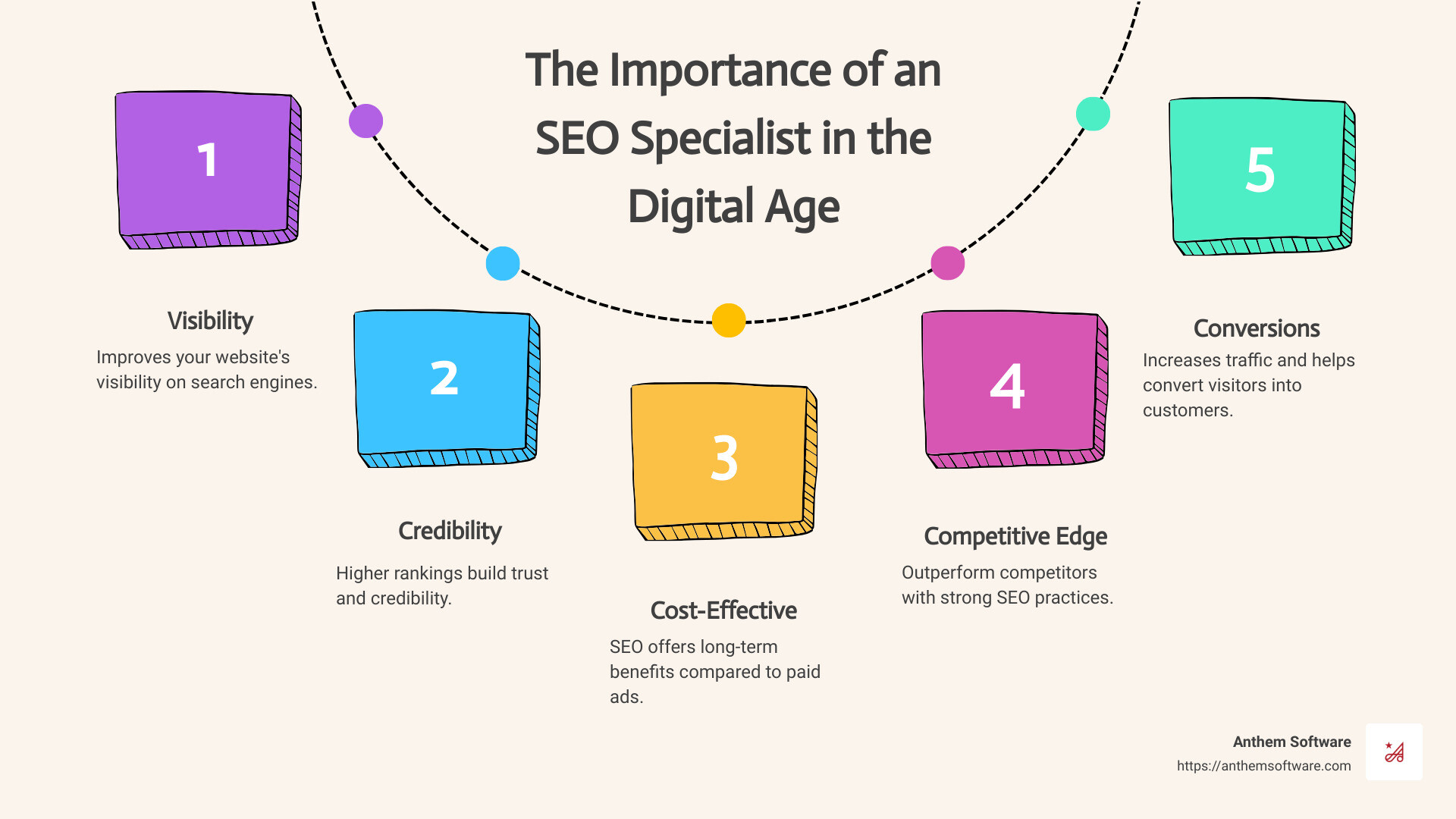
An engine optimization specialist improves website rankings on search engines, increases traffic, and helps convert visitors into customers.
Why It Matters:
– Visibility and Rankings: High search engine rankings make your website more visible to potential customers.
– Credibility and Trust: A well-ranked site is seen as credible and trustworthy.
– Cost-Effective Marketing: Unlike paid ads, the benefits of good SEO last over time.
– Competitive Edge: Strong SEO practices keep you ahead of competitors.
Hi there, I’m Joe Amaral. After spending years working in various sales and management roles, I finded my passion for digital marketing, especially SEO. Currently, I lead a thriving team, helping businesses optimize their online presence.
What is an SEO Specialist?
An SEO Specialist is a digital marketing professional who focuses on improving a website’s visibility in search engine results. Their main goal is to attract more organic traffic from search engines like Google and Bing. This is achieved through a wide range of strategies and techniques.
Key Responsibilities
Keyword Research: This is the foundation of SEO. By identifying the right keywords, an SEO specialist ensures that the content on a website matches what potential customers are searching for. For example, using tools like Google’s Keyword Planner, they can find popular search terms relevant to the business.
On-Page Optimization: This involves tweaking elements on a website to make it more search-engine-friendly. It includes optimizing title tags, meta descriptions, headers, and images. On-page optimization ensures that the content is relevant and easy to understand for both users and search engines.
Link Building: Building high-quality backlinks from other reputable websites is crucial for improving a site’s authority and ranking. An SEO specialist might reach out to other websites for guest blogging opportunities or create shareable content that naturally attracts links.
Content Strategy: Creating valuable and engaging content is key to attracting and retaining visitors. An SEO specialist works closely with content creators to develop blog posts, articles, and other forms of content that not only engage readers but also rank well in search engines.
Technical Audits: Regularly auditing the technical aspects of a website ensures it runs smoothly and efficiently. This includes checking the site’s speed, mobile-friendliness, and ensuring there are no broken links or errors that could hinder its performance.
Tools and Techniques
SEO specialists use a variety of tools to help them analyze, monitor, and improve a website’s performance. Here are some of the most popular ones:
Google Analytics: This free tool provides insights into how visitors find and use a website. It helps SEO specialists understand user behavior, track conversions, and measure the effectiveness of their strategies.
SEMrush: A comprehensive tool that offers keyword research, competitor analysis, and site audits. It’s a favorite among SEO professionals for its wide range of features.
AHrefs: Known for its robust backlink analysis, AHrefs helps SEO specialists understand their site’s link profile and find opportunities for new backlinks.
Moz: Moz offers tools for keyword research, link building, and site audits. It also provides valuable educational resources for those looking to deepen their SEO knowledge.
Webmaster Tools: Both Google Search Console and Bing Webmaster Tools allow SEO specialists to monitor their site’s presence in search engine results. They provide data on search queries, indexing status, and any issues that need to be addressed.
By leveraging these tools and techniques, an SEO Specialist can develop and execute strategies that significantly improve a website’s search engine rankings, driving more organic traffic and ultimately contributing to the business’s success.

In the next section, we’ll explore the essential skills needed to excel as an SEO specialist.
Essential Skills for an SEO Specialist
To excel as an engine optimization specialist, you’ll need a mix of technical and marketing skills. Let’s break down the key skills you’ll need.
Technical Skills
1. HTML, CSS, JavaScript
Understanding these languages is crucial. HTML and CSS help you structure and style your web pages. JavaScript lets you add interactive elements. These skills help you communicate effectively with web developers and make necessary tweaks yourself.
2. Site Speed Optimization
Google values fast-loading sites. If your site takes too long to load, users leave quickly. Tools like Google PageSpeed Insights can help you identify and fix issues slowing down your site.
3. Mobile Optimization
With more people using mobile devices to browse the web, mobile optimization is essential. Google uses mobile-first indexing, so your site must look good and work well on smartphones and tablets.
Marketing Skills
1. Content Creation
Good content is the backbone of SEO. You need to create valuable, relevant, and engaging content. This can be blog posts, videos, infographics, or other media that attract and retain visitors.
2. Keyword Optimization
Effective keyword research helps you understand what your audience is searching for. Tools like Google’s Keyword Planner can help. Once you have your keywords, use them naturally in your content, titles, and meta descriptions.
3. User Experience (UX)
A good user experience keeps visitors on your site longer. This reduces bounce rates and signals to search engines that your site is valuable. Make sure your site is easy to steer, visually appealing, and provides the information users need quickly.
4. Social Media Integration
Social media helps drive traffic to your site. Share your content on platforms like Facebook, Twitter, and LinkedIn to reach a broader audience. Engaging with users on social media also increases your chances of earning backlinks.
Soft Skills
1. Communication
You’ll often need to explain complex SEO concepts to people who aren’t tech-savvy. Good communication skills help you convey your ideas clearly and collaborate effectively with your team.
2. Technical Proficiency
Beyond just knowing HTML and CSS, you should be familiar with tools like Google Analytics, SEMrush, and AHrefs. These tools help you track performance, find opportunities, and measure the success of your SEO strategies.
3. Data Analysis
An SEO Specialist needs to analyze data to see what’s working and what’s not. Understanding metrics like organic traffic, bounce rates, and conversion rates helps you make informed decisions. Ryan Jones from Razorfish advises using the “3 What’s” method: What happened? Why did it happen? What should we do about it?
4. Adaptability
SEO is always changing. Google made around 4,500 changes to its search engine in 2020. You need to stay updated with the latest trends and be ready to adjust your strategies accordingly.
5. Curiosity
A successful SEO specialist is always learning. Whether it’s new algorithms, tools, or techniques, staying curious helps you stay ahead of the competition. As Google’s John Mueller puts it, continual learning is key to success in SEO.
In the next section, we’ll look at the career path and progression for SEO specialists, from entry-level roles to senior positions.
Career Path and Progression
Related Job Titles
Becoming an SEO Specialist can open many doors in the digital marketing world. Here’s a look at the typical career path and related job titles you might encounter.
Entry-Level Roles
When starting, you might take on roles like SEO Assistant or Junior SEO Specialist. These positions involve supporting senior team members by conducting keyword research, analyzing data, and optimizing web pages. It’s all about learning the ropes and gaining hands-on experience.
SEO Analyst
With some experience, you can move up to an SEO Analyst position. Here, you’ll take on more responsibility, such as developing and implementing SEO strategies, performing technical audits, and monitoring website performance using tools like Google Analytics.
Senior Roles
After proving yourself as an analyst, you might advance to senior roles. A Senior SEO Specialist or SEO Manager typically leads a team, oversees large-scale SEO projects, and collaborates with other departments like content and web development. Leadership and strategic planning become crucial skills at this stage.
Head of SEO
At the top of the ladder, you find the Head of SEO. This role involves setting the overall SEO strategy for the company, staying ahead of industry trends, and ensuring all SEO efforts align with business goals. You’ll often report directly to senior executives and play a key role in the company’s digital marketing strategy.
Related Job Titles
The skills you develop as an SEO Specialist can also lead to other exciting roles:
- Digital Marketing Specialist: Focuses on a broader range of online marketing tactics, including SEO, SEM, PPC, and social media.
- Online Marketing Specialist: Similar to a digital marketing specialist but with a stronger emphasis on online campaigns and analytics.
- Search Engine Marketer: Specializes in paid search marketing (PPC), using platforms like Google Ads to drive traffic and conversions.
- Content Marketer: Works closely with SEO specialists to create and promote content that drives organic traffic and engagement.
These roles often overlap, so having a diverse skill set can make you more versatile and valuable in the job market.
In the next section, we’ll explore how SEO has evolved over the years and the emerging trends you need to watch out for.
The Evolution of SEO
Emerging Trends
SEO has come a long way since its early days. Understanding its evolution helps us appreciate the current trends and better prepare for the future.
Early SEO Tactics
In the beginning, SEO was straightforward. Early tactics included keyword stuffing—cramming as many keywords as possible into your content. This might have worked back then, but it made for a terrible user experience. Pages were hard to read and often felt spammy.
Backlinks were another early tactic. Websites exchanged links to boost their rankings. The more backlinks you had, the higher you ranked. But this led to link farms and low-quality backlinks, which search engines soon caught onto.
Modern SEO
Today, SEO is much more complex. Search engines like Google use advanced algorithms to determine rankings. These algorithms consider hundreds of factors, from keyword relevance to user engagement.
Modern SEO focuses on providing value. This means creating high-quality, relevant content and ensuring a good user experience.
Algorithms and User Behavior
Search engine algorithms constantly evolve. Google, for example, rolls out updates regularly. In 2020 alone, it made around 4,500 changes.
Understanding user behavior is also crucial. Search engines aim to provide the most relevant results, so they analyze how users interact with content. Metrics like bounce rate and time on page can affect your rankings.
Voice Search
Voice search is becoming increasingly popular. People now use voice assistants like Siri and Alexa to search the web. This changes how we optimize content. Voice searches are often longer and more conversational, so focusing on long-tail keywords can be beneficial.
AI and Machine Learning
Artificial Intelligence (AI) and machine learning are changing SEO. Tools like Google’s RankBrain help the search engine understand complex queries. SEO specialists need to stay updated with these technologies to remain competitive.
User Experience
User experience (UX) is more important than ever. Search engines prioritize websites that offer a good UX. This includes fast loading times, easy navigation, and mobile-friendly design.
Mobile Optimization
With the majority of searches now happening on mobile devices, mobile optimization is crucial. Google uses mobile-first indexing, meaning it predominantly uses the mobile version of a site for ranking. Ensuring your site is responsive and loads quickly on mobile devices can significantly impact your rankings.
Understanding these emerging trends helps SEO specialists stay ahead of the curve. In the next section, we’ll explore how SEO integrates with other digital marketing strategies to create a holistic approach.
The Interplay Between SEO and Other Digital Marketing Strategies
Collaboration with Other Teams
SEO doesn’t work in isolation. To be effective, an engine optimization specialist must work closely with other digital marketing teams. This collaboration ensures a unified strategy that drives the best results.
Content Marketing
Content marketing and SEO are like peanut butter and jelly—better together. Quality content attracts visitors and keeps them engaged. But without SEO, even the best content might go unnoticed. SEO specialists work with content creators to ensure that articles, blogs, and videos are optimized for search engines. This involves:
- Keyword research: Identifying terms people use to search for related content.
- On-page optimization: Ensuring keywords are used naturally in titles, headers, and text.
- Internal linking: Connecting related pieces of content to improve site navigation and SEO.
Social Media Marketing
Social media can amplify your SEO efforts. While social media links don’t directly affect search rankings, they can drive traffic to your site, increasing visibility and engagement. SEO specialists often collaborate with social media teams to:
- Promote content: Sharing optimized content on platforms like Facebook, Twitter, and LinkedIn.
- Build brand awareness: Engaging with audiences to create a loyal following.
- Generate backlinks: Encouraging shares and mentions that can lead to valuable backlinks.
Pay-Per-Click Advertising
Pay-per-click (PPC) advertising and SEO can complement each other. While PPC provides immediate visibility, SEO offers long-term organic growth. Working together, these strategies can dominate search engine results pages (SERPs). SEO specialists and PPC managers collaborate to:
- Share keyword data: Using successful PPC keywords to inform SEO strategies.
- Optimize landing pages: Ensuring that pages perform well both organically and in paid campaigns.
- Analyze performance: Using data from both PPC and SEO to refine strategies.
Holistic Approach
A holistic approach to digital marketing means integrating various strategies to achieve common goals. For an SEO specialist, this involves:
- Understanding business objectives: Aligning SEO goals with broader business goals like brand awareness or conversions.
- Coordinating campaigns: Ensuring that SEO efforts are part of larger marketing campaigns.
- Measuring success: Using analytics to track the effectiveness of integrated strategies.
Marketing and Communications
Effective SEO requires clear communication. SEO specialists often work with marketing and communications teams to:
- Craft compelling messages: Ensuring that the content is both search-engine friendly and resonates with the audience.
- Promote consistency: Maintaining a consistent brand voice across all channels.
- Educate stakeholders: Explaining the importance of SEO to non-technical team members.
Web Development
Technical SEO relies heavily on the expertise of web developers. SEO specialists collaborate with web development teams to:
- Improve site speed: Ensuring fast load times for better user experience and rankings.
- Improve mobile usability: Making sure the site is responsive and mobile-friendly.
- Fix technical issues: Addressing problems like broken links or duplicate content.
Content Creators
Content creators are the backbone of any SEO strategy. SEO specialists guide content creators by:
- Providing keyword insights: Suggesting keywords to include in new content.
- Reviewing drafts: Ensuring content is optimized before publication.
- Updating existing content: Revising old content to improve its SEO performance.
By working together, these teams create a seamless and effective digital marketing strategy. Up next, we’ll answer some frequently asked questions about SEO specialists and their role in adapting to changes in search engine algorithms.
Frequently Asked Questions about SEO Specialists
What emerging trends in SEO should specialists be aware of?
SEO is constantly evolving, and specialists need to stay ahead of the curve. Here are some key trends:
Voice Search Optimization
With the rise of smart speakers and voice assistants like Alexa and Siri, voice search is becoming more popular. SEO specialists should focus on optimizing content for natural language queries and long-tail keywords. For example, instead of just targeting “best pizza,” think about “Where can I find the best pizza near me?”
AI and Machine Learning
Search engines like Google are using AI and machine learning to improve search results. Tools like Google’s RankBrain help understand user intent better. SEO specialists need to grasp how these technologies impact rankings and adapt their strategies accordingly. That means focusing on high-quality, relevant content that truly answers user queries.
User Experience (UX)
Google’s algorithms increasingly prioritize user experience. Factors like site speed, mobile-friendliness, and easy navigation are crucial. SEO specialists must work closely with web developers to ensure that websites are not only fast but also user-friendly.
How do SEO Specialists adapt their strategies to changes in search engine algorithms?
Search engines update their algorithms frequently, which can affect website rankings. Here’s how SEO specialists stay on top:
Continuous Learning
SEO specialists never stop learning. They follow industry blogs, attend webinars, and join forums to stay updated. Websites like Moz and Search Engine Journal are excellent resources for the latest SEO news and trends.
Testing and Experimentation
SEO is not a one-size-fits-all approach. Specialists often run A/B tests to see which strategies work best. For instance, they might test different meta descriptions to see which one improves click-through rates.
Monitoring Performance
Using tools like Google Analytics and SEMrush, SEO specialists keep an eye on website performance. They track metrics like organic traffic, bounce rates, and keyword rankings to see how changes impact results. If something isn’t working, they tweak their strategies accordingly.
Can SEO Specialists improve a website’s mobile optimization?
Absolutely! Mobile optimization is crucial for SEO. Here’s why and how SEO specialists can help:
Mobile-Friendly Websites
With more people using smartphones to browse the internet, search engines prioritize mobile-friendly sites. SEO specialists ensure that websites are responsive, meaning they look good and function well on all device types.
Impact on Search Rankings
Google uses mobile-first indexing, which means it predominantly uses the mobile version of a site for ranking and indexing. A mobile-optimized site can improve search rankings, increasing online visibility.
Techniques for Mobile Optimization
SEO specialists focus on several areas to improve mobile optimization, including:
- Page Speed: Ensuring pages load quickly.
- Responsive Design: Making sure the site adapts to different screen sizes.
- Easy Navigation: Simplifying menus and buttons for touch screens.
By addressing these factors, SEO specialists help businesses reach more users and improve their overall search performance.
Conclusion
The Importance of SEO Specialists
Having a strong online presence is crucial for any business. SEO specialists play a vital role in ensuring that businesses are easily found online. They help improve search rankings, drive traffic, and ultimately increase sales. As search engines like Google evolve, the expertise of an engine optimization specialist becomes even more critical. They stay updated with the latest trends and algorithms to keep your business ahead of the competition.
Building a Robust Digital Identity
Your digital identity is how your business is perceived online. It includes everything from your website content to your social media interactions. SEO specialists help shape this identity by optimizing your website and creating content that resonates with your target audience. A well-executed SEO strategy can improve your brand’s credibility and visibility, making it easier for potential customers to find and trust you.
Anthem Software: Your Partner in SEO
At Anthem Software, we understand the complexities of SEO and digital marketing. Our team of experts is dedicated to helping small businesses thrive online. We offer comprehensive SEO services custom to meet your unique needs. From keyword research to link building, we cover all aspects of SEO to boost your online presence.
B2B Email Marketing and Small Businesses
SEO is just one piece of the digital marketing puzzle. B2B email marketing is another powerful tool that can complement your SEO efforts. By sending targeted email campaigns, you can engage with your audience, nurture leads, and drive conversions. For small businesses, combining SEO with effective email marketing can lead to significant growth and success.
In Summary
SEO specialists are essential for building a strong digital identity and achieving online success. They ensure your website is optimized for search engines, making it easier for customers to find you. At Anthem Software, we are committed to helping small businesses steer the digital landscape with our expert SEO services and comprehensive marketing strategies. Partner with us to lift your online presence and grow your business.
By understanding the role and importance of SEO specialists, businesses can make informed decisions to improve their digital marketing efforts. For more information on how Anthem Software can help you with your SEO needs, visit our SEO services page.