

Ecommerce payment processing solutions are the backbone of any online business, seamlessly transferring funds securely between customers, merchants, and financial institutions to complete a purchase. For those seeking a quick grasp of this domain, here’s a concise snapshot:
Key Points about ecommerce payment processing solutions:
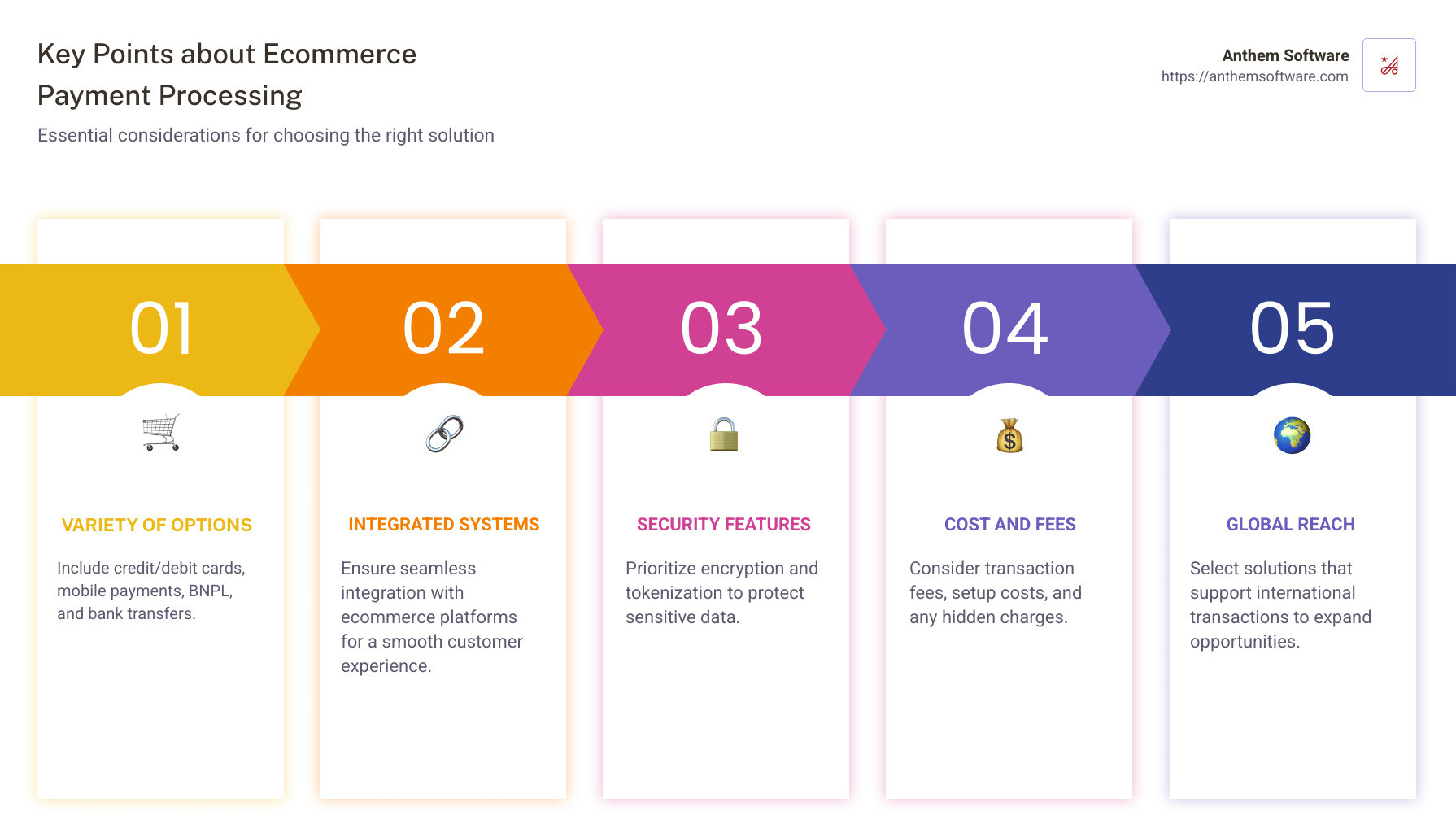
1. Variety of Options: Include a mix of popular payment methods such as credit/debit cards, mobile payments, “Buy Now, Pay Later” (BNPL) options, and bank transfers to capture diverse customer preferences.
2. Integrated Systems: Opt for solutions that can smoothly integrate with your ecommerce platform for an uninterrupted customer experience and higher trust.
3. Security Features: Prioritize encryption and tokenization to safeguard sensitive data and improve customer trust.
4. Cost and Fees: Consider transaction fees, setup costs, and any hidden charges when selecting a payment processor.
5. Global Reach: Choose solutions supporting international transactions to expand your business opportunities.
Recognizing the need for efficient ecommerce payment processing solutions is crucial for businesses to thrive in today’s digital economy. Such solutions not only ensure smooth transactions but also improve customer satisfaction and trust.
As your guide, I’m Joe Amaral, deeply experienced in ecommerce payment processing solutions. With over a decade in sales and management and success in the digital marketing field, I’ve seen how these solutions empower businesses to flourish. Stay tuned to learn more about integrating effective payment systems.
Understanding Ecommerce Payment Processing
When you’re setting up an online store, understanding ecommerce payment processing solutions is key. This involves a few moving parts, but once you get the hang of it, it’s pretty straightforward. Let’s break it down.
Payment Gateway
Think of a payment gateway as the bridge between your ecommerce site and the payment processor. It’s like the digital version of a point-of-sale terminal in a physical store. When a customer enters their payment details, the gateway securely encrypts this information and sends it to the payment processor.
There are four main types of gateways:
Hosted Payment Gateway: Redirects customers to a third-party page to complete their payment. This is super secure but takes customers away from your site.
Self-Hosted Payment Gateway: Keeps customers on your site throughout the payment process. You have full control over the checkout experience.
API-hosted Payment Gateway: Uses an API to collect payment details, offering a seamless integration with your site.
Local Bank Integration Gateway: Redirects customers to their bank’s platform for payment completion.
Payment Processor
The payment processor is the entity that handles the transaction details. It checks with the customer’s bank to ensure they have enough funds and then either approves or declines the transaction. Once approved, the processor transfers funds from the customer’s bank to the merchant’s account.
Payment processors are like the engine under the hood, making sure everything runs smoothly and efficiently. They also play a crucial role in fraud detection and ensuring PCI compliance.
Transaction Flow
Here’s a simple breakdown of how a typical transaction works:
Customer Checkout: The customer enters their payment details on your ecommerce site.
Information Transfer: The payment gateway encrypts this info and sends it to the payment processor.
Authorization: The processor communicates with the customer’s bank to verify funds. If approved, the transaction proceeds.
Confirmation: The approval is sent back through the payment gateway, and the customer receives confirmation of their purchase.
Funds Transfer: The processor moves the money from the customer’s bank to your merchant account.

This entire process happens in just a few seconds. It’s the magic behind every online purchase, ensuring your business gets paid swiftly and securely.
Understanding these components helps you choose the right ecommerce payment processing solutions for your business, enhancing both efficiency and customer trust.
Next, we’ll dive into the top ecommerce payment processing solutions available today.
Top 6 Ecommerce Payment Processing Solutions
Choosing the right ecommerce payment processing solutions can significantly impact your business’s success. Let’s explore six leading options that cater to various needs and preferences.
Shopify Payments
If you run a Shopify store, Shopify Payments is a seamless choice. It’s integrated directly into the Shopify platform, eliminating the need for third-party providers. Shopify Payments supports multicurrency transactions, making it ideal for businesses with a global customer base. While transaction fees vary, the convenience and built-in fraud analysis make it a strong contender.
Stripe
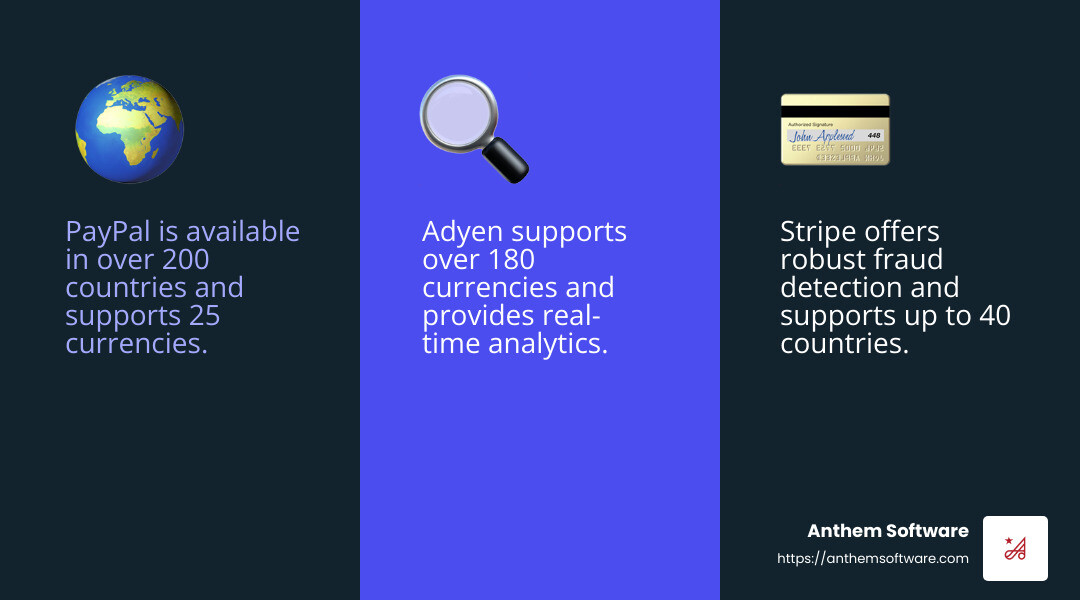
Stripe is known for its robust fraud detection and global reach. It supports a wide range of payment methods, including credit cards and digital wallets. Stripe’s API allows for extensive customization, which is great for tech-savvy businesses. Its ability to handle multicurrency transactions and its presence in over 40 countries make it a top choice for international businesses.
PayPal
PayPal is a household name in online payments, offering secure transactions and a feature called One Touch, which speeds up the checkout process. PayPal supports payments through credit cards, PayPal accounts, Venmo, and even cryptocurrencies. Its availability in over 200 countries and support for 25 currencies make it a versatile option for businesses looking to expand internationally.
Square
Square is perfect for small to mid-sized businesses, especially if you need to handle both online and in-person sales. It offers inventory management and supports mobile payments, making it ideal for retailers on the go. With Square, you only pay for what you earn, and its real-time sales reporting helps keep track of your business performance.
Adyen
Adyen focuses on providing a seamless payment experience, particularly for mobile transactions. It supports over 180 currencies and nearly 100 countries, making it a strong choice for enterprise-level businesses. Adyen’s real-time analytics offer valuable insights into consumer behavior, while its dynamic card validation improves transaction security.
Braintree
Braintree, a PayPal service, excels in supporting recurring billing and easy integration with PayPal. It’s designed for businesses that need to manage subscriptions or offer installment payments. Braintree also supports a variety of payment methods, including credit cards and digital wallets, making it a flexible solution for diverse customer preferences.
Each of these solutions offers unique features and benefits. Consider your business model, target audience, and growth plans when choosing the best fit for your ecommerce store. Next, let’s explore the key features to consider when evaluating ecommerce payment processing solutions.
Key Features to Consider in Ecommerce Payment Processing Solutions
When choosing ecommerce payment processing solutions, it’s crucial to look at specific features that ensure security, flexibility, and compatibility with your business needs. Here’s what to focus on:
Security and Compliance
Security is a top priority. Your customers need to feel safe when entering their payment information. Start with an SSL certificate. This encrypts data between your website and the browser, keeping sensitive information protected.
Next, ensure your payment processor is PCI compliant. PCI compliance is a set of standards that safeguard credit card transactions. Non-compliance can lead to hefty fines and loss of customer trust. Most top payment processors, like Stripe and PayPal, are PCI compliant, providing an extra layer of security.
Tokenization is another security feature to consider. It replaces sensitive credit card information with a token, reducing the risk of data breaches. This is especially important if you allow customers to save their payment details for future use.
Payment Methods and Flexibility
Offering a variety of payment methods can improve customer satisfaction and increase sales. In addition to credit and debit cards, consider accepting digital wallets like Apple Pay and Google Pay. These options are fast and secure, appealing to tech-savvy customers.
The rise of “Buy Now, Pay Later” (BNPL) services, like Afterpay, is also significant. BNPL gives customers flexibility, allowing them to split purchases into smaller, manageable payments. This can boost conversions, especially for higher-ticket items.
Integration and Compatibility
Your payment processor should integrate seamlessly with your existing systems. Look for solutions compatible with popular ecommerce platforms like Shopify, BigCommerce, or WooCommerce. This ensures smooth operations and less technical hassle.
Additionally, consider compatibility with third-party apps that improve functionality, such as accounting software or CRM systems. For example, Square offers built-in inventory management, which is beneficial for retailers.
When evaluating ecommerce payment processing solutions, keep these key features in mind. Security, flexibility, and integration can make a significant difference in your business’s success. Next, let’s address some common questions about ecommerce payment processing solutions.
Frequently Asked Questions about Ecommerce Payment Processing Solutions
What are the best payment processors for ecommerce?
When it comes to ecommerce payment processing solutions, three names often stand out: Shopify Payments, Stripe, and PayPal.
Shopify Payments is perfect for businesses using the Shopify platform. It offers a seamless setup with no third-party accounts needed, and it supports multiple currencies, making international transactions a breeze. Plus, it includes a built-in fraud analysis feature.
Stripe is known for its robust fraud detection and global reach. It supports a wide variety of payment methods, including credit cards, digital wallets, and even cryptocurrencies. Stripe’s versatility makes it ideal for businesses looking to operate internationally.
PayPal is a household name, offering features like One Touch for quick payments and support for cryptocurrencies. It’s a trusted option for both consumers and merchants worldwide, ensuring secure transactions with minimal hassle.
How do I choose the right payment processor?
Selecting the right processor depends on several factors:
Security Features: Ensure that the processor offers top-notch security, including PCI compliance and tokenization. This will protect your customers’ data and build trust.
Costs and Fees: Be aware of all the fees involved, such as transaction fees, currency conversion fees, and any monthly charges. Some processors, like PayPal, offer transparent pricing, while others might have hidden costs.
International Support: If you plan to sell globally, choose a processor that supports multiple currencies and international payments without excessive fees. Stripe, for instance, is known for its international capabilities.
What is the difference between a payment gateway and a payment processor?
Understanding the roles of a payment gateway and a payment processor is crucial for smooth transactions:
Payment Gateway: Think of it as a bridge between your ecommerce site and the payment processor. It securely transmits transaction data and authorizes payments. Gateways like PayPal and Stripe offer robust security and fraud prevention features.
Payment Processor: This is the financial service that handles the transaction. It communicates between the customer’s bank and your merchant account, ensuring funds are transferred after authorization. The processor also handles the settlement, where funds are deposited into your account.
In summary, while the payment gateway facilitates the transaction, the payment processor completes it. Together, they ensure a seamless and secure payment experience for both you and your customers.
Conclusion
Navigating ecommerce payment processing solutions can feel overwhelming, but the right choices can significantly impact your business’s growth and customer satisfaction. At Anthem Software, we understand the importance of a seamless payment experience in driving ecommerce success.
The ecommerce landscape is rapidly evolving, with online shopping becoming a key economic driver. From January to April 2024, online shoppers spent a staggering $331.6 billion, showcasing a 7% increase from the previous year. This growth is a golden opportunity for businesses to expand their reach and boost profits.
However, with growth comes the challenge of managing costs, especially in payment processing. In 2023, merchants paid $100 billion in processing fees, underscoring the need for cost-effective solutions. By offering diverse payment options such as Buy Now, Pay Later and pay by bank, businesses can reduce fees and improve conversion rates.
Customer experience is at the heart of successful ecommerce. Research indicates that 59% of consumers will abandon their cart if their preferred payment method isn’t available. By integrating multiple payment gateways like Shopify Payments, Stripe, and PayPal, businesses can cater to various customer preferences, enhancing satisfaction and loyalty.
Security is another critical factor. Ensuring compliance with PCI standards and utilizing encryption and tokenization can safeguard customer data and build trust. Anthem Software is committed to providing secure and efficient solutions that help businesses thrive in the competitive ecommerce market.
In conclusion, choosing the right payment processing solutions can propel your ecommerce business to new heights. By focusing on customer experience, security, and cost management, you can create a seamless shopping journey that keeps customers coming back. For more on how Anthem Software can support your ecommerce payment needs, visit our payment processing page.