

Do small businesses need CRM software? Absolutely—it is a vital tool for streamlining operations, enhancing customer relationships, and driving business growth. Here’s why:
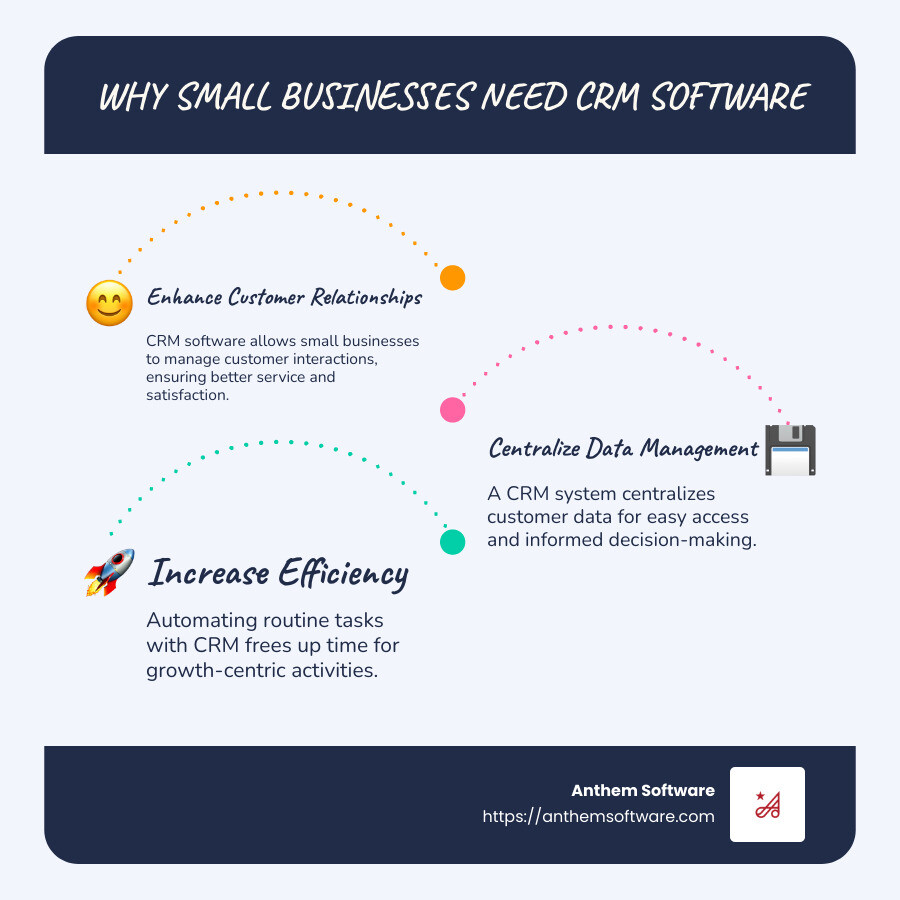
Improve Customer Relationships: CRM software helps small businesses manage and nurture customer interactions, facilitating better service and satisfaction.
Centralize Data Management: A CRM system centralizes customer data, ensuring easy access and up-to-date records, leading to informed decision-making.
Increase Efficiency: Automating routine tasks with CRM software allows small businesses to focus on growth-centric activities.
Small businesses thrive on strong connections with their customers. With a CRM, those relationships can be cultivated carefully, maintaining a robust line of communication and coordinated data management. By consolidating customer information in one place, CRMs make it effortless for small businesses to access the insights needed for delivering personalized experiences. This consolidated approach not only boosts customer satisfaction but also streamlines workflows, freeing up time for business owners to focus on strategic growth.
My name is Joe Amaral. With a rich background in sales, management, and digital marketing, I’ve witnessed how impactful CRM tools are for streamlining business processes. Understanding the intricacies of do small businesses need CRM software is not just part of my expertise, but a passion that drives my continuous exploration of efficient marketing solutions.
Basic do small businesses need crm software glossary:
– best crm software for small businesses
– crm management
Do Small Businesses Need CRM Software?
Yes, they do! CRM software is not just for big companies. It’s a game-changer for small businesses too. Here’s how:
CRM Benefits
Customer Relationships: At the core of any business are its customers. A CRM helps nurture these relationships by keeping track of every interaction. This means you can provide personalized service, which is key to customer satisfaction and loyalty.
Time-Saving Automation: Mundane tasks like data entry and follow-up reminders can eat up valuable time. A CRM automates these processes, freeing you to focus on what really matters—growing your business.
Sales Goals
Boost Sales Performance: With a CRM, you can track sales leads and monitor the sales pipeline. This visibility helps you identify opportunities and blockages in real-time, making it easier to hit your sales targets.
Predictive Insights: CRM tools often come with analytics that help forecast sales trends. This means you can make informed decisions and adjust your strategies proactively.
Customer Data
Centralized Information: All your customer data is stored in one place. This means no more digging through emails or spreadsheets to find information. Everything you need is at your fingertips.
Data-Driven Decisions: Access to organized data allows you to analyze customer behaviors and preferences. This insight helps tailor your marketing efforts and improve customer experiences.
Real-World Impact
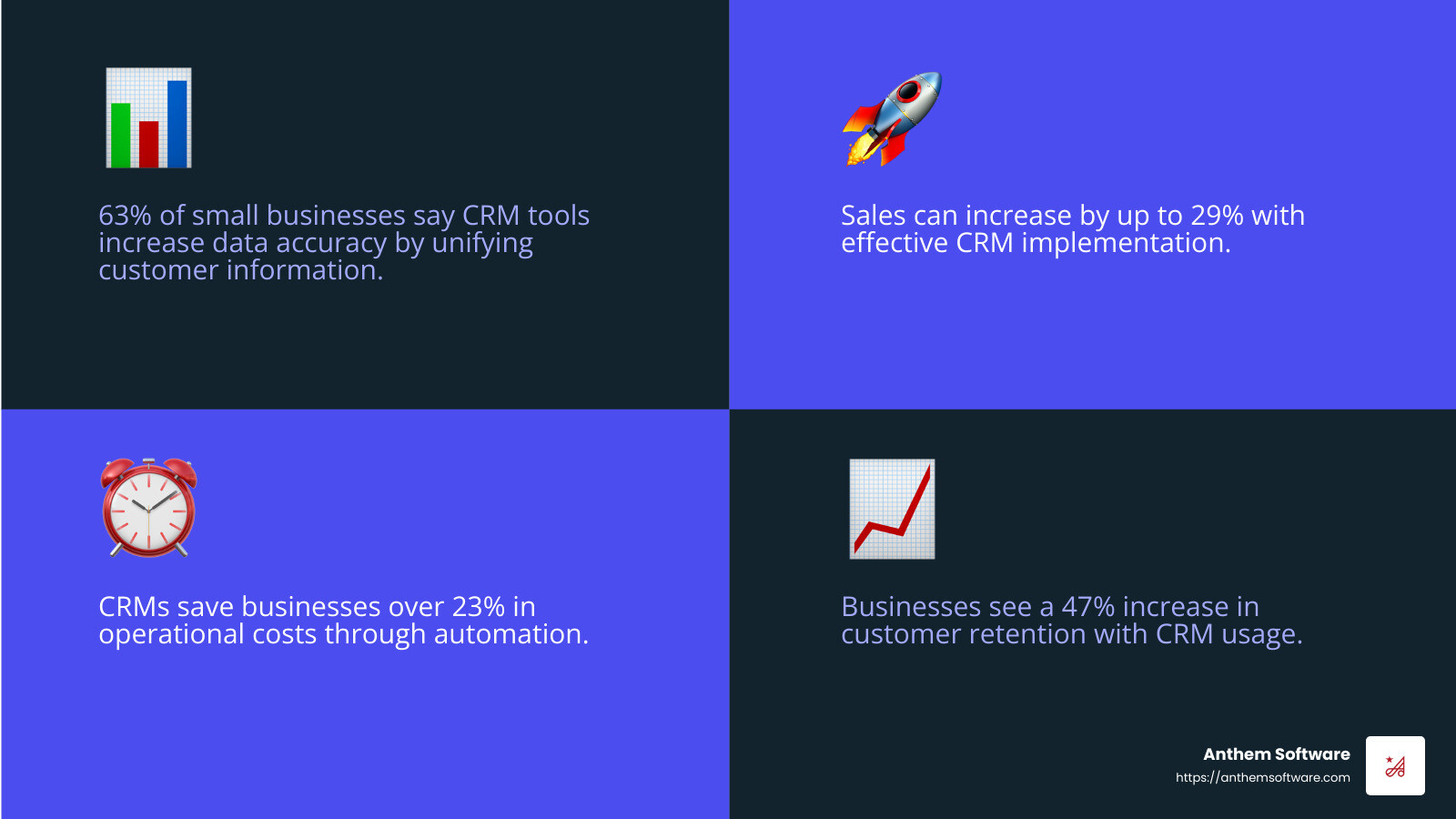
Consider the story of a small eCommerce business that adopted CRM software. Before CRM, they struggled with managing customer inquiries and tracking sales. After implementation, they saw a 34% increase in sales productivity and a 29% boost in revenue, according to HubSpot. These figures highlight the transformative power of CRM tools in achieving ambitious sales goals.
In short, do small businesses need CRM software? Absolutely. It’s a vital tool for organizing customer data, automating tasks, and achieving sales targets. With CRM, small businesses can compete with larger companies by delivering personalized experiences and making informed decisions based on real-time data.
Key Benefits of CRM for Small Businesses
Implementing a CRM system can be a game-changer for small businesses. From enhancing customer service to boosting sales, the benefits are substantial.
Improved Customer Service
A CRM system centralizes customer data, making it easy for your team to access information quickly. This means when a customer calls, you can address their needs without asking them to repeat their story. Imagine the relief on your customer’s face when they realize you remember them and understand their needs. This level of service fosters loyalty and trust.
Sales Increase
CRM software helps track every step of the sales process. With clear visibility into the sales pipeline, you can manage leads more efficiently and close deals faster. For instance, companies using CRM software have reported a 29% increase in revenue, as noted by TechRadar. This is because CRMs streamline the process, allowing sales teams to focus on converting leads into customers.
Data Analysis
With all your customer interactions logged in one place, CRMs make it easy to analyze data. This analysis can reveal patterns in customer behavior, preferences, and buying habits. By understanding these insights, you can tailor your marketing strategies to meet customer needs more effectively. Analytical CRMs even offer predictive modeling, helping you forecast future trends and opportunities.
Efficiency
Automating routine tasks like sending follow-up emails and updating customer records saves time and reduces errors. This efficiency allows your team to focus on more strategic activities. According to Anthem Software, this kind of automation not only boosts productivity but also improves workflow across various departments.
Customer Retention
Satisfied customers are more likely to return. A CRM system helps maintain these relationships by ensuring consistent and personalized communication. By keeping track of customer interactions, you can anticipate their needs and surprise them with excellent service. This leads to higher customer retention rates, which can increase profits by 25% to 85%, according to research mentioned by TechRadar.
In conclusion, the benefits of CRM for small businesses are clear. From improving customer service to driving sales and efficiency, a CRM system is an indispensable tool for growth and success.
5 Signs Your Small Business Needs CRM Software
Wondering if your small business should invest in a CRM system? Let’s explore five clear signs that it’s time to make the leap.
1. Struggling with Lead Management
If managing leads feels like juggling too many balls, a CRM can help. These systems streamline lead management by organizing potential customers and tracking their interactions with your business. This means no more lost opportunities or forgotten follow-ups. Instead, you’ll have a clear view of where each lead stands in your sales pipeline, allowing you to nurture them more effectively.
2. Inconsistent Customer Service
Good customer service is crucial, but maintaining consistency can be challenging without a CRM. With all customer data centralized, your team can provide personalized service every time. This means no more asking clients to repeat themselves. Instead, you’ll have access to past interactions and preferences, allowing you to address issues swiftly and build stronger relationships.
3. Lack of Data Analysis
Data is powerful, but only if you can use it to your advantage. CRMs offer robust data analysis capabilities, helping you uncover patterns in customer behavior. This insight allows you to tailor your marketing and sales strategies effectively. For instance, you can identify which campaigns resonate most with your audience and adjust your tactics accordingly.
4. Inadequate Sales Reporting
Tracking sales performance is essential for growth, but manual reporting can be time-consuming and error-prone. CRMs automate sales reporting, providing you with real-time insights into your sales activities. You can easily monitor performance, identify bottlenecks, and make informed decisions to boost your sales outcomes.
5. Ineffective Marketing Campaigns
If your marketing efforts aren’t yielding the desired results, a CRM can change the game. By analyzing customer data, you can segment your audience based on behavior and preferences. This allows for more targeted and effective marketing campaigns, increasing your chances of conversion. Plus, automation features help manage and track these campaigns, ensuring nothing falls through the cracks.
Incorporating a CRM system can address these challenges, making your business more efficient and customer-focused. If you recognize any of these signs, it might be time to explore CRM options to improve your operations.
How to Choose the Right CRM for Your Small Business
Selecting the right CRM for your small business can feel overwhelming, but it doesn’t have to be. Focus on a few key aspects to ensure you pick a CRM that fits your needs perfectly.
CRM Selection
First things first, identify what you need from a CRM. Do you want to improve customer service, streamline sales, or improve data analysis? Make a list of your priorities.
For example, if lead generation is crucial, look for CRMs with robust lead management features. According to TechRadar, small businesses should assess their needs to determine must-have features. This way, you won’t pay for unnecessary functionalities.
Integration
Your CRM should integrate seamlessly with the tools you already use. This could be your email marketing service, e-commerce platform, or any other software critical to your operations.
Integration ensures a smooth workflow and eliminates the need for manual data entry. For instance, when a new contact signs up on your website, they should automatically appear in your CRM. The ability to connect with third-party apps can save you time and simplify processes.
Customization
A one-size-fits-all CRM might not cater to your unique business needs. Look for a CRM that offers customization. This means you can tailor the system to emphasize features that matter most to your business while keeping the interface simple.
Joshua Feinberg from SP Home Run Inc. emphasizes the importance of a customizable CRM, stating, “Every business is different, and using a CRM that is built around the organization ensures maximum efficiency.”
Mobile-Friendly
In today’s world, having a mobile-friendly CRM is crucial. You want to access your CRM on the go, whether you’re commuting, at a meeting, or working from home.
A mobile app should be as comprehensive and easy to use as its desktop counterpart. Push notifications for important updates can keep you informed, but there should also be an option to turn them off when you need a break.
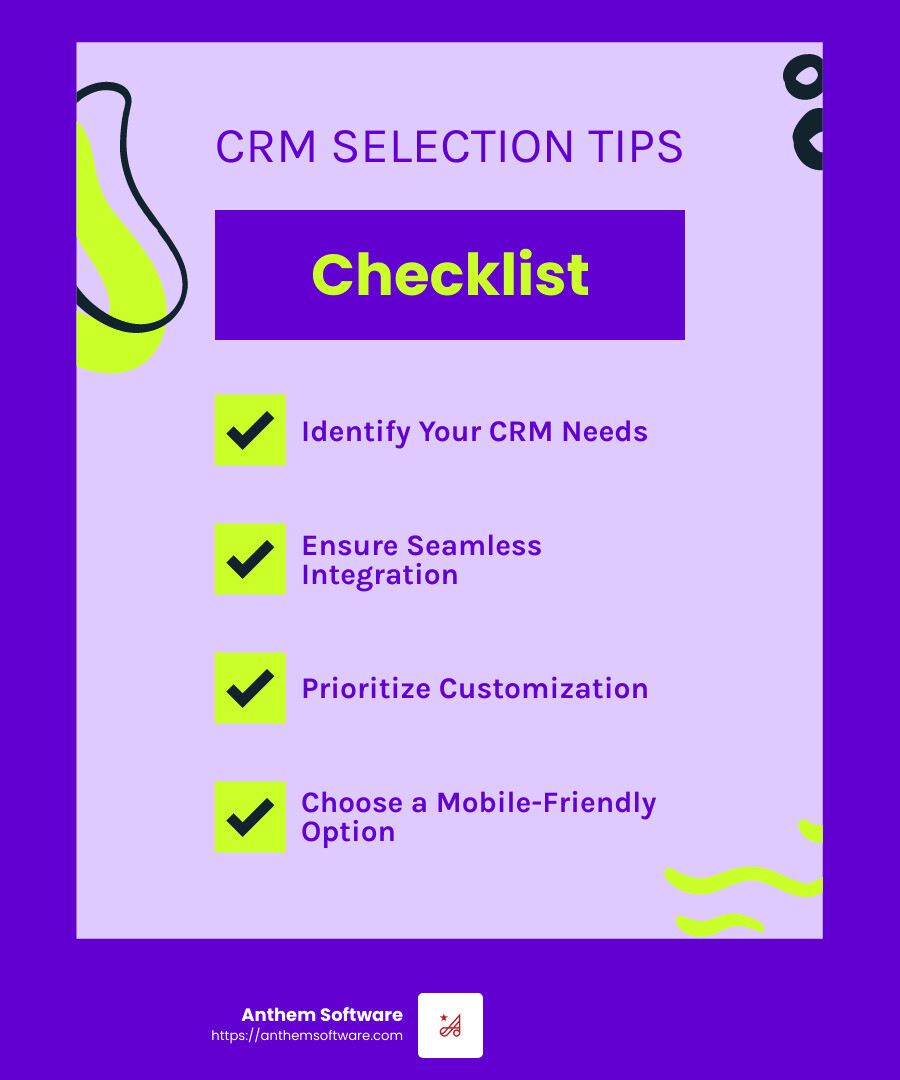
Choosing a CRM with these features will ensure it grows with your business. It will become an indispensable tool in managing customer relationships and driving sales. Now that you know what to look for, it’s time to dive deeper into the options available to find the perfect fit for your small business.
Frequently Asked Questions about CRM Software
Do small businesses need CRM software?
Absolutely! Do small businesses need CRM software? Yes, they do. As a small business grows, so does its customer base. Managing customer interactions manually can quickly become overwhelming. CRM software helps streamline these interactions, ensuring no customer is overlooked.
Small businesses often face resource constraints. A CRM system can automate routine tasks, freeing up time for more strategic activities. According to HubSpot, CRM technologies can boost revenue by 29% and sales productivity by 34%. This is a game-changer for small businesses aiming to maximize their limited resources.
What are the common features of CRM systems?
CRM systems come packed with features that simplify business operations. One key feature is data storage. CRMs store customer details, interaction history, and preferences in one place. This ensures easy access to information, improving customer service efficiency.
Analytics is another powerful feature. CRMs analyze customer data to identify patterns and trends. This insight helps businesses make informed decisions, tailor marketing campaigns, and improve sales strategies. For example, Anthem Software highlights how CRM analytics can improve customer targeting and increase conversion rates.
Automation is a significant time-saver. CRMs automate tasks like sending follow-up emails, scheduling meetings, and updating records. This reduces manual work and minimizes errors, allowing businesses to focus on growth.
How does CRM software improve customer service?
CRM software improves customer service by providing a 360-degree view of customer interactions. With all customer data at their fingertips, service teams can respond quickly and accurately to inquiries. This level of service builds trust and fosters long-term relationships.
Efficient communication is crucial. CRMs streamline communication by integrating with email, phone, and social media platforms. This ensures consistent messaging and timely responses. According to TechRadar, a CRM can track customer interactions and set reminders for follow-ups, ensuring no customer is left waiting.
Moreover, CRMs help personalize customer experiences. By tracking preferences and purchase history, businesses can tailor their offerings to meet individual needs. This personalized approach not only improves customer satisfaction but also boosts retention rates.
In summary, CRM software is a vital tool for small businesses looking to improve customer interactions, streamline operations, and drive growth. Whether you’re storing customer data, analyzing trends, or improving communication, a CRM can make all the difference.
Conclusion
Implementing CRM software is a strategic move for small businesses aiming to grow. With CRM, you can streamline operations, improve customer relationships, and drive business growth.
Why choose CRM? Small businesses often juggle many tasks with limited resources. CRM systems automate routine tasks, freeing up time for strategic activities. They also provide valuable insights into customer behavior, helping businesses make informed decisions.
Anthem Software specializes in CRM solutions custom for small businesses. Our expertise in digital marketing and CRM implementation ensures that your business can effectively manage customer interactions and boost sales. We believe that with the right CRM, even the smallest business can achieve big goals.
Our CRM tools integrate seamlessly with your existing systems, making it easy to manage contacts, track sales, and automate marketing efforts. Whether you’re just starting or looking to upgrade your existing system, Anthem Software can help you find the right CRM solution.
By choosing Anthem Software, you’re not just getting a tool—you’re gaining a partner committed to your business growth. Our solutions are designed to adapt as your business evolves, ensuring that your CRM continues to meet your needs.
Ready to take your business to the next level? Explore our CRM offerings and see how we can help you achieve your business goals. Learn more about our small business CRM solutions.
In conclusion, CRM software is not just a luxury; it’s a necessity for small businesses striving to thrive in a competitive market. With the right CRM, you can build better customer relationships, streamline operations, and drive growth. Let’s make your business dreams a reality with Anthem Software.