

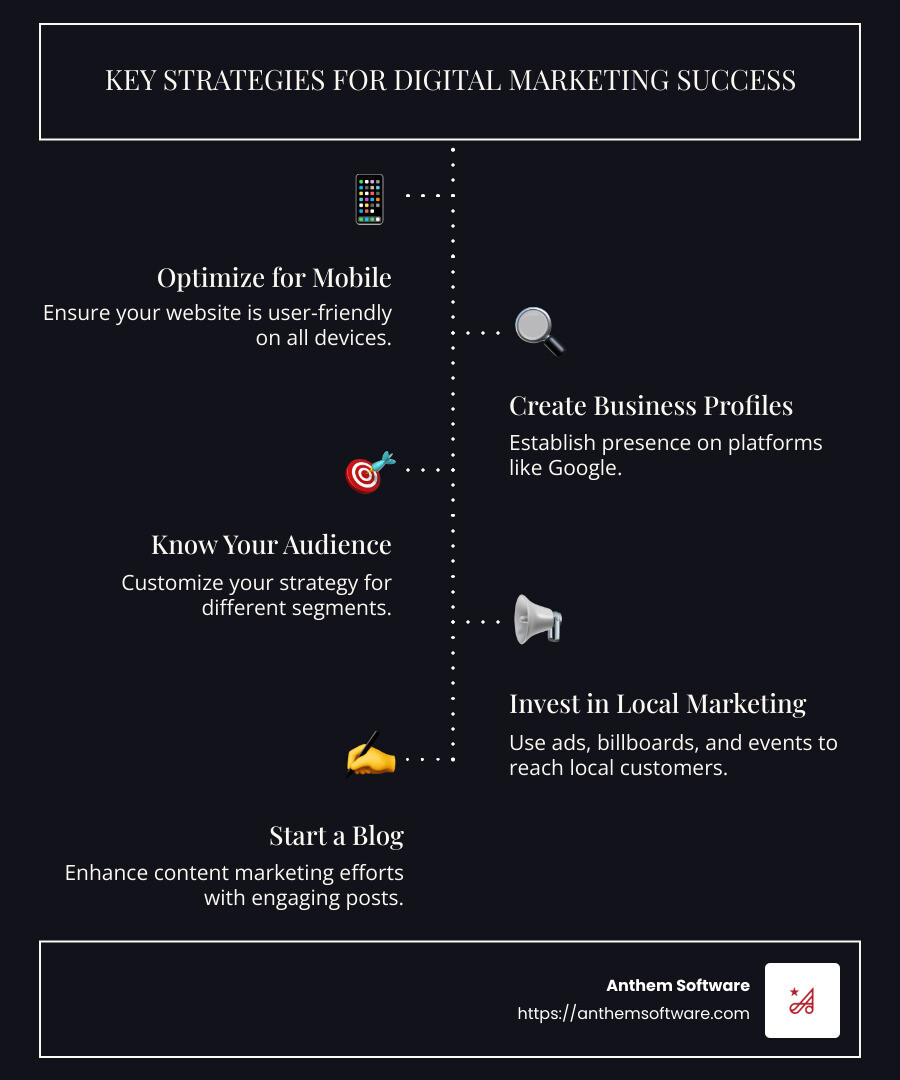
Digital marketing for small businesses is a powerful way to grow your brand and reach new customers. Having a strong online presence isn’t just an option—it’s essential. Here are some key pointers to kickstart your journey:
- Optimize your website for mobile: Ensure it’s user-friendly on all devices.
- Create business profiles on popular search platforms like Google.
- Know your audience: Customize your marketing strategy to fit different customer segments.
- Invest in local marketing: Use ads, billboards, and community events to connect with local customers.
- Start a blog to improve your content marketing efforts.
Digital marketing gives small businesses the flexibility to reach beyond geographical limitations. It offers cost-effective solutions and improves customer relationships by providing engaging content.
I’m Joe Amaral. With a background in sales and a passion for creativity, I transitioned into digital marketing and founded multiple businesses to help companies, including small ones, succeed online. My experience in digital marketing for small businesses has shown me the changeal power of the right strategies. Let’s dive deeper into the journey of building your online presence.
Understanding Digital Marketing for Small Businesses
Digital marketing for small businesses is like a toolkit, filled with strategies to boost your brand’s visibility online. Let’s break down three essential components: SEO, social media, and email marketing.
SEO: Your Digital Lighthouse
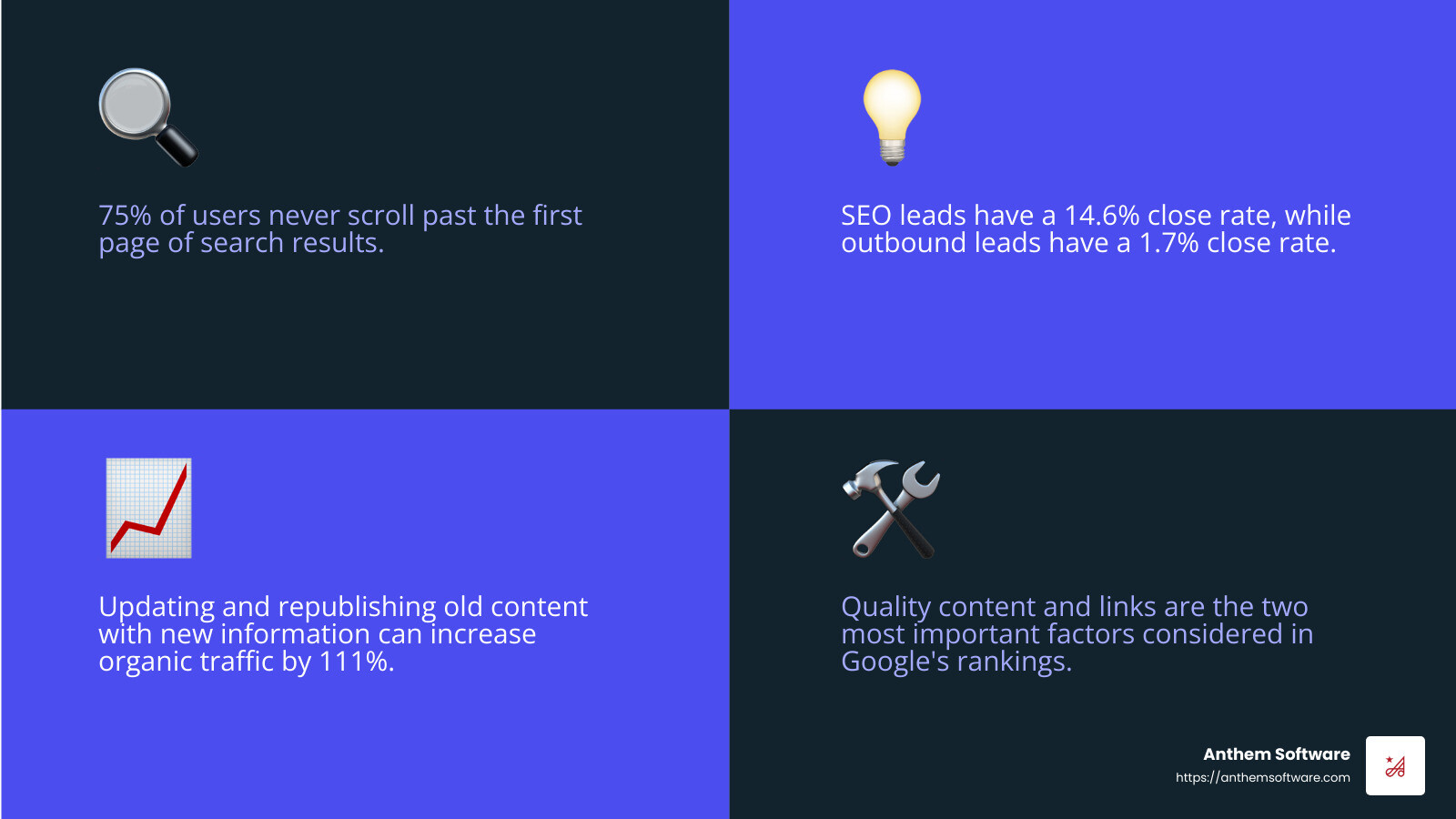
Think of Search Engine Optimization (SEO) as the guide that guides customers to your website. It’s all about making your site visible on search engines like Google. Here’s how you can shine brighter:
Keyword Research: Use tools like KW Finder to find the words your potential customers use. These keywords should be sprinkled naturally throughout your content.
On-Page SEO: Optimize your titles, headers, and meta descriptions with those keywords. Make sure your website is easy to steer.
Content Quality: Create high-quality content that answers your audience’s questions and solves their problems. This builds trust and authority in your field.
Social Media: Where Conversations Happen
Social media platforms are where your customers hang out. They offer incredible opportunities to engage with your audience and showcase your brand’s personality.
Choose the Right Platform: Focus on platforms where your audience spends the most time. If you’re a visual brand, Instagram or TikTok might be your go-to.
Engage Regularly: Respond to comments, share user-generated content, and start conversations. Building relationships is key.
Consistency is Key: Use a content calendar to plan and schedule your posts. Consistency helps maintain engagement and keeps your brand top-of-mind.
Email Marketing: Your Direct Line
Email marketing is a direct way to reach your customers and keep them in the loop. It’s cost-effective and personal.
Build a Quality List: Focus on growing an email list of interested subscribers. Offer value, like a free guide or discount, to encourage sign-ups.
Craft Compelling Content: Your emails should provide value, whether it’s through informative content, special offers, or updates.
Automate and Personalize: Use marketing automation tools to send personalized emails at the right time. This saves you time and boosts engagement.
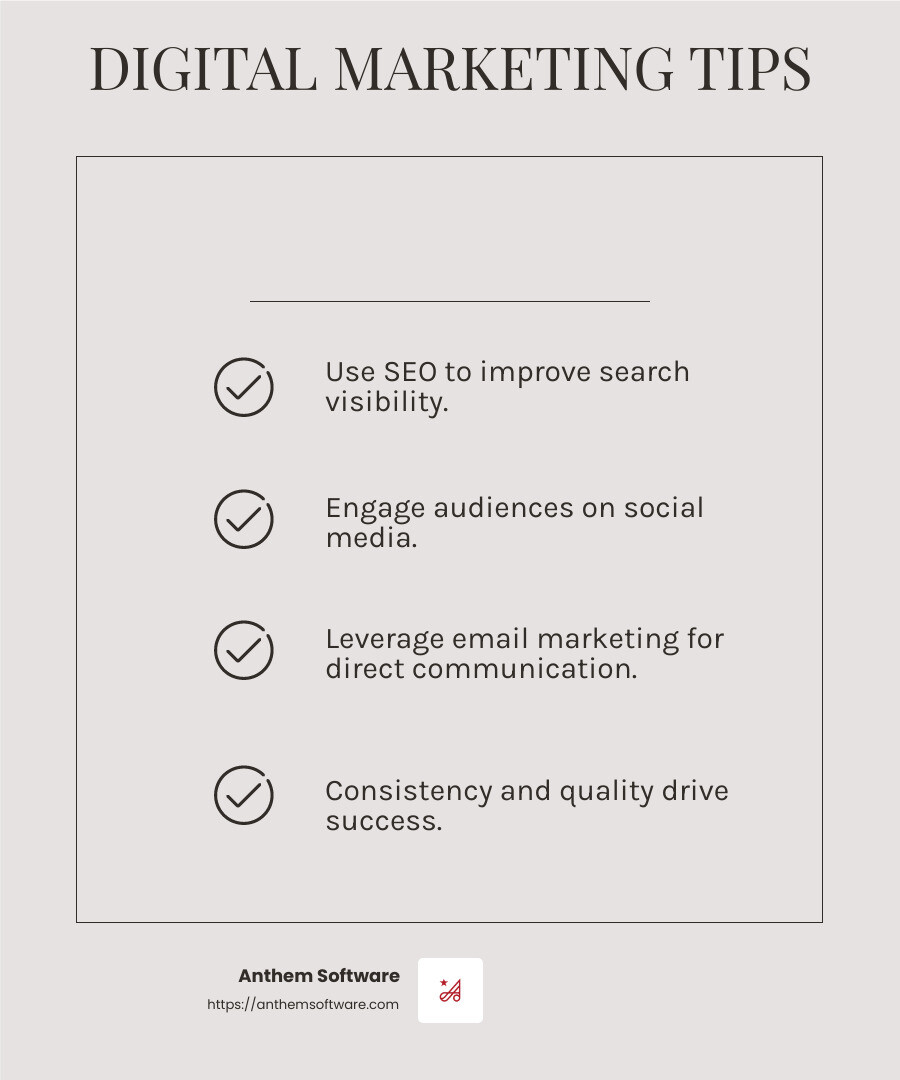
By understanding and implementing these digital marketing strategies, small businesses can create a strong online presence, engage with their audience, and drive growth. We’ll explore the key strategies for success in digital marketing.
Key Strategies for Success
Content Creation: Your Brand’s Voice
Creating content is like giving your brand a voice. It’s how you tell your story, share your expertise, and connect with your audience. Here’s how to do it effectively:
Know Your Audience: Before you start creating, understand who you’re talking to. Research their interests, pain points, and what they value. This will guide your content topics and tone.
Diverse Content Types: Mix it up with blog posts, videos, infographics, and e-books. Each format can reach different segments of your audience and keep things interesting.
Consistency and Quality: Publish regularly to stay relevant. Make sure your content is well-researched, clear, and valuable. Quality content builds trust and authority.
Audience Engagement: Building Relationships
Engaging with your audience is about more than just likes and shares. It’s about building relationships and fostering a community around your brand.
Be Responsive: Answer questions, reply to comments, and acknowledge feedback. This shows your audience that you care and are attentive to their needs.
Create Interactive Content: Polls, quizzes, and live Q&A sessions can boost engagement. They invite your audience to participate and interact with your brand.
Leverage User-Generated Content: Encourage your customers to share their experiences with your products or services. This not only provides social proof but also deepens their connection with your brand.
Cost-Effective Strategies: Getting the Most Bang for Your Buck
For small businesses, budgets can be tight. But that doesn’t mean you can’t make a big impact with your digital marketing efforts.
Leverage Free Tools: Use free tools like Google Analytics to track your website traffic and understand your audience’s behavior. This data is invaluable for making informed decisions.
Focus on Organic Growth: Prioritize strategies that drive organic traffic, like SEO and content marketing. They might take longer to show results, but they’re sustainable and cost-effective in the long run.
Use Social Media: Platforms like Instagram, Facebook, and LinkedIn offer free ways to reach and engage with your audience. Consistent posting and interaction can build a loyal following without breaking the bank.
By focusing on content creation, audience engagement, and cost-effective strategies, small businesses can maximize their digital marketing efforts without overspending. Next, we’ll dive into the essential digital marketing techniques that can lift your business from zero to hero.
6 Essential Digital Marketing Techniques
Flyers and Posters: Old School Meets New Opportunities
While digital marketing is all the rage, flyers and posters still have their place, especially for small businesses targeting local customers. Think of them as your offline digital ads.
Flyers: These are the carpet-bombing method of cheap advertising. Distribute them in areas where your target customers live or work. Keep them short and sweet, highlighting key services or promotions. Offering a discount or freebie can entice potential customers.
Posters: Use community boards in supermarkets, libraries, and cafes. Make them visually appealing with bold images and catchy phrases. Include tear-off tabs with your contact info or a special offer. Different colors for different locations can help track where your leads are coming from.
Referral Networks: Word of Mouth 2.0
Referrals are gold. They’re like a five-star review from a trusted friend. Building a referral network can significantly boost your credibility and reach.
Customer Referrals: Encourage current customers to refer friends and family. Offer incentives like discounts or freebies for successful referrals.
Business Partnerships: Partner with complementary businesses to cross-promote each other. For example, a coffee shop could partner with a local bakery to offer joint promotions.
Follow-Ups: The Art of Staying Top-of-Mind
Following up with customers is crucial. It shows you care and helps reinforce your brand.
Post-Purchase Follow-Ups: Send a thank-you email or message after a sale. Include a request for feedback or a review.
Periodic Check-Ins: Reach out to past customers with updates or exclusive offers. This keeps your business in their minds without being too pushy.
Cold Calls: A Direct Approach
Cold calls might seem old-fashioned, but they can still be effective if done right. It’s about making a personal connection.
Be Prepared: Know your script but be ready to adapt. Understand the needs of the person you’re calling.
Be Respectful: Respect their time. If they’re not interested, thank them and move on.
Online Advertising: Targeted and Trackable
Online advertising is where you can really shine. It’s targeted, trackable, and can be very cost-effective.
Social Media Ads: Platforms like Facebook and Instagram allow you to target specific demographics. Start small, test different ads, and see what resonates.
Search Engine Marketing (SEM): Use tools like Google Ads to appear in search results. Focus on keywords relevant to your business.
By combining these digital marketing techniques, small businesses can create a robust marketing strategy that reaches customers both online and offline. Next, we’ll explore how to measure the success of these efforts and ensure you’re getting a solid return on investment.
Measuring Success and ROI
Measuring the success of your digital marketing efforts is crucial for understanding what works and what needs tweaking. Let’s explore the tools and techniques that can help you track your progress and measure return on investment (ROI).
Google Analytics: Your Data Powerhouse
Google Analytics is a free tool that provides valuable insights into your website’s performance. It’s like having a magnifying glass for your online business.
Real-Time Data: See what’s happening on your site as it happens. This helps you understand how users interact with your content.
Audience Insights: Learn about your visitors—where they come from, what devices they use, and more. This information is vital for tailoring your marketing strategies.
Behavior Reports: Find which pages are popular and how visitors steer your site. This can help you improve user experience and keep visitors engaged longer.
Conversion Tracking: Know Your Success
Tracking conversions is about understanding how many visitors complete a desired action on your site, such as making a purchase or signing up for a newsletter.
Set Up Goals: Use Google Analytics to set up specific goals that align with your business objectives. This could be anything from form submissions to completed purchases.
Analyze Conversion Rates: Compare the number of conversions to your total website traffic. A high conversion rate indicates that your marketing efforts are resonating with your audience.
UTM Codes: Track Every Click
UTM codes are snippets of text added to URLs to help track the effectiveness of online campaigns. They are like breadcrumbs that show you where your traffic is coming from.
Granular Tracking: By using UTM codes in your links, you can see which campaigns drive the most traffic and conversions. This is especially useful for email marketing and social media.
Campaign Comparison: Evaluate the performance of different marketing channels by comparing UTM-tagged links. This helps you allocate your resources to the most effective strategies.
By leveraging tools like Google Analytics, conversion tracking, and UTM codes, you can gain a clear picture of your digital marketing success. These insights enable you to make data-driven decisions, ensuring your small business gets the most bang for its buck. Now, let’s dive into some frequently asked questions about digital marketing for small businesses.
Frequently Asked Questions about Digital Marketing for Small Businesses
Does digital marketing work for small business?
Absolutely! Digital marketing for small businesses is not just effective; it’s essential. Whether you’re a local café or an online boutique, reaching your target audience online can transform your business.
Content marketing plays a pivotal role here. By creating valuable and relevant content, you not only attract visitors but also establish your brand as a trusted authority. Think of blog posts, social media updates, and newsletters that speak directly to your audience’s needs and interests. As Joe Amaral, a digital marketing entrepreneur, notes, “Effective online marketing can transform a business.”
Knowing your target audience is the key. When you understand who your customers are, you can tailor your content and messages to resonate with them. This targeted approach ensures that your efforts are not wasted on the wrong crowd.
What is the 3-3-3 rule in marketing?
The 3-3-3 rule is a simple yet powerful guideline for crafting marketing messages. It emphasizes the importance of concise messaging and impactful headlines. Here’s how it breaks down:
3 Seconds: You have just 3 seconds to grab your audience’s attention. Use bold, compelling headlines that immediately convey the essence of your message.
3 Words: In those 3 seconds, aim to communicate your main idea in 3 words. Think “Fresh Coffee Daily” or “Sale Ends Soon.”
3 Ideas: Finally, focus on delivering 3 key ideas or benefits in your message. This keeps your content clear and memorable.
This rule helps ensure your marketing materials are both engaging and effective, making it easier for potential customers to understand and act on your message.
Can I do digital marketing for my own business?
Yes, you can! Many small business owners start by managing their own digital marketing. It’s a great way to learn the ropes and develop skills that are crucial for long-term success.
Skills development is essential. You don’t need to be an expert overnight, but learning the basics of SEO, social media, and email marketing can go a long way. There are plenty of online courses and resources available to help you get started.
Having a business plan is also crucial. Outline your marketing goals, target audience, and strategies. This plan will serve as your roadmap, helping you stay focused and organized.
While managing your own digital marketing can be challenging, it’s also rewarding. As you gain experience, you’ll become more confident in making decisions that drive your business forward. And remember, you can always seek help from digital marketing professionals or tools like WriterAccess to improve your efforts.
By understanding these aspects of digital marketing, small businesses can effectively reach their audience and grow their brand. Let’s now explore some more advanced digital marketing strategies.
Conclusion
As we wrap up our journey into digital marketing for small businesses, it’s clear that having a strategic approach is crucial for success. At Anthem Software, we specialize in B2B email marketing, helping small businesses connect with their professional stakeholders effectively.
Email marketing is a powerful tool for building relationships. Unlike other channels, it allows you to reach your audience directly and personally. With the right plan, you can nurture leads and turn them into loyal customers. Our expertise lies in crafting custom email marketing strategies that resonate with your audience and drive engagement.
Our global clientele is a testament to the effectiveness of our approach. From local startups to international enterprises, businesses around the world have leveraged our solutions to improve their outreach and grow their customer base. This global reach highlights our adaptability to different markets and customer needs.
Anthem Software provides a comprehensive suite of tools designed specifically for small businesses. Our platform simplifies the creation and management of email campaigns, ensuring they are both efficient and impactful. By automating 90% of daily business tasks, including email marketing, we enable entrepreneurs to focus on other critical aspects of their business.
In conclusion, integrating effective email marketing plans with robust tools like those offered by Anthem Software can transform the trajectory of your small business. By focusing on strategic email campaigns that engage and convert, small businesses can achieve substantial growth and establish themselves as leaders in their respective industries.
Ready to take your small business to the next level? Explore our best SEO methods and find how we can help you succeed in the digital landscape.