

Content strategy in digital marketing is like a map for your journey to success. It guides what content to create, how to share it, and how to engage your audience. Here’s a quick look at why it’s essential:
- Connect: Build trust and strengthen relationships with your audience.
- Position: Establish yourself as an expert in your field.
- Guide: Align your content with your business goals for significant impact.
A well-thought-out content strategy in digital marketing can transform your business by creating a narrative that resonates with your audience. Knowing what to say, when to say it, and on which platforms can make all the difference.
Hello! I’m Joe Amaral. With experience in digital marketing and founding successful ventures, I’ve learned that a solid content strategy in digital marketing is key to reaching your target audience and growing your business.
Learn more about content strategy in digital marketing:
– digital marketing content strategy
– content strategy for a website
– online content strategy
What is Content Strategy?
Core Elements of Content
A content strategy is your master plan for creating, managing, and distributing content. It’s about crafting a roadmap that aligns with your business goals and caters to your audience’s needs. Think of it as your guide to delivering valuable content that resonates with your audience.
Creating a Content Strategy
To build a content strategy, you start by understanding your audience’s needs. What information are they seeking? What problems do they need solving? By answering these questions, you can create content that is not just informative but genuinely helpful.
Managing and Distributing Content
Once you have your content, the next step is managing and distributing it effectively. This involves planning when and where to publish your content, ensuring it reaches the right people at the right time.
The Roadmap
Your content strategy should include a detailed roadmap. This roadmap outlines the steps needed to execute your content plan, from ideation to publication. It ensures that every piece of content serves a purpose and contributes to your overarching goals.
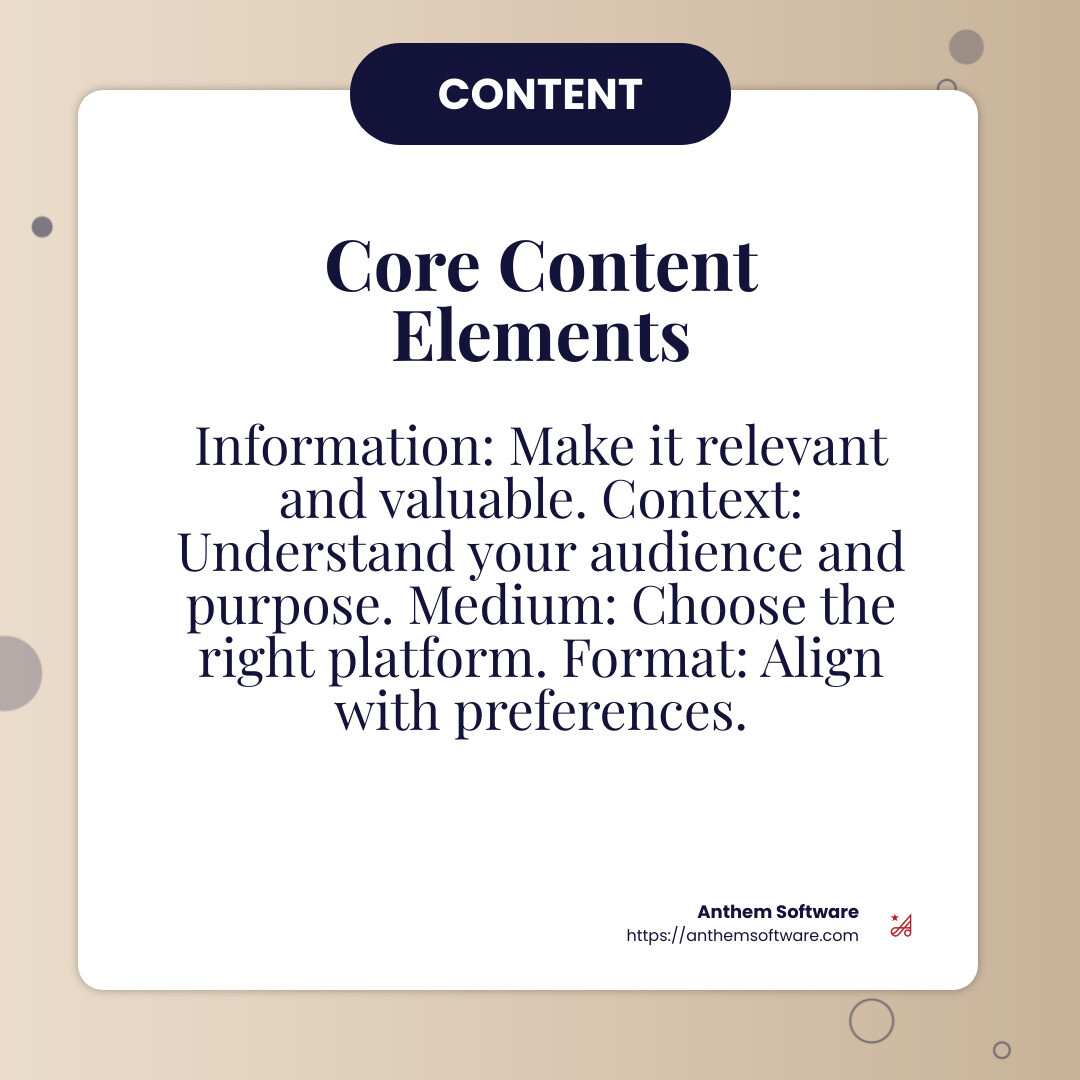
Core Elements: Information, Context, Medium, and Format
Content isn’t just about information; it’s about how that information is packaged and delivered. Here are the core elements to consider:
Information: This is the meat of your content. It can be factual, practical, or entertaining. The key is to make it relevant and valuable.
Context: Understand why you’re creating the content and who it’s for. Content without context is just noise.
Medium: Choose the right platform to publish your content. Whether it’s a blog post, a TikTok video, or an infographic, the medium can significantly influence how your message is received.
Format: This refers to the form your content takes. Is it a technical white paper, a newsletter, or a video? The format should align with your audience’s preferences and the medium you choose.
Examples of Content Formats
Let’s look at some examples of content formats you might use:
- Technical White Papers: Ideal for in-depth, technical information aimed at industry experts.
- Blog Posts: Great for sharing insights, tips, and updates with a broader audience.
- TikTok Videos: Perfect for engaging a younger audience with short, catchy content.
- Infographics: Use these to present complex data visually and make it more digestible.
- Newsletters: Keep your audience informed with regular updates straight to their inbox.
By considering these elements, you can craft a content strategy that not only informs but also engages and converts your audience. This approach ensures your content is not just seen but valued and acted upon.
Next, we’ll explore the importance of content strategy in digital marketing and how it can drive your business forward.
Importance of Content Strategy in Digital Marketing
Benefits of a Content Strategy
When it comes to digital marketing, a well-crafted content strategy is like a lighthouse guiding your business through the foggy seas of online competition. It ensures that your content aligns with both business goals and organizational objectives, making your marketing efforts more focused and effective.
Achieving Business Goals
A solid content strategy helps you achieve various business goals, from increasing brand awareness to boosting customer acquisition. By creating content that addresses the needs and interests of your target audience, you’re more likely to attract new customers and retain existing ones. This not only fills your sales funnel but also reduces customer churn, ensuring a steady flow of business.
Organizational Alignment
One of the major benefits of a content strategy is organizational alignment. It brings together different departments and ensures everyone is on the same page. Whether it’s the marketing team, the support team, or subject matter experts, everyone understands their role in the content creation process. This alignment is crucial for maintaining a consistent brand voice and message across all channels.
Resource Optimization
A strategic approach to content helps optimize resources. By clearly defining roles and responsibilities, you can avoid duplication of efforts and make the most out of your team’s skills. This is where service level agreements come into play, ensuring that everyone knows what’s expected of them and when. It also helps in getting buy-in from stakeholders, making it easier to secure the necessary resources for your content initiatives.
Support for SaaS Providers
For SaaS providers, a content strategy can be particularly beneficial. It helps in creating content that not only attracts potential customers but also educates them about the product. This educational content can be a valuable resource for the buying group, helping them make informed decisions and speeding up the sales process.
Building Brand Awareness
Creating valuable and relevant content consistently helps in building brand awareness. When your audience finds your content helpful, they’re more likely to remember your brand and turn to you when they’re ready to make a purchase. Over time, this builds trust and positions your brand as a thought leader in your industry.
In the next section, we’ll dig into the steps involved in creating a content strategy, including defining your goals and understanding your audience.
Steps to Create a Content Strategy
Creating a content strategy involves several key steps that ensure your content efforts are aligned with your business goals and audience needs. Let’s explore these steps to set your digital marketing on the path to success.
Define Your Goals
Start by setting SMART goals—specific, measurable, achievable, relevant, and time-bound. These goals will guide your content strategy and help you focus on what’s important. For instance, if your aim is to increase brand awareness, you might set a goal to boost website traffic by 20% in the next quarter.
Research Your Target Audience
Understanding your audience is crucial. Develop a buyer persona that includes demographics, psychographics, interests, values, and communication styles. This will help you create content that resonates with your audience. For example, if your audience values sustainability, focus on content that highlights eco-friendly practices.
Conduct a Content Audit
Evaluate your existing content to identify what’s working and where there are gaps. A content audit involves assessing content performance, conducting keyword research, and performing a competitor analysis. This will help you understand what topics need more coverage and how you can differentiate your content from competitors.
Choose Your Content Types
Decide on the types of content that will best engage your audience. Options include blog posts, social media posts, videos, podcasts, email newsletters, case studies, white papers, templates, and e-books. For example, if your audience prefers visual content, focus on creating engaging videos or infographics.
Develop a Content Plan
Create a content calendar to organize your content creation and publication schedule. This involves ideation, content governance, and production planning. Use an editorial calendar to ensure your content aligns with business milestones, such as product launches or seasonal promotions.
Measure Success
Finally, track the success of your content strategy using metrics and KPIs. Use analytics tools to monitor engagement, conversions, and other key performance indicators. Regularly gather feedback and refine your strategy based on these insights to ensure continuous improvement.
In the next section, we’ll explore how a well-crafted content strategy can be integrated into your digital marketing efforts, including SEO, social media, and email marketing.
Content Strategy in Digital Marketing
Creating a content strategy in digital marketing is like building a roadmap to success. It involves using various digital channels to reach, engage, and convert your audience. Let’s explore how SEO, social media, and email marketing play pivotal roles in this journey.
SEO Content Strategy
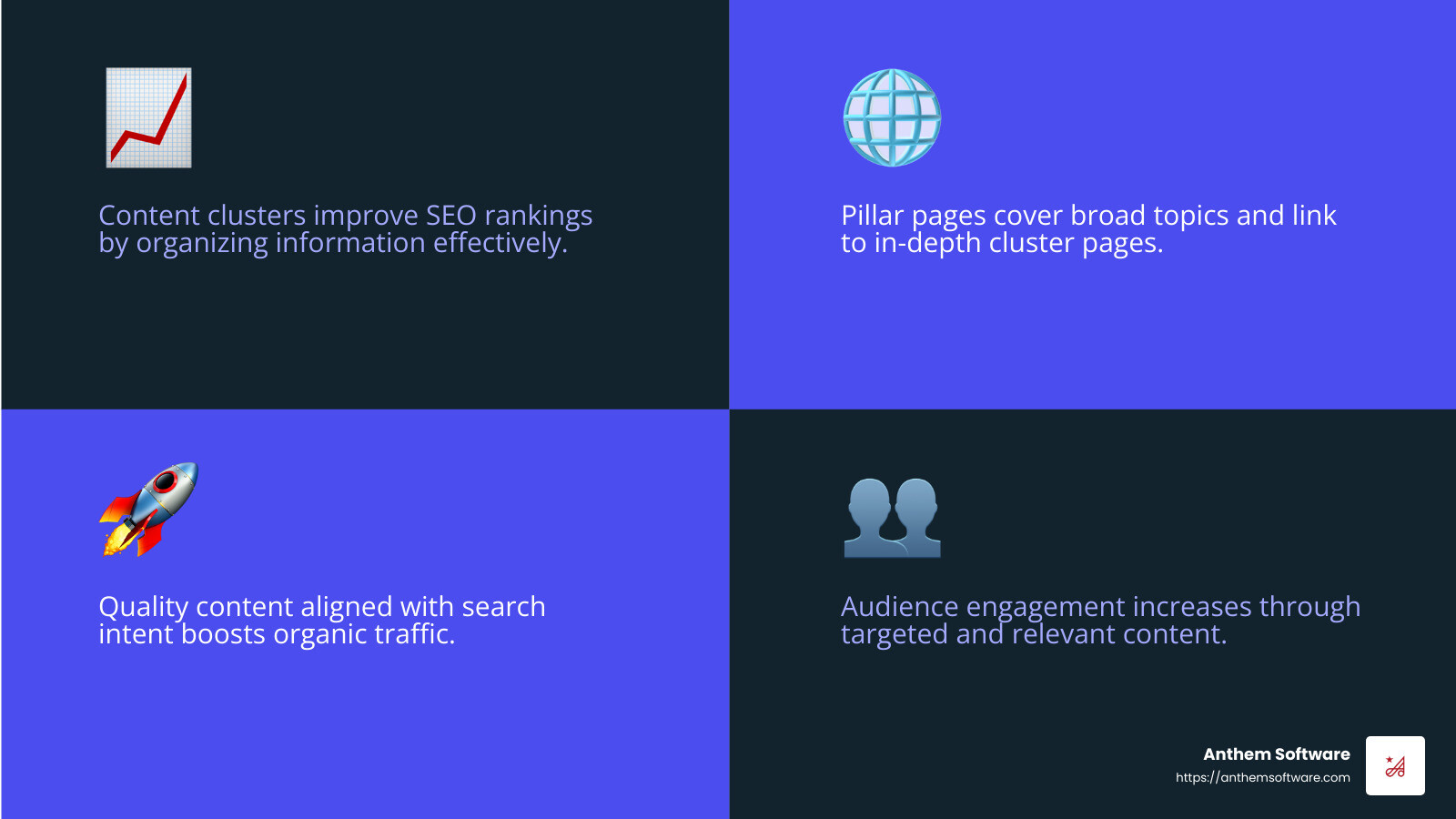
SEO (Search Engine Optimization) is all about attracting organic traffic to your website. This involves understanding search intentions and creating quality content that meets those needs. A key tactic is the use of content clusters—a strategy where you create a pillar page that covers a broad topic in depth and links to cluster pages that dive into subtopics. This approach not only boosts your search engine rankings but also improves user experience by providing comprehensive information.
For example, ISSA, a certification provider, successfully uses content clusters to address various questions their audience might have, resulting in steady SEO gains and organic traffic growth.
Social Media Content Strategy
Social media platforms are essential for brand growth and engagement. They offer a space to distribute content and create viral moments that can significantly boost brand visibility. Use hashtags to increase reach and engage with your audience in real-time.
A multichannel approach is crucial. Tailor your content for each platform to ensure relevance and engagement. For instance, a catchy infographic might perform well on Instagram, while an in-depth blog post could be more suitable for LinkedIn. This strategy ensures your content is seen and shared, reinforcing your brand message across platforms.
Email Marketing Strategy
Email marketing remains a powerful tool for nurturing leads and building customer relationships. Successful email campaigns often involve segmentation, personalization, and automation. By tailoring content to specific audience segments, you can deliver more relevant messages that resonate with your subscribers.
Anthem Software, for example, uses email marketing to engage and retain customers by providing personalized content that meets their needs. This approach not only improves customer satisfaction but also reduces customer acquisition costs.
As we dive deeper into content strategy in digital marketing, it’s clear that each channel has its unique strengths and requires a custom approach. In the next section, we’ll address frequently asked questions about content strategy, providing insights and actionable tips to optimize your digital marketing efforts.
Frequently Asked Questions about Content Strategy in Digital Marketing
What is content marketing strategy in digital marketing?
A content marketing strategy in digital marketing is about creating content that attracts, engages, and retains your audience. Think of it as a plan to build brand awareness through articles, videos, and podcasts.
Take Mailchimp, for example. They use content marketing to not only promote their services but also to educate their audience. By providing valuable content, they attract new users and keep existing ones engaged. This approach helps them build a community around their brand.
What is digital content strategy?
A digital content strategy involves creating, distributing, and managing content across various platforms to meet business goals. Vidico, a video production company, exemplifies this by crafting engaging video content that aligns with audience interests and business objectives.
Key components include audience analysis, content audits, and promotion tactics. By understanding your audience’s needs and preferences, you can tailor your content to maximize impact. This strategy ensures your content reaches the right people, at the right time, through the right channels.
What are the 7 steps in creating a content strategy?
Creating a content strategy can be broken down into seven key steps, as highlighted by HawkSEM:
- Define Your KPIs: Establish clear, measurable goals to track your success.
- Understand Your Audience: Conduct research to identify your audience’s needs and preferences.
- Content Creation: Develop engaging and relevant content that resonates with your audience.
- Content Distribution: Choose the right platforms to share your content and reach your target audience.
- Publish & Promote: Launch your content and use promotion tactics to increase visibility.
- Track Results: Monitor the performance of your content using analytics tools.
- Content Audits: Regularly review and refine your content to ensure it meets your goals and audience needs.
These steps help ensure your content strategy is effective and aligned with your business objectives. By following this roadmap, you can create epic content that not only attracts but also retains your audience.
In the next section, we’ll dig into more specific strategies and tools that can improve your digital marketing efforts.
Conclusion
As we wrap up our exploration of content strategy in digital marketing, it’s clear that a well-crafted plan is essential for success in today’s digital landscape. At Anthem Software, we specialize in helping small businesses harness the power of B2B email marketing to effectively reach professional stakeholders. Our expertise in creating strategic email marketing plans ensures that your message not only reaches your audience but also resonates with them.
In the changing world of digital marketing, having a robust content strategy is more important than ever. Our global clients have seen the benefits of a targeted approach to content marketing. By understanding their audience’s needs and preferences, we’ve helped them build lasting relationships and drive growth.
Whether you’re aiming to increase brand awareness, acquire new customers, or retain existing ones, a well-defined content strategy is your roadmap to success. By incorporating elements like SEO, social media, and email marketing, you can create a cohesive strategy that maximizes your reach and impact.
At Anthem Software, we’re committed to helping small businesses thrive in a competitive digital landscape. If you’re ready to take your content strategy to the next level, learn more about our content marketing services.
Together, we can create content that not only informs but also inspires, connecting you with your audience in meaningful ways. Let’s make your business sing!