

When it comes to client relationship management, the goal is to streamline how businesses interact with clients, keeping relationships strong and enduring. A robust CRM system is essential for several reasons:
- Improves Client Retention: Good client management ensures existing clients stick around.
- Boosts Business Growth: Happy clients mean more referrals and new opportunities.
- Improves Customer Experience: Clients value seamless interactions and feel valued.
In a rapidly evolving business landscape, client relationship management isn’t just a convenience—it’s a necessity. As Michael Levin aptly put it, “Client management isn’t an option. It’s a necessity.” Businesses that excel in this area are not only more competitive but also more likely to see long-term success.
I’m Joe Amaral, and I’ve been on a remarkable journey from the Navy to founding multiple software and marketing companies. With years of expertise in client relationship management, I’ve seen how effective CRM strategies can transform businesses.
We’ll dive deeper into why CRM matters and how it can revolutionize your approach to client interaction.
Understanding Client Relationship Management
When we talk about client relationship management, we’re looking at more than just a system. It’s about how businesses interact with their clients to create lasting relationships. Let’s break down some key aspects: CRM systems, client interactions, and data analysis.
CRM Systems: The Backbone of Client Management
CRM systems are like the central nervous system of client management. They help businesses keep track of all client interactions, from emails to phone calls to meetings. Imagine having all your client information in one place—easy to access and understand. That’s the power of a good CRM system.
These systems can do more than just store data. They can analyze it to give you insights into client behavior. For example, they can show which clients are most profitable or which ones might be at risk of leaving. This helps businesses focus their efforts where it matters most.
Client Interactions: Building Strong Connections
Every interaction with a client is a chance to build a stronger relationship. It’s not just about selling; it’s about listening and understanding their needs.
Consider this: 89% of customers will switch to a competitor after a bad experience. That’s why every touchpoint matters. Whether it’s a quick email response or a follow-up call, these interactions need to be thoughtful and timely.
Data Analysis: Turning Information into Action
Data analysis is the secret sauce that makes client relationship management effective. By analyzing client data, businesses can identify trends and patterns. For instance, knowing that 50% of consumers stop doing business with a company if they don’t get a response within a week can drive a company to improve its response times.
Data can also help in personalizing interactions. Imagine sending a client a birthday greeting or a special offer on their anniversary with your company. These small touches, powered by data, can make a big difference in how clients perceive your business.
Client relationship management is about using CRM systems, client interactions, and data analysis to create meaningful connections with clients. This is not just a strategy—it’s a necessity for businesses aiming for long-term success.
Next, we’ll explore the benefits of effective client relationship management and how it can propel your business forward.
Benefits of Effective Client Relationship Management
When you think about client relationship management, imagine it as a bridge that connects your business to long-term success. This bridge is built on three main pillars: client retention, business growth, and customer experience.
Client Retention: Keeping the Connection Alive
Think of client retention as the heartbeat of your business. Without it, your company could struggle to survive. According to a study by Deloitte, companies with a client-focused model are 60% more profitable than others. Why? Because retaining clients is cheaper and easier than acquiring new ones. Plus, a happy client is more likely to stick around and even bring their friends.
Consider the story of MBNA Europe. By focusing on retaining their profitable clients, they achieved a 75% annual profit growth. They knew that keeping clients satisfied meant understanding their needs and delivering consistent value.
Business Growth: Expanding Your Horizons
Effective client relationship management isn’t just about holding onto what you have; it’s about growing. When you manage client relationships well, you open doors to new opportunities. Happy clients are more likely to refer others, leading to new business without the hefty cost of marketing.
86% of customers are willing to pay more for a better experience. This means that by improving client relationships, you can not only retain clients but also boost your revenue. It’s like planting seeds today that will grow into fruitful trees tomorrow.
Customer Experience: Creating Memorable Moments
Customer experience is where the magic happens. It’s the sum of every interaction a client has with your business. A positive experience can turn clients into loyal advocates, while a negative one can drive them away—sometimes straight into the arms of your competitors.
Dylan Max from Netomi highlights that on average, a customer will tell 15 people about a bad experience. On the flip side, a good experience makes them eight times more likely to share it with others. This word-of-mouth can be your most powerful marketing tool.
A great customer experience involves understanding and anticipating client needs. It means being proactive, not reactive. For instance, using CRM data, you can personalize interactions and offer solutions before clients even realize they need them.
In summary, effective client relationship management is essential for retaining clients, fostering business growth, and enhancing customer experiences. It’s a strategy that not only keeps your current clients happy but also attracts new ones, propelling your business forward.
Next, let’s dive into techniques for building strong client relationships and how they can transform your business interactions.
Techniques for Building Strong Client Relationships
Building strong client relationships is like crafting a sturdy bridge. It requires key elements like communication, trust-building, and relationship marketing. Let’s explore how these techniques can transform your business interactions.
Communication: The Foundation of Connection
Effective communication is the backbone of any strong relationship. It’s not just about talking; it’s about listening and understanding. According to research, timely and efficient communication can significantly improve client satisfaction. Always aim for clarity and consistency in your interactions. Make sure to:
- Set Clear Expectations: From the start, outline what clients can expect from your services. This prevents misunderstandings and builds trust.
- Be Available: While it’s important to maintain boundaries, being reachable shows clients you value their time and concerns.
- Encourage Openness: Create an environment where clients feel comfortable sharing their thoughts and feedback. This can lead to valuable insights and improvements.
Trust-Building: Creating a Solid Bond
Trust is earned, not given. To build trust, your actions must align with your words. Here are some ways to foster trust:
- Be Honest and Transparent: Share both the good and the bad. Clients appreciate honesty, even when things don’t go as planned. According to Anthem Software, transparency can lead to increased client loyalty.
- Deliver on Promises: Always aim to underpromise and overdeliver. This doesn’t mean doing the bare minimum; it means being realistic and then exceeding those expectations.
- Show Empathy: Understand your client’s perspective. Being empathetic can strengthen your relationship and show clients that you truly care.
Relationship Marketing: Beyond Transactions
Relationship marketing is about seeing clients as partners, not just transactions. It focuses on long-term engagement rather than short-term gains. Here’s how to implement it:
- Personalize Interactions: Use CRM tools to tailor your communication based on client data. This makes clients feel valued and understood.
- Engage Regularly: Keep in touch through newsletters, personalized emails, or even a quick check-in call. This keeps your business top of mind and shows clients you’re invested in the relationship.
- Encourage Feedback: Actively seek client input and use it to improve your services. This not only improves your offerings but also shows clients their opinions matter.
By focusing on these techniques, you can build strong, lasting relationships that benefit both your business and your clients. Next, we’ll explore the top strategies for effective client relationship management and how they can make a difference in your approach.
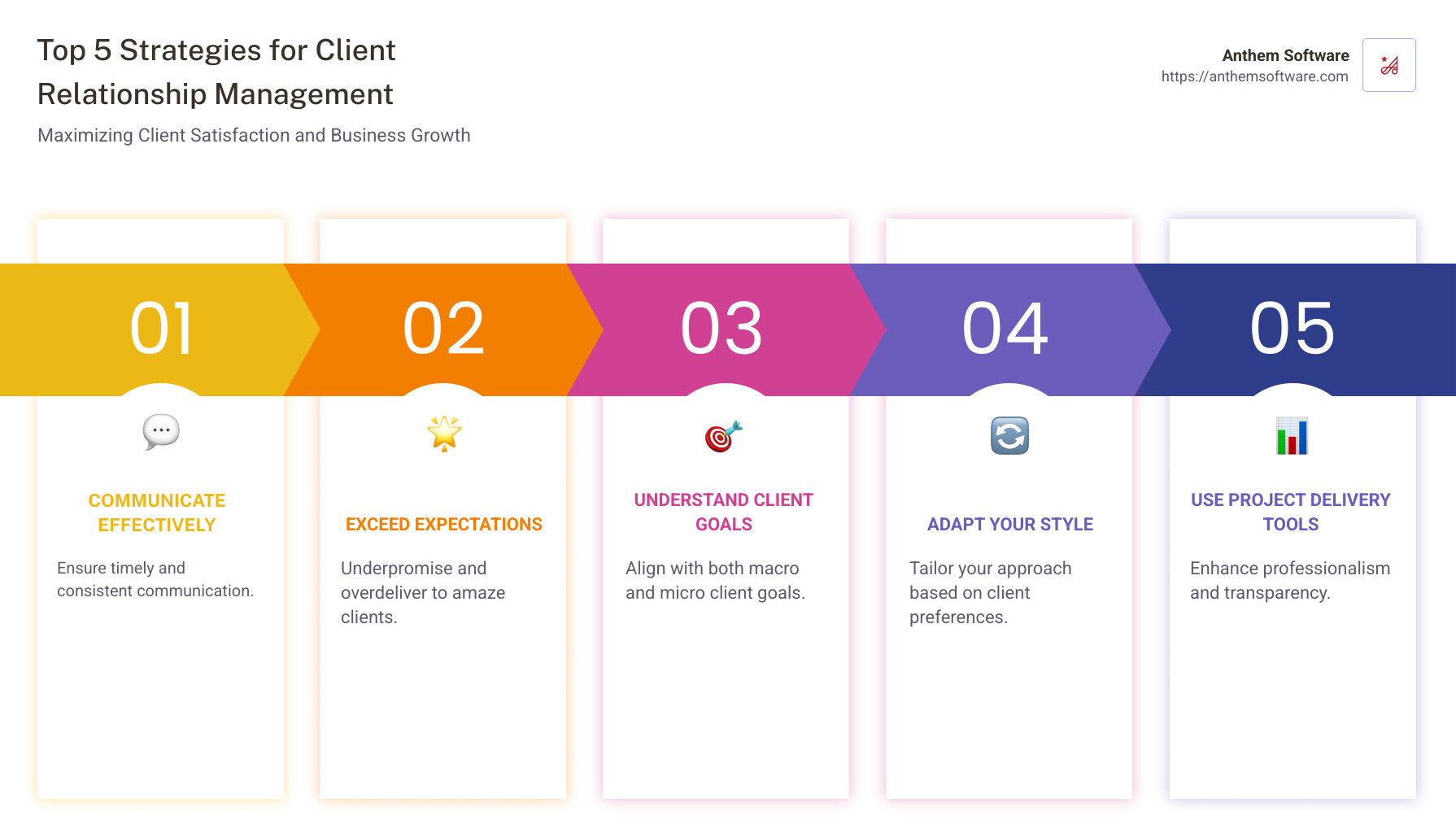
Top 5 Strategies for Client Relationship Management
Building strong client relationships is essential for any successful business. Here are the top five strategies to excel in client relationship management:
Communicate Effectively and Consistently
Communication is the key to client satisfaction. Timely communication ensures clients feel valued and informed. It’s important to:
- Respond Promptly: Quick responses show that you prioritize your clients’ needs and respect their time.
- Maintain Regular Contact: Regular updates, even if there’s no major news, help keep clients in the loop and build trust.
- Use the Right Channels: Some clients prefer emails, while others might favor phone calls or video meetings. Adapt to their preferences for smoother interactions.
Exceed Expectations
One proven way to delight clients is to exceed their expectations. This involves:
- Underpromising and Overdelivering: Set realistic goals and then strive to go beyond them. This approach not only impresses clients but also builds a reputation for reliability.
- Surprise and Delight: Small gestures like personalized thank-you notes or unexpected bonuses can leave a lasting impression and foster loyalty.
Understand Client Goals
To effectively manage client relationships, you must understand their goals on both macro and micro levels. This means:
- Identifying Micro Goals: Understand the specific objectives of the current project. This helps tailor your approach and deliver precisely what the client needs.
- Recognizing Macro Goals: Consider how the project fits into the client’s broader business strategy. This shows you’re invested in their long-term success.
Adapt Your Style
Every client is unique, and adapting your style to match theirs can improve your relationship. Consider:
- Emotional Intelligence: Use empathy to understand clients’ feelings and perspectives. This can guide you in tailoring your communication and services.
- Flexibility: Be willing to adjust your approach based on client feedback and preferences. This demonstrates your commitment to meeting their needs.
Use Project Delivery Tools
Professionalism and transparency are crucial in project management. Leverage project delivery tools to:
- Improve Transparency: Share project timelines, milestones, and updates through tools like Trello or Asana. This keeps clients informed and engaged.
- Improve Efficiency: Use these tools to manage tasks and deadlines effectively, ensuring projects stay on track and clients remain satisfied.
By implementing these strategies, you can lift your client relationship management practices and build stronger, more productive partnerships. Next, we’ll address some common questions about client relationship management and provide further insights into this essential business practice.
Frequently Asked Questions about Client Relationship Management
What does client relationship management do?
Client relationship management helps businesses build and keep strong connections with their clients. It involves monitoring accounts to ensure that all interactions and transactions are smooth and efficient. This means regularly checking in with clients, addressing their needs, and making sure they are satisfied with the services or products provided.
Another key part of client relationship management is organizing training for employees. This ensures your team knows how to use CRM tools effectively and can provide the best support to clients. Training also helps staff understand the importance of client satisfaction and how to achieve it.
What is CRM with an example?
CRM, or customer relationship management, is a tool that businesses use to handle client interactions. A great example of CRM in action is Salesforce. Salesforce is a popular CRM platform that helps businesses manage their leads and customer information. It allows companies to capture leads, track sales activities, and automate marketing tasks.
Imagine a company using Salesforce to track a customer’s journey from the first contact to the final sale. By using this CRM system, the company can ensure that no lead is forgotten and that each customer receives personalized attention throughout their journey.
What are the three types of CRM?
There are three main types of CRM, each serving a different purpose:
Analytical CRM: This type focuses on analyzing client data to gain insights into behavior and preferences. It helps businesses make informed decisions about marketing strategies and customer service improvements.
Operational CRM: This type streamlines business processes by automating sales, marketing, and customer support tasks. It ensures that all client interactions are efficient and organized, reducing the chances of errors or delays.
Collaborative CRM: This type improves communication between different departments within a company. It ensures that everyone has access to the same client information, allowing for a unified approach to customer service and support.
By understanding these types of CRM, businesses can choose the right system to improve their client relationship management practices.
Next, let’s explore some common strategies for implementing these CRM types effectively.
Conclusion
At Anthem Software, we believe that client relationship management is the backbone of successful business interactions. As a digital marketing agency, we specialize in creating custom B2B email marketing strategies that help small businesses connect with their professional stakeholders.
Our expertise in digital marketing allows us to craft campaigns that not only reach the right audience but also foster long-lasting relationships. We focus on delivering personalized content that resonates with your clients, ensuring that your message is not just seen, but remembered.
Our approach to email marketing is simple yet effective. By combining creativity with data-driven insights, we help businesses improve their client interactions and drive growth. Our goal is to make sure that every email you send strengthens your relationship with your clients and contributes to their satisfaction.
If you’re looking to lift your client relationship management and digital marketing efforts, we invite you to explore our CRM solutions for small businesses. Let us help you build bridges with your clients and achieve remarkable results.
In the changing world of digital marketing, staying ahead means continuously learning and adapting. With Anthem Software by your side, you can confidently steer the landscape and open up the full potential of your CRM and email marketing strategies.