

Business to Business Payment (B2B) transactions are crucial exchanges of value between companies, forming the backbone of inter-business commerce. In recent years, the landscape of B2B payments has been changing significantly due to digital advancements. Here’s a quick look at B2B payments:
- Definition: Payments made from one business to another.
- Common Methods: Wire transfers, checks, corporate credit cards.
- Key Trends: Increasing digital adoption, security improvements, automation.
In today’s rapidly shifting market, the influence of digital technologies is undeniable. Businesses no longer rely solely on traditional payment methods like checks; digital options are rising, offering speed and convenience. The shift towards digital payment solutions is essential as companies strive to meet customer expectations for quick and seamless transactions.
By way of introduction, I’m Joe Amaral. With years of experience in digital marketing and management, I’ve seen the pivotal role of business to business payment in facilitating successful operations. This expertise allows me to share insights into navigating these financial exchanges as businesses digitize their processes.

Know your business to business payment terms:
– b2b ach payment processing
– b2b credit card processing
– what is b2b payment processing
What are Business to Business Payments?
Business to Business Payments, or B2B payments, are the financial transactions conducted between two businesses. This could be anything from a manufacturer paying a supplier for raw materials to a retailer settling accounts with a wholesaler. Unlike consumer payments, which are often quick and straightforward, B2B payments are more complex and can involve multiple steps and approvals.
Transaction Complexity
B2B payments are not just about transferring money. They involve a series of steps that ensure both parties comply with agreed terms. This can include invoicing, purchase orders, and payment terms negotiation. The process is often more time-consuming than B2C transactions, which are usually instantaneous at the point of sale.
Why the complexity? It’s because B2B transactions typically involve larger sums of money and longer payment cycles. Businesses need to ensure that every detail is correct to avoid costly mistakes. Moreover, the approval process can be lengthy, involving several departments within a company.
Recurring Transactions
Many B2B payments are not one-off events but recurring transactions. This is common in industries where businesses have ongoing relationships with their suppliers. For instance, a company might have a subscription-based service or a long-term contract requiring regular payments.
Recurring B2B payments can streamline operations for both parties. They allow businesses to plan their cash flow better and reduce the administrative burden of processing individual payments. However, they also require careful management to ensure that payments are made on time and in the correct amounts.
The rise of digital payment platforms has made managing recurring transactions easier. These platforms can automate payments, reducing the risk of human error and ensuring timely transfers.
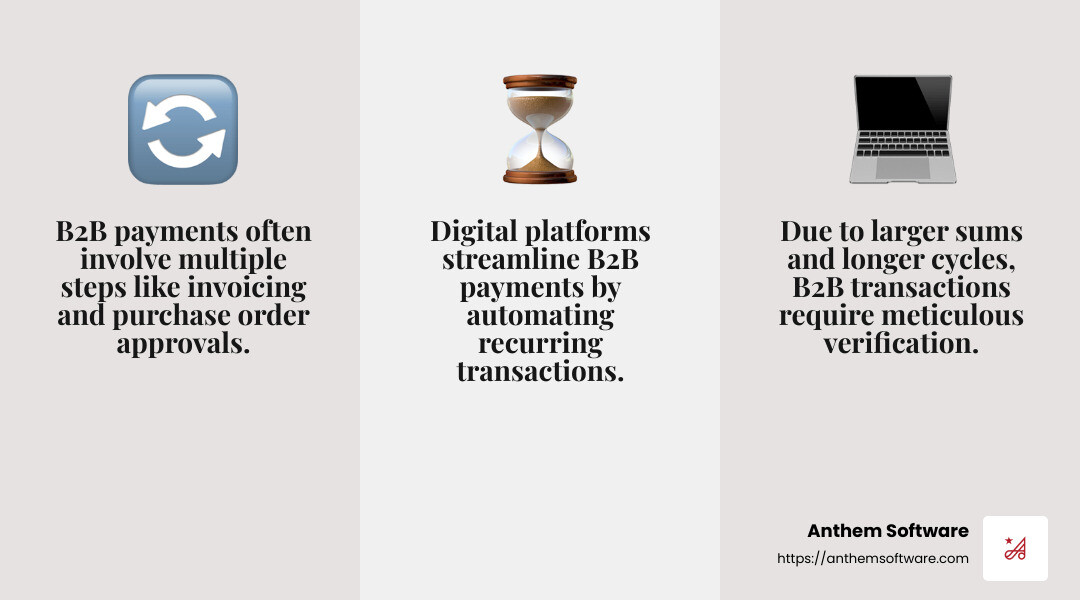
In summary, business to business payment processes are complex but crucial for maintaining smooth operations between businesses. As digital technology continues to evolve, these processes are becoming more efficient, helping businesses to save time and reduce errors.
Next, we’ll explore the various methods businesses use to make these payments.
Common B2B Payment Methods
When it comes to business to business payment, there are several methods businesses can choose from. Each offers its own set of advantages and challenges. Let’s take a look at some of the most common B2B payment methods:
Checks
Despite the digital age, checks remain a staple in B2B payments. They offer a clear paper trail, which is why many businesses still rely on them. However, checks can be slow to process and are prone to human error.
Pros:
– Clear documentation
– Familiar process for many businesses
Cons:
– Slow processing times
– Higher risk of errors and fraud
ACH Payments
Automated Clearing House (ACH) payments are electronic transfers made between banks. They are popular for their cost-effectiveness and security, especially for recurring transactions.
Pros:
– Lower transaction costs
– Secure and reliable
Cons:
– Can take a few days to process
– Requires setup and authorization
Wire Transfers
Wire transfers are ideal for high-value transactions and international payments. They offer immediate availability of funds but come with higher costs and security concerns.
Pros:
– Immediate fund availability
– No currency limits
Cons:
– Higher transaction fees
– Less secure than some other methods
Credit Cards
Credit cards are convenient and widely accepted. They are often used for smaller transactions, but the fees can add up quickly.
Pros:
– Quick and easy to use
– Reward programs and low-interest rates available
Cons:
– High processing fees
– Spending limits can restrict large transactions
Electronic Funds Transfers (EFT)
EFTs encompass ACH and wire transfers, providing a fully digital payment solution. They are efficient and increasingly favored due to their speed and lower costs.
Pros:
– Fast and entirely digital
– Lower transaction costs compared to wire transfers
Cons:
– Requires both parties to have compatible systems
– Can still be slower than real-time solutions
In conclusion, the choice of a B2B payment method depends on the specific needs and preferences of the businesses involved. Each method offers unique benefits and challenges, so choose the one that aligns best with your company’s goals and operational requirements.
How Business to Business Payments Differ from Consumer Payments
Understanding how business to business payment systems differ from consumer transactions is crucial. Let’s break it down:
Transaction Size
B2B transactions often involve large sums of money. We’re talking thousands, sometimes millions of dollars. This contrasts sharply with B2C transactions, which usually involve smaller amounts. For instance, buying office equipment for a corporation is a B2B transaction, while purchasing a laptop for personal use is B2C.
Payment Cycles
In the B2C world, payments are typically instant. You swipe your card at a store, and the transaction is done. But in B2B, payment cycles can be much longer. Businesses often operate on credit terms, meaning they pay for goods or services weeks or even months after receiving them. This can lead to cash flow challenges for suppliers who must wait for payment.
Negotiation
Negotiation is a hallmark of B2B transactions. Unlike B2C, where prices are often fixed, B2B prices can be flexible. Businesses negotiate terms, prices, and even payment schedules. This makes each B2B transaction unique and often more complex.
Complexity and Approvals
B2B payments are generally more complex due to the scale and the involvement of multiple stakeholders. In many cases, a single B2B transaction requires approval from various departments within a company. This can include finance, procurement, and even legal teams, making the process more intricate and time-consuming.
Security and Compliance
Due to the larger sums and the complexity involved, B2B payments require robust security measures. Businesses must comply with various regulations to protect sensitive financial information, making B2B transactions more secure but also more cumbersome.
Example in Action
Consider a manufacturing company purchasing raw materials from a supplier. The transaction involves negotiating the price, agreeing on payment terms, and ensuring compliance with international trade regulations if it’s a cross-border deal. This is vastly different from a consumer buying a similar product online, where the process is straightforward and immediate.
The distinction between B2B and B2C payments highlights the unique challenges and considerations businesses face. Next, we’ll explore the latest trends in business to business payments, including the impact of digital advancements and the ongoing shift towards automation.
Trends in Business to Business Payments
The world of business to business payment is evolving rapidly. Let’s explore some key trends shaping the industry today.
Digital Payments
The shift towards digital payments has been significant in recent years. This change was accelerated by the COVID-19 pandemic, which made traditional payment methods like paper checks impractical. Businesses had to pivot quickly to digital solutions to keep operations running smoothly. Now, digital payments are becoming the norm, offering faster, more efficient, and more secure transactions.
Impact of COVID-19
The pandemic was a catalyst for change in the B2B payment landscape. With millions out of work and businesses shuttered, the need for efficient, contactless payment solutions became urgent. CFOs turned to cloud-based platforms and digital transactions to manage accounts receivable and payable. This shift not only streamlined processes but also paved the way for future innovations in the sector.
Automation
Automation is revolutionizing the way businesses handle payments. By automating accounts payable and receivable processes, companies save time, reduce errors, and improve cash flow management. For example, tools like BILL help businesses automate their payment processes, giving them more control and visibility over transactions. This trend is set to continue, with more businesses adopting automation to stay competitive.
Fraud Prevention
As digital transactions increase, so does the risk of fraud. Businesses are investing in secure payment methods to protect themselves and their clients. Implementing SSL certifications, two-factor authentication, and tokenization are just a few ways companies are enhancing security. The rise in fraud cases, such as the $255 million lost by Zelle app customers in 2022, underscores the importance of robust fraud prevention measures.
Real-Time Payments
The demand for real-time payments is growing. Businesses want the same instant, frictionless experience they get with consumer transactions. Real-time payments reduce the time it takes to complete a transaction, improving cash flow and operational efficiency. As more companies adopt this technology, the B2B payment landscape will become faster and more seamless.
In summary, the business to business payment landscape is undergoing significant changes. Digital payments, automation, and real-time transactions are becoming the standard, while fraud prevention remains a top priority. These trends will continue to shape the way businesses handle payments. Next, we’ll explore the benefits and challenges of B2B payments.
Benefits and Challenges of Business to Business Payments
Business to business payment transactions have their own set of advantages and problems. Let’s break down the key benefits and challenges businesses face in this area.
Benefits
1. Efficiency
Switching from traditional methods like paper checks to digital payments can dramatically increase efficiency. Automation tools streamline processes, reducing the time spent on manual tasks. This means fewer errors and more time for employees to focus on strategic activities.
2. Improved Cash Flow
Digital payments help improve cash flow by speeding up the payment cycle. Faster transactions mean businesses can access their funds sooner, which is crucial for maintaining liquidity. Real-time payments, in particular, allow businesses to manage their finances more effectively and react swiftly to market changes.
3. Improved Security
With the rise of cyber threats, security is a top concern for businesses. Digital payment systems often include advanced security features like encryption and fraud detection. These measures help protect sensitive data and reduce the risk of fraud. Companies are investing in these solutions to safeguard their transactions and maintain trust with partners.
Challenges
1. Manual Processes
Despite the benefits of automation, many companies still rely on manual processes for B2B payments. This can lead to inefficiencies, errors, and delays. Changing these processes requires investment in technology and training, which can be a barrier for some businesses.
2. Cross-Border Transactions
Handling international payments adds complexity to B2B transactions. Issues like currency conversion fees, regulatory compliance, and longer processing times can complicate cross-border payments. Businesses need robust systems to manage these challenges and ensure smooth international operations.
3. Security Concerns
While digital payments offer improved security, they are not immune to threats. Cybercriminals are constantly finding new ways to exploit vulnerabilities. Businesses must stay vigilant and invest in ongoing security measures to protect their financial data.
In conclusion, business to business payment systems offer significant benefits, such as increased efficiency, better cash flow, and improved security. However, they also come with challenges, including reliance on manual processes, complexities in cross-border transactions, and the need for robust security measures. Understanding these factors is crucial for businesses looking to optimize their payment systems.
Next, we’ll address some frequently asked questions about B2B payments to help clarify common concerns and misconceptions.
Frequently Asked Questions about Business to Business Payments
What is a business-to-business payment?
Business-to-business payments, often abbreviated as B2B payments, are transactions where one business pays another for goods or services. These transactions can be complex due to their size, frequency, and the need for detailed records. Unlike business-to-consumer (B2C) payments, which typically happen instantly, B2B payments often involve invoicing and longer payment cycles.
B2B payments can be one-time transactions or part of a recurring arrangement, such as monthly subscriptions for services. This recurring element is especially common in industries that provide ongoing services, like software or equipment leasing.
What is the best payment method for B2B?
Choosing the best payment method for business-to-business payments depends on several factors, including transaction size, frequency, and the specific needs of the businesses involved. Here are some common options:
Wire Transfers: Although wire transfers represent less than 1% of B2B payments, they account for 93% of the total amount due to their use in high-value transactions. They’re reliable and secure, making them a preferred choice for large sums or international payments where currency conversion is a concern.
ACH Payments: Automated Clearing House (ACH) payments are electronic and suitable for recurring transactions. They require initial setup but offer a seamless experience for regular payments, making them a popular choice for businesses that need to manage ongoing expenses.
Credit Cards: While not as common due to high fees, credit cards offer flexibility and can be useful for smaller, more frequent transactions. Many businesses also benefit from rewards programs offered by B2B credit cards.
The best method depends on the specific needs and preferences of the businesses involved. Flexibility and security are key considerations.
How do recurring online payments work?
Recurring online payments simplify the process of managing regular transactions between businesses. They typically involve a subscription element, where the buyer agrees to pay for a service or product at regular intervals. This setup is beneficial for both parties, as it ensures a steady stream of income for the seller and convenience for the buyer.
When dealing with international sales, recurring payments can be particularly advantageous. They allow businesses to handle transactions in local currencies, reducing the hassle of currency conversion and associated fees. Advanced payment platforms also enable businesses to automate these processes, further enhancing efficiency.
However, it’s important to note that not all markets accept recurring online payments. Businesses need to consider local regulations and payment preferences when setting up these systems.
By understanding these aspects of recurring payments, businesses can better manage their cash flows and maintain strong relationships with their partners.
Conclusion
At Anthem Software, we understand the complexities of business-to-business payments and the vital role they play in the success of small businesses. Our expertise extends beyond just payment processing, as we specialize in crafting effective B2B email marketing strategies custom to reach professional stakeholders across the globe.
Email marketing is a powerful tool in the B2B landscape, enabling businesses to connect with their audience in a personalized and impactful way. Our approach at Anthem Software focuses on creating strategic email campaigns that resonate with the unique needs of each client. By leveraging data insights and segmentation capabilities, we ensure that our clients’ messages are not only seen but also remembered and acted upon.
Our global reach and adaptability mean that we can serve clients worldwide, helping them steer the changing digital landscape. We provide a comprehensive suite of tools designed to simplify the creation and management of email campaigns, making them more efficient and engaging.
As B2B payments continues to evolve, staying ahead of trends and leveraging the right tools is crucial. By integrating our email marketing expertise with robust payment processing solutions, businesses can streamline their operations, improve cash flow, and drive growth.
Our commitment to helping businesses succeed in today’s competitive market is unwavering. We believe that with the right strategies and tools, small businesses can achieve substantial growth and build lasting relationships with their partners.
Thank you for joining us on this journey to decode business-to-business payments. We look forward to helping you transform your B2B interactions and achieve new heights of success.