

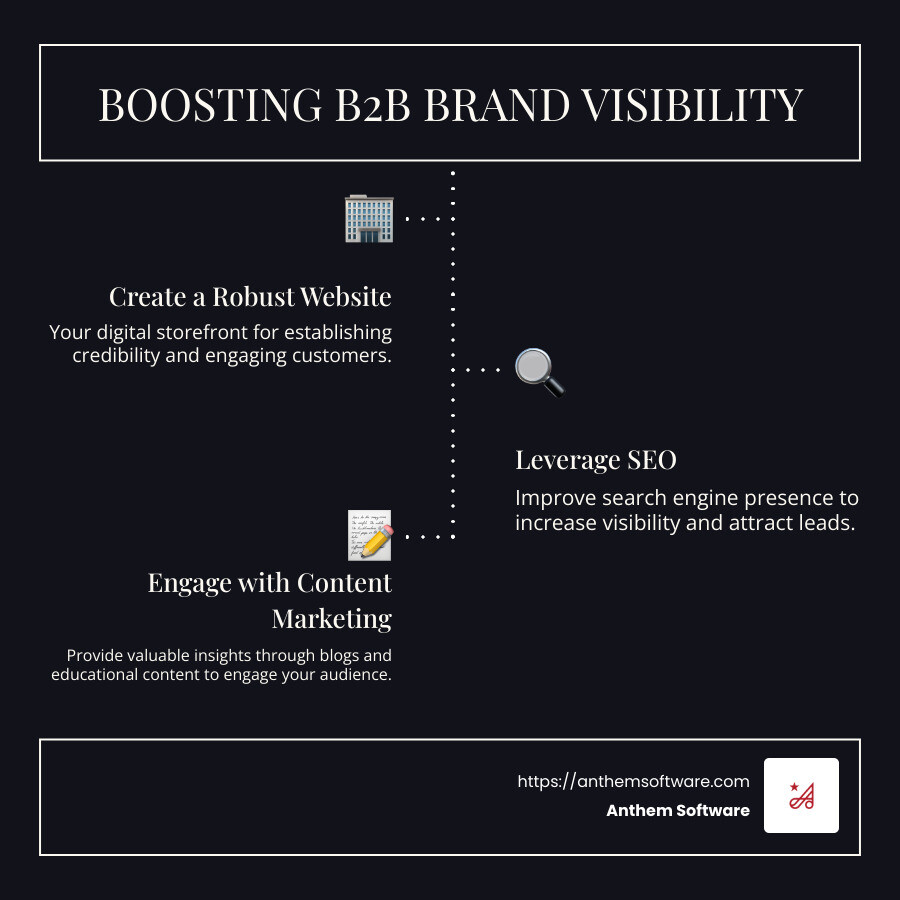
When exploring b2b internet marketing strategies, simple yet effective techniques can significantly improve brand visibility and customer engagement. Here’s a quick look:
- Create a robust website to serve as your digital storefront.
- Leverage SEO to improve your search engine presence.
- Engage through content marketing by providing valuable insights.
- Use email marketing for direct and personalized communication.
- Effectively use social media to foster relationships and increase visibility.
In the complex world of B2B marketing, digital strategies stand as a vital pillar for businesses aiming to connect with professional audiences. Boosting brand awareness in this digital age requires not just a presence but also a strategic plan that leverages modern tools and techniques. Crafting a high-performance website, paired with robust SEO and content marketing, can open doors to new opportunities and relationships.
I’m Joe Amaral, a digital marketing enthusiast with a wealth of experience navigating the intricacies of b2b internet marketing strategies. From my beginnings in sales and management roles to founding multiple startups, I’ve seen how these strategies can lift a business.
Understanding B2B Internet Marketing Strategies
When it comes to B2B digital marketing, understanding the buyer’s journey and target audience is crucial. Unlike B2C marketing, where the focus is on individual consumers, B2B marketing targets businesses, which means the stakes are higher and the decision-making process is more complex.
B2B Digital Marketing
B2B digital marketing is all about using online tools to connect with other businesses. This isn’t just about selling a product; it’s about building relationships that lead to long-term contracts. The focus is on creating value and trust, which requires a strategic approach.
In the B2B world, digital marketing isn’t just a nice-to-have — it’s a must. Businesses rely heavily on digital channels to research products, compare options, and make purchasing decisions. This means your digital presence needs to be strong and persuasive.
The Buyer Journey
The buyer journey in B2B marketing is a multi-step process involving awareness, consideration, and decision stages. At each stage, your marketing strategies should align with the needs of your potential clients.
- Awareness Stage: Here, businesses are just learning about your products or services. Content like informative blog posts, infographics, and videos can help capture attention and drive traffic to your site.
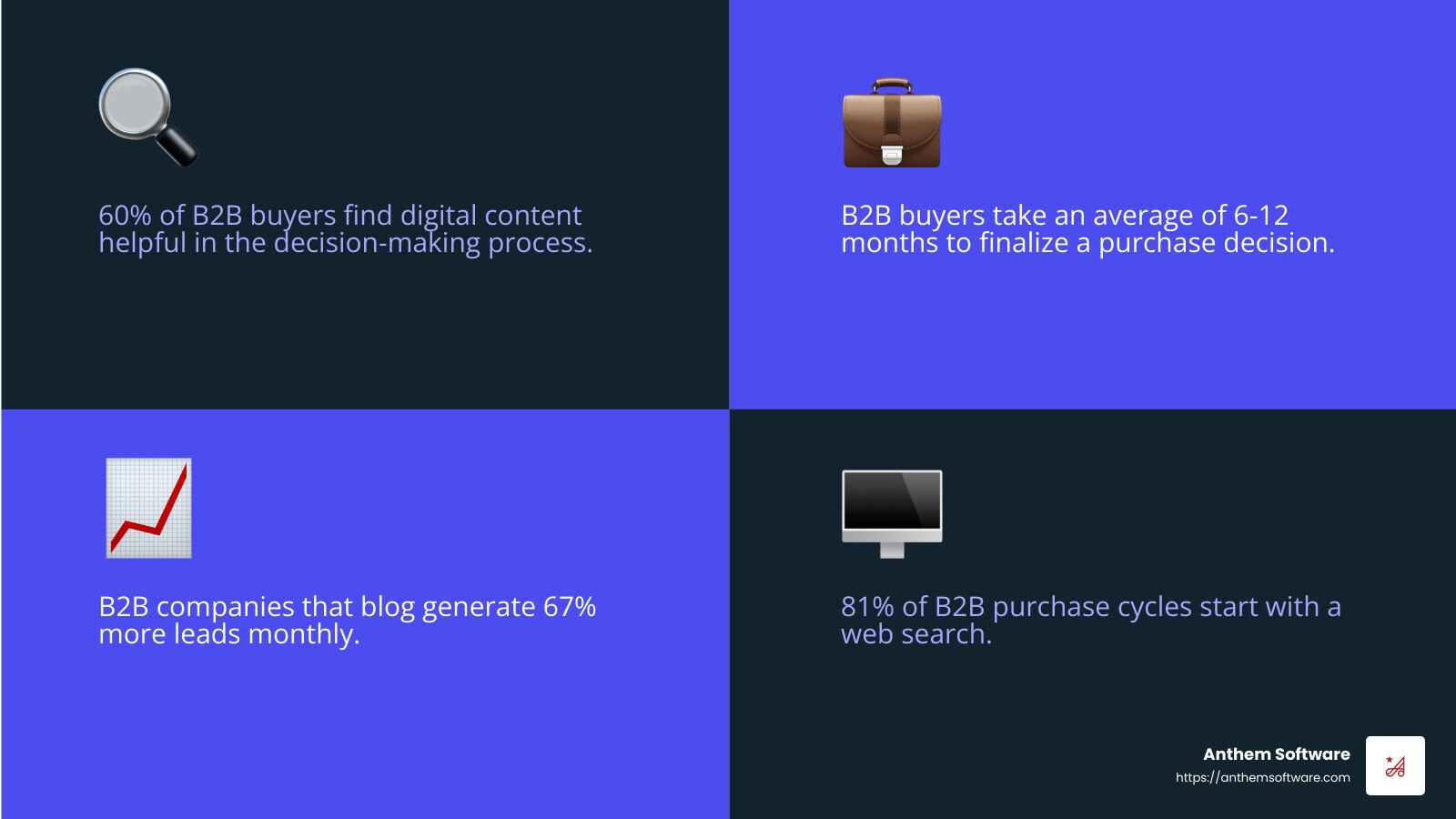
Consideration Stage: At this point, potential buyers are comparing your offerings with competitors. Providing in-depth content like ebooks, whitepapers, and research reports can position your business as an expert in the field.
Decision Stage: Finally, when the buyers are ready to make a decision, content such as case studies and testimonials can be the final push they need to choose your business.
Target Audience
Defining your target audience is the foundation of any successful B2B marketing strategy. You’re not just targeting one person; you’re engaging with a group of decision-makers within a company. This includes roles like initiators, users, buyers, and influencers.
Creating detailed buyer personas can help you understand the needs and challenges of each role. This understanding allows you to tailor your marketing messages to resonate with these diverse audiences, increasing the chances of conversion.
B2B internet marketing strategies revolve around understanding the buyer’s journey and targeting the right audience with the right message at the right time. By focusing on these elements, businesses can create a digital marketing strategy that not only reaches their audience but also drives engagement and sales.
1. Research and Market Analysis
Before diving into any marketing campaign, it’s crucial to understand the landscape. This is where market research comes into play. It helps you understand your industry, competitors, and most importantly, your customers.
Market Research
Market research is the bedrock of any successful B2B strategy. It involves gathering information about your market and the businesses you aim to reach. This can include understanding market trends, identifying potential opportunities, and analyzing competitor strategies.
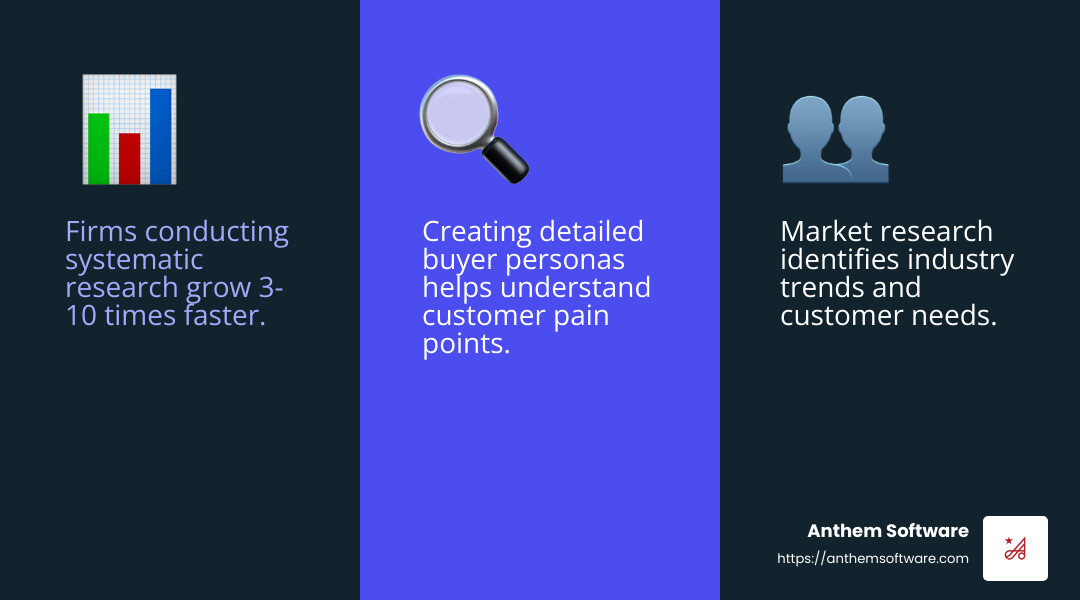
A key takeaway from research is that firms conducting systematic research grow three to ten times faster than those that don’t.
Buyer Personas
Once you have a solid understanding of the market, the next step is creating buyer personas. These are detailed profiles of your ideal customers. They help you understand who you are marketing to and what their needs and pain points are.
To build effective buyer personas, consider factors like:
- Demographics: Age, gender, job title, and education level.
- Firmographics: Company size, industry, and location.
- Psychographics: Interests, values, and pain points.
Using tools like CRM systems can help you gather and organize this data efficiently. With accurate personas, you can tailor your marketing strategies to meet the specific needs of your audience.
Data Insights
Data is king. Collecting and analyzing data from your marketing activities provides valuable insights that can guide your strategies. This includes tracking website traffic, social media engagement, and email open rates.
Utilizing platforms like Google Analytics allows you to monitor how visitors interact with your site. It helps you understand which strategies are working and which aren’t. This data-driven approach ensures you’re investing time and resources in the right areas.
By combining market research, detailed buyer personas, and data insights, you can create a comprehensive B2B marketing strategy that aligns with your business goals and resonates with your target audience. This foundation sets the stage for exploring niche-driven strategies, which we will discuss next.
2. Niche-Driven Strategy
In B2B internet marketing strategies, carving out a specific niche can be your secret weapon. Specializing in a particular area allows your business to stand out and become an industry leader. Let’s break this down.
Specialization
Specialization is all about focusing on a narrow segment of the market where your expertise shines. By zeroing in on a niche, you can tailor your services and products to meet the distinct needs of that segment. This approach not only differentiates you from the competition but also positions you as a go-to expert.
For example, a company specializing in cybersecurity solutions for healthcare organizations can offer more targeted and effective solutions than a general cybersecurity provider. This specialization makes it easier to market your expertise and attract clients who value your deep understanding of their specific challenges.
Industry Expertise
Building industry expertise is essential for a successful niche strategy. It involves staying updated on the latest trends, regulations, and technologies within your chosen niche. This expertise allows you to provide insights and solutions that generic providers can’t.
Consider IBM’s approach with its Influencer and Employee Advocacy Program. By leveraging employees who are experts in their fields, IBM improves its credibility and trustworthiness. According to Ryan Bares, global social programs lead at IBM, buyers trust individual voices more than traditional marketing messages.
Competitive Advantage
A niche-driven strategy gives you a competitive edge. When you focus on a specific area, you can tailor your marketing messages to address the unique needs and pain points of your target audience. This targeted approach resonates more with potential clients and increases the likelihood of conversion.
Moreover, being a specialist allows you to charge a premium for your services. Clients are often willing to pay more for expertise that directly addresses their specific needs. This can lead to higher profitability and faster growth, as evidenced by research showing that specialized firms grow faster and are more profitable than their peers.
In summary, a niche-driven strategy is about honing in on a specific market segment, building deep expertise, and leveraging that knowledge to gain a competitive advantage. This approach not only makes your marketing efforts more effective but also establishes your firm as a leader in your industry.
Next, we’ll explore how to create a high-performance website that supports your niche-driven strategy.
3. High-Performance Website
In the field of B2B internet marketing strategies, your website is more than just a digital business card. It’s the hub where potential clients learn about your expertise and decide if you’re the right fit. Let’s explore what makes a high-performance website.
Website Design
A well-designed website is crucial. It should be visually appealing, but more importantly, it needs to function smoothly. Think of your website as your digital storefront—first impressions matter. A clean, modern design can convey professionalism and trustworthiness.
Visual hierarchy is key. Use size, color, and placement to guide visitors through your content. Highlight important elements like calls-to-action with bold colors or larger fonts to draw attention.
User Experience (UX)
User experience is all about making your website easy to steer. Visitors should find what they’re looking for without frustration.
Navigation menus should be simple and intuitive. Avoid clutter and ensure that pages load quickly. According to Anthem Software, speed optimization is vital because no one likes waiting for a slow website. Optimize images and use a content delivery network (CDN) to improve loading times.
Mobile-Friendly
With more people accessing the internet via smartphones and tablets, your site must be mobile-friendly. A responsive design ensures your website looks good on any device, automatically adjusting to fit different screen sizes.
This is crucial not just for user experience but also for SEO. Google favors mobile-friendly sites in its search rankings. So, if your site isn’t optimized for mobile, you’re likely losing out on valuable traffic.
The Power of a High-Performance Website
A high-performance website can set you apart from competitors. It’s your chance to showcase your niche expertise and engage potential clients before they even speak to you.
Responsive design, user-friendly navigation, and a clean layout are non-negotiable. These elements work together to create a seamless experience that keeps visitors engaged and encourages them to explore further.
Next, we’ll explore how to harness the power of search engine optimization (SEO) to make sure your high-performance website gets found by the right audience.
4. Search Engine Optimization (SEO)
In B2B internet marketing strategies, SEO is your secret weapon. It’s how you make sure your high-performance website isn’t just a hidden gem but a well-traveled highway. Let’s break down the essentials of on-site SEO, off-site SEO, and keyword strategy.
On-Site SEO
On-site SEO is all about making your website search-friendly. It’s like organizing a library so people can easily find the books they want.
Keyword Integration: Use relevant keywords naturally in your content. Tools like Ahrefs and SEMrush can help you find the best keywords for your industry. For example, if you’re a B2B tech company, terms like “cloud solutions for businesses” might be your targets.
Meta Tags and Descriptions: These are the snippets that show up in search results. Make sure they are compelling and include your primary keywords.
Content Quality: High-quality, relevant content keeps visitors on your site longer. Google loves this and ranks you higher. Think of it like a movie—if it’s good, people will stay till the end.
Site Speed and Mobile Optimization: As mentioned earlier, a fast-loading, mobile-friendly site is crucial. Google prioritizes these sites, so ensure your images are optimized and your site is responsive.
Off-Site SEO
While on-site SEO is like setting up your store, off-site SEO is about getting people to recommend it.
Backlinks: These are links from other websites to yours. They act as votes of confidence. More high-quality backlinks mean higher authority in Google’s eyes. For instance, getting a mention on a well-known industry blog can boost your credibility.
Guest Blogging: Write articles for other sites in your industry. This not only builds backlinks but also positions you as a thought leader.
Social Signals: While not a direct ranking factor, being active on social media can increase your online presence and indirectly boost your SEO through more traffic and engagement.
Keyword Strategy
A solid keyword strategy is the backbone of your SEO efforts. It’s about knowing what your audience is searching for and tailoring your content to meet their needs.
Research and Selection: Use tools like Google Keyword Planner to find keywords that have a good balance of search volume and competition.
Long-Tail Keywords: These are longer phrases that are highly specific. They might have lower search volumes but often convert better. For example, “best B2B cloud storage solutions” is more targeted than just “cloud storage.”
Content Alignment: Make sure your content answers the questions your keywords imply. If someone searches “how to improve B2B sales,” your content should provide actionable insights.
By mastering these SEO components, your high-performance website won’t just sit in the corner of the internet. It will actively draw in the right audience, helping you climb the search rankings and boost your business visibility.
Next, we’ll explore how content marketing can further improve your SEO efforts and engage your audience.
5. Content Marketing
In the field of B2B internet marketing strategies, content marketing is your storytelling toolkit. It’s how you share your expertise, build trust, and guide potential clients through their buyer journey. Let’s explore blogging, white papers, and educational content.
Blogging
Blogging is like having a conversation with your audience. It’s an opportunity to share insights, industry news, and practical tips.
Thought Leadership: Regular blog posts can position your company as an industry leader. Take a cue from successful companies that use blogs to share both professional insights and personal stories, fostering a deeper connection with their audience.
SEO Boost: Blogs are a great way to integrate keywords naturally. This helps improve your site’s visibility on search engines, driving more traffic your way.
Lead Generation: Each blog post is a chance to convert readers into leads. Include clear calls to action, like signing up for a newsletter or downloading a resource.
White Papers
White papers are like the textbooks of content marketing. They provide in-depth information on complex topics and are perfect for B2B audiences looking for detailed insights.
Data-Driven Content: Use white papers to share valuable data and research. This not only educates your audience but also establishes your business as a credible source.
Lead Magnets: White papers can be used to capture leads by offering them in exchange for contact information. This is particularly effective for generating qualified leads who are interested in your expertise.
Problem-Solving: Address specific industry challenges in your white papers. Show how your solutions can help, making it easier for potential clients to see the value in your offerings.
Educational Content
Educational content is about teaching your audience something new. This can be through guides, tutorials, or webinars.
Engagement: Educational content keeps your audience engaged. Focus on customer pain points and offer solutions, making your content highly relevant and useful.
Trust Building: By providing educational resources, you demonstrate your knowledge and build trust with your audience. People are more likely to do business with companies they trust.
Versatility: Educational content can take many forms—videos, infographics, or podcasts. Choose the format that best suits your audience and the message you want to convey.
By integrating these content marketing strategies, you can effectively communicate your expertise, attract the right audience, and nurture leads through the sales funnel. Next, we’ll explore how email marketing complements these efforts and keeps your audience engaged.
6. Email Marketing
Email marketing is a powerhouse in the B2B internet marketing strategies toolkit. It’s not just about sending emails—it’s about building relationships, nurturing leads, and personalizing your communication.
Lead Nurturing
Lead nurturing is the art of guiding your prospects through the buying journey. It’s about delivering the right content at the right time.
Drip Campaigns: These automated email sequences send targeted messages over time. They educate prospects, keep them engaged, and move them closer to making a decision.
Targeted Content: By understanding where a lead is in the buying process, you can tailor your content. This ensures you’re providing value at every stage, whether it’s introducing your brand or offering a detailed case study.
Building Trust: Consistent, relevant communication helps build trust with your audience. As they receive valuable information, they start seeing you as a reliable partner.
Personalized Emails
Personalization is key in email marketing. It transforms generic messages into conversations.
Segmented Lists: Divide your email list into segments based on factors like industry, job role, or behavior. This allows you to send more relevant messages to each group.
Dynamic Content: Use dynamic content to personalize emails. This could be as simple as addressing the recipient by name or as complex as tailoring the entire message to their specific interests.
Increased Engagement: Personalized emails have higher open and click-through rates. People are more likely to engage with content that feels relevant to them.
Anthem Software
At Anthem Software, we understand the power of email marketing in the B2B space. We help businesses craft strategic, personalized email campaigns that resonate with their audience.
Expertise and Tools: We leverage advanced segmentation and automation tools to optimize your email marketing efforts. Our approach ensures that your messages are both impactful and efficient.
Deliverability and Validation: Ensuring your emails reach the right inboxes is crucial. We focus on email validation to maintain a clean list and improve deliverability rates.
Strategic Insights: Our team provides insights into email performance, helping you refine your strategies for better results.
By focusing on lead nurturing and personalized emails, you can turn prospects into loyal customers. Next, we’ll explore how social media engagement can amplify your brand’s visibility and reach.
7. Social Media Engagement
Social media is a powerful tool in the B2B internet marketing strategies arsenal. It’s not just about posting updates; it’s about creating meaningful connections and boosting your brand’s visibility.
Social Media Platforms
Choosing the right platform is crucial. Not all social media channels are created equal, especially in the B2B world.
LinkedIn: This is the go-to platform for B2B marketers. It’s where professionals connect, share industry insights, and build networks. Use it to share thought leadership content and engage with potential clients.
Twitter: Ideal for sharing quick updates and industry news. Engage in conversations, use hashtags to increase reach, and participate in Twitter chats to showcase your expertise.
Facebook and Instagram: While these platforms are more B2C-focused, they can still be valuable for B2B. Use them for brand storytelling and showcasing company culture.
Influencer Marketing
Influencer marketing isn’t just for B2C brands. In the B2B space, it’s about leveraging industry experts and thought leaders to amplify your message.
Employee Advocacy: Encourage your employees to share company content. IBM’s influencer and employee advocacy program is a great example. Their employees have become trusted voices in the industry.
Industry Influencers: Partner with well-known figures in your field. Their endorsement can boost your credibility and reach a wider audience.
Content Collaboration: Work with influencers to create valuable content. This could be webinars, podcasts, or guest blog posts that provide insights to your audience.
Brand Visibility
Building brand visibility on social media requires a strategic approach.
Consistent Branding: Ensure your brand’s voice and visuals are consistent across all platforms. This helps in creating a recognizable brand identity.
Engagement: Don’t just post—engage. Respond to comments, join discussions, and show that you’re active and approachable. Listening and responding to your audience builds trust and loyalty.
Analytics: Use social media analytics to track performance. Understand what content resonates with your audience and refine your strategy accordingly.
By focusing on the right platforms, leveraging influencer marketing, and enhancing brand visibility, you can effectively engage your audience on social media. Next, we’ll dive into how pay-per-click (PPC) advertising can drive targeted traffic to your business.
8. Pay-Per-Click (PPC) Advertising
Pay-Per-Click (PPC) advertising is a crucial part of B2B internet marketing strategies. It helps businesses reach their target audience quickly and efficiently by placing ads in front of those actively searching for related products or services.
PPC Campaigns
A well-structured PPC campaign can significantly boost your visibility and drive traffic to your site. Companies like Google Ads and Facebook offer platforms where you can run these campaigns.
Google Ads: This is the most popular PPC platform. It allows your ads to appear in search results when users search for specific keywords. For example, if you’re selling accounting software, your ad might appear when someone searches “best accounting software for businesses.”
Social Media Ads: Platforms like LinkedIn and Facebook allow you to run targeted PPC ads. LinkedIn is particularly effective for B2B as it lets you target professionals based on job title, industry, and more.
Keyword Bidding
Keyword bidding is at the heart of PPC. You choose keywords relevant to your business and bid on them. The higher your bid, the more likely your ad will appear.
Research: Use tools like Google Keyword Planner to find the right keywords. Look for terms with high search volume but low competition to get the best results.
Match Types: Choose between broad, phrase, and exact match types to control how closely search queries must match your keywords. This helps in reaching the right audience.
Negative Keywords: Exclude irrelevant terms to prevent wasting your ad spend. If you’re targeting “B2B marketing software,” you might exclude “free” or “jobs” to avoid non-converting clicks.
Ad Targeting
Effective ad targeting ensures your ads reach the right people at the right time.
Demographic Targeting: Tailor your ads based on age, gender, location, and even company size. This is particularly useful in B2B where knowing your audience is key.
Behavioral Targeting: Reach users based on their past behavior online. If someone visited your site but didn’t convert, retarget them with a specific ad that encourages them to return.
Device Targeting: Customize your ads for different devices. With more people using mobile devices for business, ensure your ads are optimized for both desktop and mobile.
Measuring Success
To know if your PPC campaigns are working, measure key metrics like click-through rate (CTR), conversion rate, and return on ad spend (ROAS). Regularly analyze and tweak your campaigns based on this data to improve performance.
By effectively managing PPC campaigns, keyword bidding, and ad targeting, you can drive high-quality traffic to your business. Now, let’s explore how marketing automation and CRM can streamline your lead management process.
9. Marketing Automation and CRM
In the world of B2B internet marketing strategies, marketing automation and Customer Relationship Management (CRM) systems are game changers. They streamline processes, improve customer interactions, and boost efficiency.
Automation Tools
Marketing automation tools save time by handling repetitive tasks. They allow you to focus on strategy and creativity.
Email Automation: Tools like MailChimp and Anthem Software automate email campaigns. They send personalized messages at the right time, increasing engagement.
Social Media Automation: Platforms like Hootsuite schedule posts and track engagement. This keeps your brand active on social media without constant manual input.
Lead Scoring: Automation tools can score leads based on their interactions with your content. This helps prioritize follow-ups with the most promising leads.
CRM Systems
A CRM system is the backbone of your lead management efforts. It organizes customer data, tracks interactions, and helps build strong relationships.
Centralized Data: CRM platforms like Salesforce and Anthem Software provide a single view of customer interactions. This ensures everyone in your organization has access to the same information.
Customer Insights: CRMs offer insights into customer behavior and preferences. This data is crucial for tailoring your marketing efforts to meet their needs.
Streamlined Communication: With a CRM, you can track emails, calls, and meetings. This ensures no lead falls through the cracks.
Lead Management
Efficient lead management is key to turning prospects into customers.
Lead Nurturing: Use automation to nurture leads with relevant content based on their stage in the buying process. Drip campaigns are effective here, providing a series of touchpoints over time.
Segmentation: Group leads by criteria like industry, company size, or behavior. This allows for more targeted communication.
Analytics and Reporting: Monitor lead performance and conversion rates. Use this data to refine your strategies and improve results.
By integrating marketing automation and CRM systems, you can improve your B2B marketing efforts, drive efficiency, and build lasting customer relationships. Next, we’ll discuss the importance of analytics and optimization in maximizing your marketing success.
10. Analytics and Optimization
In the field of B2B internet marketing strategies, analytics and optimization are your navigational tools. They guide your decisions, ensuring that every marketing move is backed by data, not guesswork.
Performance Metrics
Understanding which metrics matter is crucial. These metrics tell you if your strategies are hitting the mark or falling flat.
Conversion Rate: This is the percentage of visitors who take a desired action, like filling out a form. A high conversion rate indicates effective marketing.
Bounce Rate: This measures how many visitors leave your site after viewing just one page. A high bounce rate might mean your content needs improvement.
Customer Lifetime Value (CLV): This metric estimates the total revenue a customer will bring during their relationship with your company. It’s vital for understanding long-term business health.
A/B Testing
A/B testing is like a science experiment for your marketing. It helps you find what works best by comparing two versions of a webpage, email, or ad.
Emails: Test different subject lines or call-to-action buttons to see which ones get more clicks.
Landing Pages: Try out different headlines or images to determine which version leads to more conversions.
Ads: Experiment with different ad copy or visuals to see which attracts more attention.
Tools like Optimizely and Unbounce make A/B testing straightforward, allowing you to make data-driven decisions that improve your marketing efforts.
Data-Driven Decisions
Data should be at the heart of every decision in your marketing strategy. It turns your efforts from a guessing game into a precise, strategic operation.
Google Analytics: This tool provides insights into your website traffic, showing where visitors come from and what they do on your site.
SEO Tools: Platforms like Moz and Semrush help you track your search engine rankings and improve your SEO strategy.
Social Media Analytics: Tools like Hootsuite and Zoho Social offer in-depth analysis of your social media performance, helping you understand what resonates with your audience.
By leveraging these insights, you can adjust your strategies in real time, optimizing for better results.
Incorporating analytics and optimization into your B2B marketing strategy ensures you are always moving forward. Next, we’ll address some common questions about B2B internet marketing strategies.
Frequently Asked Questions about B2B Internet Marketing Strategies
What is a B2B digital marketing strategy?
A B2B digital marketing strategy is a plan that businesses use to promote their products or services to other businesses using online channels. Unlike B2C marketing, which targets individual consumers, B2B marketing focuses on building relationships and demonstrating value to business clients.
Key components of a successful strategy include understanding the buyer’s journey, creating targeted content, and using tools like SEO and email marketing to reach decision-makers. The goal is to generate high-quality leads and convert them into long-term business partnerships.
What are the 4 types of B2B marketing?
Content Marketing: This involves creating valuable content like blogs, white papers, and videos to educate and engage your target audience. It helps establish your brand as an industry authority.
Email Marketing: A highly effective way to nurture leads and maintain relationships with clients. Personalized emails can significantly increase engagement and conversions.
Social Media Marketing: Platforms like LinkedIn and Twitter are essential for B2B marketing. They provide opportunities for networking, brand visibility, and even influencer partnerships.
PPC Advertising: Pay-per-click campaigns allow businesses to target specific keywords and demographics, ensuring that their ads reach the right audience at the right time.
These types of marketing, when combined, create a powerful strategy that can drive business growth and success.
How does SEO benefit B2B companies?
SEO, or Search Engine Optimization, is crucial for B2B companies because it improves online visibility and attracts more organic traffic to their websites. Here’s how it benefits B2B companies:
Increased Visibility: By optimizing your website for search engines, your business can appear higher in search results, making it easier for potential clients to find you.
Targeted Traffic: SEO helps attract visitors who are actively searching for the solutions you offer, increasing the likelihood of conversions.
Credibility and Trust: High search rankings can improve your business’s credibility, as users often associate top results with industry leaders.
Cost-Effective: Compared to paid advertising, SEO provides a sustainable way to attract traffic without ongoing costs.
Utilizing SEO effectively can position your business as a go-to resource in your industry, driving long-term growth and success.
Next, we’ll explore how these strategies can be implemented for maximum impact.
Conclusion
In today’s digital world, the right B2B internet marketing strategies can make all the difference. At Anthem Software, we specialize in helping businesses steer this landscape with precision and expertise. Our approach centers around crafting custom strategies that align with your unique business goals.
Strategic Implementation for Success
Implementing a successful digital marketing strategy requires more than just understanding the tools and techniques. It involves a deep dive into your business objectives and target audience. By leveraging data-driven insights, we help you create a roadmap that not only attracts but also retains business clients.
Achieving Digital Marketing Success
Digital marketing success isn’t just about reaching more people; it’s about reaching the right people. With our expertise in B2B email marketing, we ensure your message resonates with professional stakeholders worldwide. Our strategies are designed to improve engagement and drive conversions, turning prospects into loyal clients.
Why Choose Anthem Software?
Our commitment to excellence and innovation sets us apart. We understand the intricacies of B2B marketing and offer solutions that are both effective and efficient. Whether it’s through personalized email campaigns or cutting-edge SEO tactics, we provide the tools you need to thrive.
Ready to lift your B2B marketing efforts? Explore our digital marketing services and find how we can help your business succeed in the digital age.
In conclusion, mastering B2B marketing is an ongoing journey. With the right partner, like Anthem Software, you can steer this journey with confidence and achieve lasting success.