

B2B digital marketing is changing the way businesses connect and communicate with one another. Today, it involves using digital channels to market products and services to other businesses, maximizing online visibility and engagement. In this changing landscape, the emphasis is on using strategic digital solutions to meet the unique needs of business clients.
- What is B2B digital marketing? It’s about marketing goods and services to other businesses through digital channels like websites, social media, and email.
- Why is it important? It offers measurable results, a high return on investment (ROI), and increases brand visibility.
B2B digital marketing has become essential in a world where keeping up with digital change is vital for success. From optimizing search engine strategies to utilizing social media for precise targeting, businesses must adapt to digital changes to stay relevant and competitive.
As a leader in the field, I’m Joe Amaral. With a rich background in digital marketing, I’ve steerd its evolution over the years. Used effectively, b2b digital marketing can drive significant growth and engagement for businesses of all sizes.
Know your b2b digital marketing terms:
– b2b internet marketing agency
– b2b internet marketing strategies
– digital marketing business to business
Understanding B2B Digital Marketing
B2B digital marketing is all about using online strategies to promote products and services to other businesses. Unlike traditional marketing, which often casts a wide net, B2B digital marketing focuses on reaching specific businesses with custom messages.
Online Marketing Explained
In the B2B world, online marketing refers to any digital tactic used to connect with other businesses. This includes everything from email campaigns to social media posts. The goal is to engage with businesses that might benefit from your products or services.
Why use online marketing? It’s cost-effective and allows for precise targeting. You can reach decision-makers directly and measure your success in real-time.
Business-to-Business Focus
The B2B approach is different from business-to-consumer (B2C) marketing. B2B buyers are looking for solutions that will improve their business operations. They want facts, figures, and a clear return on investment. Unlike B2C, where emotion can drive sales, B2B is all about logic and benefits.
Key point: When marketing to businesses, always focus on how your product or service can solve their specific problems.
Digital Channels
Digital channels are the various platforms you can use for B2B marketing. Here are some key channels:
Email Marketing: A powerful tool for nurturing leads and maintaining relationships.
Social Media: Platforms like LinkedIn are great for connecting with other businesses.
Websites and Blogs: A well-optimized website is crucial for attracting and converting business clients.
Pay-Per-Click (PPC) Advertising: This can drive targeted traffic to your website quickly.
Video Content: As noted by Pete Stein from Merkle, video storytelling is becoming a vital part of the B2B experience. It helps humanize brands and engage decision-makers from younger generations.
Why Digital Channels Matter
These channels provide a way to reach your audience where they spend their time. For example, many business decision-makers use LinkedIn to network and find solutions. By using the right digital channels, you can ensure your message reaches the right people at the right time.
Pro Tip: Use website visitor identification software to uncover opportunities with visitors showing strong buyer intent, even if they don’t submit a form. This approach, highlighted by Tom Shapiro of Stratabeat, can be a game-changer for B2B marketers.
In summary, understanding B2B digital marketing requires leveraging online marketing strategies and digital channels to reach and engage other businesses effectively. This approach not only increases brand visibility but also drives measurable results and high ROI.
Key B2B Digital Marketing Strategies
In B2B digital marketing, having the right strategies is crucial for success. Let’s explore some of the most impactful strategies you can use to boost your business.
1. SEO (Search Engine Optimization)
Search Engine Optimization is all about making your website more visible on search engines like Google. The goal? To appear at the top of search results when potential clients are looking for services you offer.
Why SEO? It’s a long-term investment that can drive organic traffic to your site. By optimizing for relevant keywords, improving user experience, and earning backlinks, you can increase your website’s authority and visibility.
Pro Tip: Conduct thorough keyword research to understand what your target audience is searching for. This helps in creating content that meets their needs and ranks well on search engines.
2. Content Marketing
Content marketing involves creating and sharing valuable content to attract and engage your target audience. This includes blog posts, whitepapers, and infographics.
Why content marketing? It can generate 54% more leads than traditional marketing and double your website conversion rates. By providing useful information, you establish your brand as an industry leader and build trust with potential customers.
Example: A software company might publish a blog on “Best Practices for Data Security,” targeting IT managers looking for solutions.
3. Email Marketing
Email marketing is a powerful tool for nurturing leads and maintaining relationships with existing clients. A well-crafted email newsletter can keep your audience informed about new products, industry news, and special offers.
Fact: 59% of users say email marketing influences their purchase decisions. This makes it a must-have in your B2B strategy.
Tip: Segment your email list to send personalized content that resonates with different audience groups. This increases engagement and conversion rates.
4. Social Media
Social media platforms like LinkedIn, Twitter, and Facebook are essential for B2B marketing. They allow you to connect with other businesses and share your content with a broader audience.
Why social media? It’s a great way to increase brand awareness and engage with your target market. By posting regularly and joining industry conversations, you can build a community around your brand.
Pro Tip: Use social media to showcase customer testimonials and success stories. This builds trust and authenticity, as noted by Danielle Wiley of Sway Group.
5. PPC Advertising
Pay-Per-Click (PPC) advertising is a way to drive targeted traffic to your website quickly. You only pay when someone clicks on your ad, making it a cost-effective strategy.
Why PPC? It allows you to bid on specific keywords, ensuring your ads reach the right audience at the right time. This can lead to increased sales and brand recognition.
Example: A B2B company might use PPC to promote a new software tool, targeting keywords like “best CRM for small businesses.”
By implementing these strategies, you can improve your B2B digital marketing efforts and achieve greater success in reaching and converting your target audience. Each strategy has its own strengths, so consider which ones align best with your business goals and resources.
Top 5 Emerging Trends in B2B Digital Marketing
The landscape of B2B digital marketing is evolving rapidly, with new trends reshaping how businesses connect and interact. Let’s explore the top five emerging trends that are making waves in 2024.
1. Video Storytelling
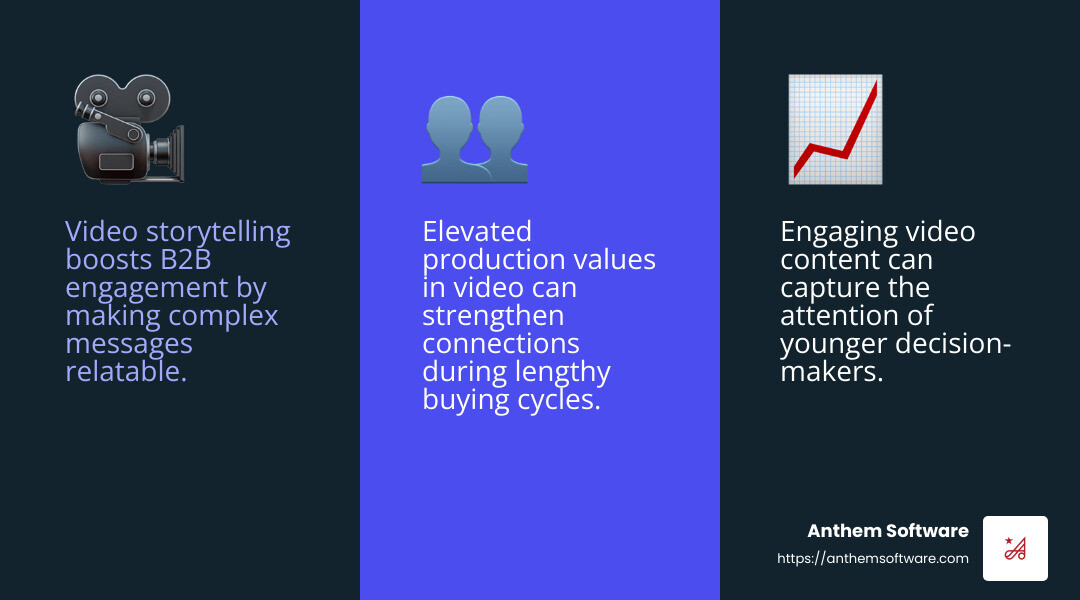
Video is no longer just a tool for B2C marketers. In the B2B world, video storytelling is changing how brands communicate complex messages. As Pete Stein from Merkle points out, video can humanize B2B brands and resonate with younger decision-makers. It’s an engaging way to showcase your brand’s story, making it relatable and memorable.
Why it matters: Video storytelling boosts engagement in lengthy buying cycles. By elevating production values and crafting inspiring narratives, businesses can capture attention and build stronger connections.
2. Website Visitor Identification
Imagine knowing who visits your website, even if they don’t fill out a form. That’s the power of website visitor identification software. Tom Shapiro from Stratabeat describes it as a game-changer, allowing marketers to uncover new opportunities by identifying visitors with high buyer intent.
Why it matters: Most site visitors leave without a trace. This software helps capture those leads, turning lost opportunities into potential sales.
3. Creator-Generated Content
Creator-generated content (CGC) is all about leveraging real customer testimonials to build trust and authenticity. As Danielle Wiley from Sway Group highlights, using CGC in ads makes content more relatable and impactful, driving higher engagement and conversions.
Why it matters: Authenticity is key in B2B marketing. Real stories from real customers resonate more than traditional ads, enhancing credibility and trust.
4. Programmatic PPC Newsletter Ads
Traditional newsletter sponsorships are evolving. With programmatic PPC newsletter ads, like those offered by Beehiiv and Paved, marketers pay per click rather than a flat fee. This innovation addresses the variability of open rates and ensures better ROI.
Why it matters: This approach reduces risk and maximizes impact, allowing for more precise targeting and cost-effective ad spend.
5. AI Integrations
Artificial Intelligence (AI) is revolutionizing B2B marketing. From data analytics to personalized content delivery, AI integrations are helping businesses optimize their strategies. AI provides insights into customer behavior, enabling more targeted and effective campaigns.
Why it matters: AI-driven personalization and automation streamline processes, improve customer experiences, and drive better results.
These emerging trends highlight the dynamic nature of B2B digital marketing. By embracing these innovations, businesses can stay ahead of the curve and foster deeper connections with their audience.
Next, let’s explore the benefits of these digital marketing strategies and how they can drive measurable results and high ROI.
Benefits of B2B Digital Marketing
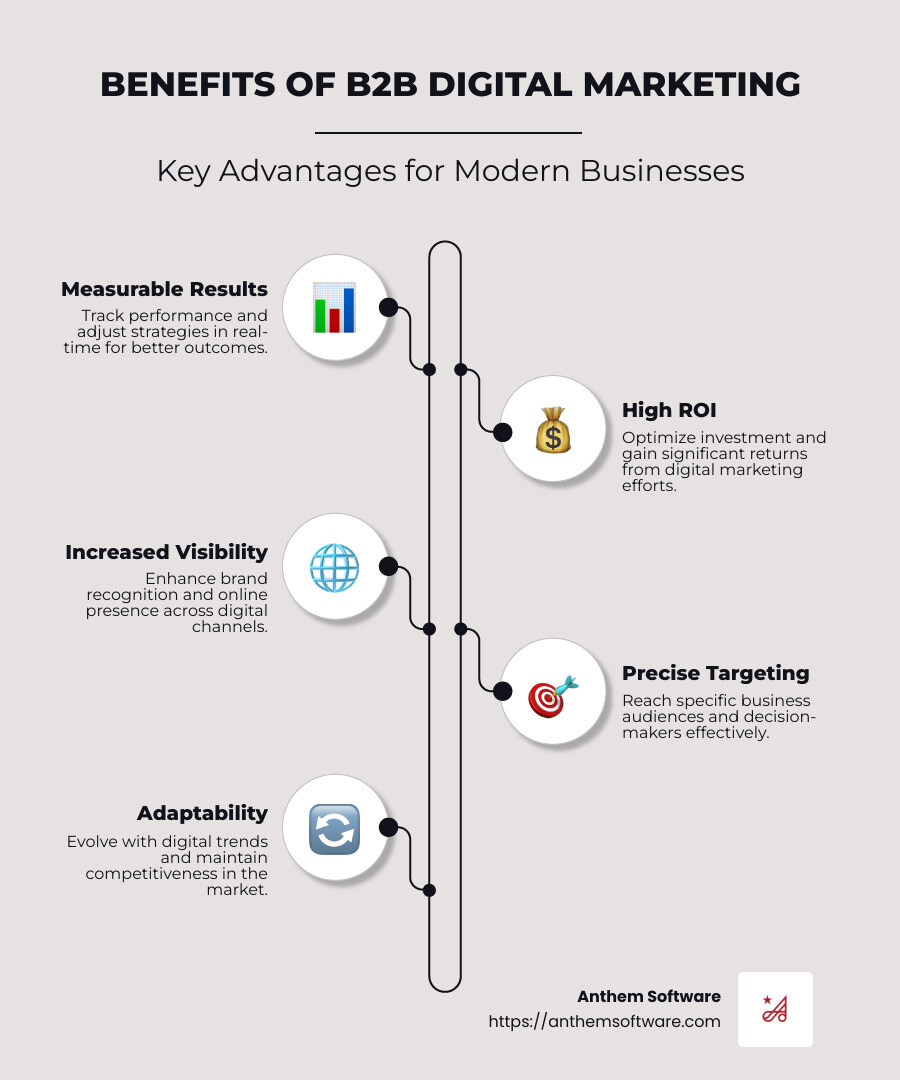
Measurable Results
One of the standout benefits of B2B digital marketing is its measurability. Unlike traditional marketing methods, digital marketing allows for precise tracking of every campaign. You can see exactly how your efforts are performing and adjust strategies in real-time. Tools like Google Analytics and HubSpot provide insights into web traffic, lead generation, and conversion rates. This data-driven approach lets you focus on what works and cut out what doesn’t, ensuring that your marketing dollars are well spent.
“With plenty of digital marketing tools at your disposal, you can easily view which strategies drive the best results for your B2B company.” – WebFX
High ROI
B2B digital marketing offers a high return on investment (ROI), making it a cost-effective choice for businesses. For instance, email marketing can offer a return of $44 for every $1 spent, according to Anthem Software. Pay-per-click (PPC) campaigns can double your investment, with $2 earned for every $1 spent. These figures highlight the efficiency of digital channels compared to traditional methods, which often require more spending for lesser returns.
| Strategy | ROI Example |
|---|---|
| Email Marketing | Earn $44 for every $1 spent |
| PPC Advertising | Earn $2 for every $1 spent |
| Content Marketing | Costs 62% less than traditional marketing |
Increased Visibility
Being visible online is crucial. B2B digital marketing strategies such as search engine optimization (SEO) and social media marketing boost your brand’s presence. SEO helps your business rank higher on search engine results pages (SERPs), making it easier for potential clients to find you. Social media platforms allow you to engage directly with your audience, expanding your reach and increasing brand awareness.
“Implementing digital marketing strategies is one of the best ways to improve your online visibility and brand awareness.” – WebFX
By leveraging these benefits, businesses can improve their marketing efforts, driving growth and success in today’s competitive landscape.
Next, we’ll address some frequently asked questions about B2B digital marketing to further clarify its role and impact.
Frequently Asked Questions about B2B Digital Marketing
What is B2B digital marketing?
B2B digital marketing is all about using online channels to market products and services to other businesses. Unlike B2C marketing, which targets individual consumers, B2B focuses on reaching businesses and organizations. The primary goal is to build relationships and drive sales through digital strategies like SEO, content marketing, email marketing, and more.
“B2B digital marketing is the marketing of products and services to other businesses and organizations through online channels and digital technologies.” – WebFX
What are the 4 types of B2B marketing?
B2B marketing can be categorized into four main types:
Producers: These are businesses that manufacture products or services. B2B marketing helps them connect with other companies that need their offerings to create their own products.
Resellers: These businesses purchase products from producers to sell them to other businesses or consumers. Effective B2B marketing strategies help resellers find and engage with potential clients.
Governments: As large buyers of goods and services, governments require specialized marketing approaches to address their unique needs and procurement processes.
Institutions: This category includes non-profits, educational organizations, and healthcare facilities. B2B marketing for institutions focuses on meeting their specific requirements and creating value-driven relationships.
How does B2B marketing differ from B2C?
B2B marketing and B2C marketing differ in several key ways, particularly in the buyer journey and target audience:
Buyer Journey: B2B sales cycles are generally longer and more complex than B2C. This is because B2B purchases often involve higher price points and require approval from multiple stakeholders within the organization. In contrast, B2C purchases are typically quicker and involve fewer decision-makers.
Target Audience: B2B marketing targets business buyers who prioritize logic, ROI, and efficiency. They look for solutions that will help their business grow. B2C marketing, on the other hand, often appeals to emotions and personal benefits, aiming to satisfy individual needs and desires.
“In B2B, that could be fear (i.e., are we falling behind our competitors?) or frustration (i.e., our current systems and processes are slowing us down).” – HubSpot
Understanding these differences is crucial for developing effective B2B marketing strategies that resonate with business buyers and drive successful outcomes.
Next, we’ll explore the conclusion and how Anthem Software can support your marketing journey.
Conclusion
As we wrap up our exploration of B2B digital marketing, it’s clear that this landscape is both challenging and full of opportunity. At the forefront of this field is Anthem Software, a digital marketing agency that specializes in B2B email marketing for small businesses. Our expertise lies in crafting effective email marketing plans that efficiently reach professional stakeholders.
Email Marketing Expertise
Email marketing remains a powerful tool for B2B marketers. It’s not just about sending emails; it’s about creating strategic, personalized campaigns that speak directly to your audience’s needs. We leverage data insights and powerful segmentation capabilities to tailor messages that resonate with business buyers. This approach helps turn potential leads into loyal customers, driving growth and engagement.
Global Reach
In today’s interconnected world, reaching a global audience is no longer a luxury but a necessity. Anthem Software serves clients worldwide, providing versatile and adaptable email marketing solutions that cater to different markets and customer bases. Our global reach demonstrates the effectiveness of our approach, helping businesses improve their email marketing efforts across borders.
By integrating effective email marketing plans with robust tools like those offered by Anthem Software, your business can thrive in today’s competitive digital landscape. Our focus is not just on communication but on building lasting relationships with your audience.
Ready to lift your B2B digital marketing strategy? Find how Anthem Software can transform your email marketing efforts. Let’s work together to drive your business forward.